Sarahs Craftography

Just another day in the life of Sarah

  • A Little More About Me
  • Family & Parenting
  • Autism
  • Healing & Hope
  • Create & Enjoy
  • Shop
  • Home
Home » Archives for Sarah Stults

Halloween Voices: AAC Boards That Empower

by Sarah Stults Leave a Comment

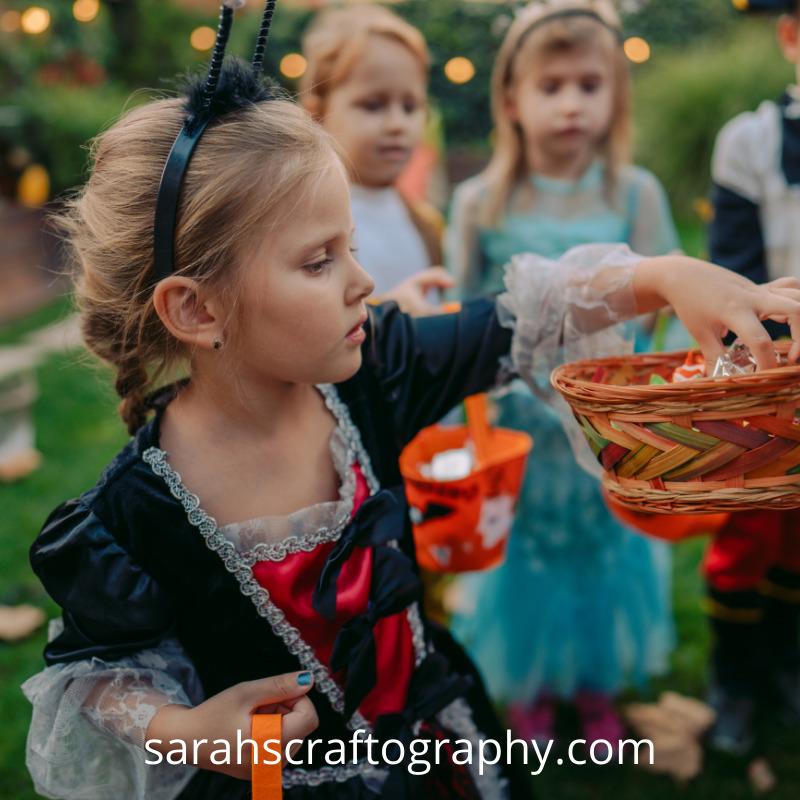
AAC preschool communication device with illustrated vocabulary cards for inclusive learning.

Have you ever wondered how AAC boards can make Halloween more inclusive and enjoyable for everyone?

For many children and adults who use augmentative and alternative communication (AAC), holidays like Halloween can bring both excitement and communication challenges.

From saying “trick-or-treat” at the door to joining in games, parties, and conversations, communication is at the heart of the celebration.

AAC boards can be one helpful option for making Halloween communication more accessible, especially when they are used alongside the person’s regular communication system.

With themed vocabulary, visual prompts, and easy-to-use designs, these tools can give AAC users another way to express themselves, share in the fun, and participate in traditions on their own terms.

During a holiday filled with costumes, candy, and community, AAC boards open the door to connection and belonging.

So grab your pumpkin pail, slip on your costume, and let’s unlock the magic of Halloween together! 🎃

[Read more…]

Filed Under: Autism, Autism in Everyday Life, Halloween, Seasonal, Sensory Experiences

The Legends Of Halloween

by Sarah Stults Leave a Comment

Have you ever wondered about the legends of Halloween and how so many of the traditions we know today came to be?

Halloween has changed a lot over the centuries. What we now know as a night of costumes, candy, pumpkins, spooky movies, and family fun grew from a mixture of old seasonal traditions, folklore, Christian observances, immigration, and good old-fashioned storytelling.

I have always loved learning where traditions come from.

Halloween is especially interesting because the history behind it is not one simple story.

Some customs can be traced back hundreds or even thousands of years, while others are much newer than we might think.

So grab a cup of coffee or maybe some apple cider and come explore a few of my favorite Halloween legends with me.

Where Did Halloween Begin?

Many discussions about Halloween begin with Samhain, a Gaelic seasonal festival associated with the end of the harvest and the beginning of the darker half of the year.

Samhain was observed around the transition from October 31 to November 1, and traditions surrounding it became part of the much larger story of Halloween.

The exact relationship between ancient Samhain and every modern Halloween custom is not as simple as some popular retellings make it sound. What we call Halloween today developed over centuries as customs from Ireland and Britain, Christian observances, immigration, folklore, and later American traditions blended together.

Halloween developed over many centuries as older customs mixed with later Christian observances such as All Saints’ Day and All Souls’ Day.

The name Halloween itself comes from All Hallows’ Eve the evening before All Saints’ Day.

That long, layered history is part of what makes the legends of Halloween so fascinating.

There is rarely just one neat explanation.

Spooky seasonal scene representing the ancient origins and folklore of Halloween

How Trick-or-Treating Became a Halloween Tradition

Modern trick-or-treating did not appear all at once.

One tradition often connected to it is medieval “souling.”

People in need would visit homes and receive food, including small cakes, in exchange for prayers for deceased family members.

Another influence came from “guising” in Scotland and Ireland.

Costumed visitors went from house to house and might sing, tell a joke, recite something, or perform a small trick in exchange for food, coins, or other treats.

Irish and Scottish immigrants brought Halloween customs with them to North America during the 19th century.

By the early 20th century, Halloween pranks had also become common in the United States.

Communities gradually encouraged more organized celebrations for children, and trick-or-treating became especially popular after World War II.

That means the little superheroes, princesses, dinosaurs, and ghosts knocking on our doors today are part of a tradition that took centuries to become what we recognize.

Colorful Halloween candy representing the history of trick-or-treating

Halloween Costumes, Candy, and My Own Family Memories

History is interesting, but Halloween traditions also become special because of the memories we make with them.

I still remember dressing up as a bum one year, complete with tattered clothes and a smudged face.

Another year, I transformed into a giant M&M.

The costume itself was only part of the fun.

My family would get ready together and head outside into the cool autumn air.

Leaves crunched under our feet while we went from house to house collecting treats.

Afterward, we would come home and dump out our candy bags.

Mom and Dad checked everything before we started sorting through our favorites.

Those are the parts of Halloween I remember most: the laughter, anticipation, costumes, candy, and being together.

As a mom, I also know that Halloween does not feel fun for every child in exactly the same way.

If costumes, crowds, noises, or unexpected changes are difficult for someone in your family, my sensory-friendly Halloween ideas offer gentler ways to enjoy the season.

Why Do We Carve Jack-O’-Lanterns?

Jack-o’-lanterns are one of my favorite examples of an old legend changing as people carried it to a new place.

Before pumpkins became the star of American porches, people in Ireland and Britain carved root vegetables such as turnips.

One popular Irish folktale tells of a troublesome figure known as Stingy Jack, who tricked the Devil and was eventually left to wander with only a glowing coal for light.

According to the legend, Jack placed the coal inside a carved turnip to make a lantern.

When Irish immigrants came to America, pumpkins were plentiful and much easier to carve than turnips.

Over time, the glowing pumpkin became one of the most recognizable symbols of Halloween.

I am thankful for the pumpkin upgrade, because carving a turnip sounds like considerably more work for considerably less porch decoration. 😂

Glowing carved jack-o-lantern connected to Irish Halloween folklore

How Witches Became Part of Halloween

Witches have a much more complicated history than the pointy hats and bubbling cauldrons we see in Halloween decorations.

Beliefs about witchcraft existed in different cultures long before modern Halloween.

In Europe and colonial America, fear of witchcraft sometimes led to accusations, trials, imprisonment, and executions.

The Salem witch trials are one well-known American example, but they were not the beginning of beliefs about witches, nor were people accused simply because they were educated women or practiced medicine.

The history involved religious beliefs, social tensions, superstition, local conflict, and fear.

Over time, folklore, books, plays, movies, and Halloween imagery helped create the familiar fictional witch: black clothing, pointed hat, broomstick, cauldron, and sometimes a black cat nearby.

Today that character can be scary, funny, glamorous, or downright adorable depending on the costume.

Why Are Black Cats Associated With Halloween?

Black cats have been tangled up in superstition for centuries.

In European folklore, cats were sometimes connected with witchcraft.

Stories claimed that witches could keep animal companions called familiars, and later folklore sometimes suggested that a witch could even take the form of a cat.

Those beliefs helped connect black cats with bad luck, darkness, witches, and eventually Halloween imagery.

Of course, folklore is not reality. A black cat is just a cat and I have personally loved my own black kitties.

They have been loving, friendly companions rather than tiny agents of Halloween doom.

That is one legend I am very happy to leave in the folklore category.

What About the Halloween Candy Scares?

For generations, parents have heard frightening warnings about strangers hiding poison, razor blades, or other dangerous objects in Halloween candy.

Those stories became especially powerful in the 20th century and changed the way many families approached trick-or-treating.

Individually wrapped commercial candy became the expected treat, while homemade goodies from unfamiliar homes largely disappeared.

Real crimes involving Halloween treats have occurred, but decades of research into reported cases have not supported the popular idea that unknown strangers routinely poison random children’s trick-or-treat candy.

That does not mean parents should ignore ordinary food-safety concerns, allergies, damaged packaging, or choking hazards. Checking treats for those practical concerns still makes sense. It simply helps to separate reasonable safety precautions from a frightening legend that has been repeated for generations.

Halloween Legends Keep Changing

Ghosts, witches, black cats, jack-o’-lanterns, monsters, and haunted houses did not all join Halloween at the same moment.

Our modern celebration is more like a scrapbook.

Different generations and cultures added traditions, stories, symbols, foods, and entertainment until Halloween became the holiday we recognize today.

Even now, families continue changing it.

Some children love a dark haunted house.

Others would rather decorate pumpkins, attend a church fall festival, watch a not-too-spooky movie, or simply hand out candy at home.

Children who communicate differently can participate too.

My post about Halloween AAC boards shares ways to make trick-or-treating and seasonal activities more accessible for AAC users.

And if your idea of celebrating involves curling up after the kids are settled and watching something spooky, I also have a list of Halloween horror movies.

Enjoying Halloween Through Faith and Family

Families of faith do not all make the same choices about Halloween, and I think there is room to be thoughtful about what we bring into our own homes.

For me, learning the history behind a tradition does not mean I have to adopt every belief connected to its past.

I can separate folklore from faith and choose the parts of the season that create good memories with my family.

Philippians 4:8 (NIV) reminds us to think about whatever is true, noble, right, pure, lovely, admirable, excellent, and praiseworthy.

That gives me a much better guide for our home than fear does.

Maybe your family enjoys costumes and candy.

Maybe you prefer pumpkins, crafts, a fall festival, a bonfire, or apple cider.

The celebration can look different from one household to another.

Which Legends of Halloween Do You Love?

The legends of Halloween show just how much a holiday can change as stories travel from one generation to the next.

Some traditions have ancient roots.

Others are surprisingly modern.

A few of the scariest stories turned out to be more legend than fact.

That is part of the fun of digging into history.

Now I want to hear from you.

Which Halloween tradition does your family look forward to every year?

Share it in the comments, and send this post to someone who loves discovering the stories behind the season.

Happy Halloween!

Filed Under: Halloween, Seasonal Tagged With: Halloween

Rediscovering Love: Healthy Relationships Post-Abuse

by Sarah Stults Leave a Comment

Rediscover love and trust after abuse with guidance on building healthy post-abuse relationships.

Are you navigating the complex journey of forming healthy relationships post-abuse?

It’s a path many find daunting, yet filled with the promise of renewal and deep connection.

In this post, we’ll explore what it means to rediscover love after experiencing emotional abuse.

The road to healing isn’t always straightforward—it twists and turns, presenting obstacles that may seem insurmountable.

But through the power of resilience and support, these barriers can become gateways to a fulfilling and loving future.

Join me as we delve into personal stories, practical advice, and the transformative power of understanding and patience in the quest for healthy relationships post-abuse.

Let’s uncover how, even after the darkest storms, love can bloom anew.

[Read more…]

Filed Under: Domestic Violence & Healing

Navigating Affection in Autism

by Sarah Stults Leave a Comment

Navigating affection in autism support and love expression.

Have you ever wondered how to navigate affection in autism?

Many people, including parents, teachers, and even those with autism, find themselves thinking about this.

Affection is something we all experience, but it can look different for people with autism.

It might not always be through hugs or saying “I love you.”

Sometimes, it could be sitting quietly together, sharing a special interest, or having a special routine.

In this post, “Navigating Affection in Autism,” we’ll uncover the unique ways individuals with autism express their love and connection.

We’ll share stories and advice to help everyone better understand and appreciate these special forms of affection.

Let’s kick things off!

[Read more…]

Filed Under: Autism Tagged With: autism, Autism acceptance, Autism awareness

Horror Movies Sure To Set The Mood For Halloween

by Sarah Stults Leave a Comment

Eerie zombie hand rising from graveyard in Halloween horror movie scene.

Are you looking for a good hair-raising movie to set the mood for Halloween? 

A scary movie can be good any time of the year, but there is something especially fun about watching one during the Halloween season. 

I have set out looking for some spine-chilling movies that are sure to give you a good scare. 

Get in the spirit of Halloween with family and friends by binge watching your favorite Halloween horror flicks. 

These are just a few of the many movies out there and it was hard to pick with so many to choose from. 

Let’s get started!

Dark forest with eerie lighting perfect for Halloween moodsetting.

[Read more…]

Filed Under: Halloween, Seasonal Tagged With: Halloween, movies

Sensory-Friendly Halloween Ideas Kids Will Love

by Sarah Stults Leave a Comment

Halloween sensory craft ideas for kids, safe and fun for children to enjoy.

Have you been looking for sensory-friendly Halloween ideas kids will love without forcing them through a night that feels too loud, itchy, crowded, or overwhelming?

Halloween can be exciting, but it can also ask a lot from a child all at once.

Costumes feel different.

Doorbells ring.

Decorations move without warning.

People wear masks. Streets get crowded, routines change, and everyone seems to expect children to know exactly what to do.

In our family, I have learned that a successful Halloween is not measured by how many houses we visit or how full the candy bucket gets.

It is measured by whether my kids felt safe enough to enjoy themselves.

That may mean a soft costume instead of an elaborate one, an early trick-or-treat walk, headphones in the bag, a quiet break in the van, or skipping an activity altogether.

Sensory-friendly does not mean taking the fun away.

It means making room for a child to enjoy the fun in a way that works for them.

Sensory-friendly Halloween ideas for autistic children and families

When Halloween Feels Like Too Much

Halloween has never been as simple as buying costumes and heading out the door with my kids.

For Trinity, costumes were not always exciting.

Some scared her, and tight or uncomfortable textures could make her feel trapped.

Alivia’s needs are different.

She does not like masks or heavy makeup, but she has loved blow-up costumes and simple combinations that let her participate without feeling weighed down.

We have done things like a black sweat outfit with butterfly wings, glitter spray in her hair, or a simple pair of cat, dog, or fox ears with a small tail.

Those little touches still feel festive without turning the costume into something she has to endure.

Sensory needs can show up in other parts of Halloween too.

Flashing lights, motion-activated decorations, fog machines, crowded sidewalks, unfamiliar smells, sudden screams, and people bumping into one another can turn a fun evening into sensory overload very quickly.

Sensory accommodations such as comfortable clothing, headphones, visual supports, quieter spaces, and avoiding crowds can make community activities more accessible. What helps will be different from child to child, so I pay attention to the sensory input my kids seek, avoid, or recover from slowly.

If your child reaches their limit, leaving is not a ruined Halloween.

Sometimes leaving at the right time is exactly what protects the good memories you already made.

Start With a Halloween Plan Your Child Can Understand

Predictability can make a big difference.

Before Halloween, talk through what is going to happen in a way your child understands.

That might be spoken conversation, pictures, a visual schedule, a calendar, a short practice walk, or a personalized teaching story.

You can practice putting on the costume before Halloween instead of discovering an itchy seam five minutes before leaving.

Walk through knocking on a familiar door.

Show your child the trick-or-treat bucket.

Talk about masks and decorations they may see.

Most importantly, tell them what the exit plan looks like. Knowing, “We can go back to the car when you need a break,” can be just as important as knowing where you are going.

If your child benefits from more preparation, pictures or a short personalized story can show where you are going, who may be there, what trick-or-treating looks like, and how the night will end. I go deeper into that kind of planning in Preparing an Autistic Child for Halloween.

Comfy Halloween Costumes Come First

The costume may be the star of Halloween for some kids, but comfort gets the starring role in our house.

Trinity taught me this early.

Soft cotton and fuzzy outfits worked much better than tight, scratchy costumes.

One year she surprised me by wanting to be a zombie.

Instead of using a mask or covering her face in heavy makeup, I tore up an old dress, rubbed it in the dirt, and used a little eyeliner, lipstick “blood,” and dark shading.

She got the spooky zombie look she wanted without having to tolerate a costume that made her miserable.

Alivia has her own preferences.

Sometimes she likes a blow-up costume.

Other times something as simple as sweats, wings, ears, or a little glitter works better.

Try the costume at home before the big night. Remove tags.

Add soft clothes underneath when that helps.

Skip masks or face paint if they bother your child.

Bring a backup option that fits in your bag.

A pair of ears or a favorite Halloween shirt can save the night when the original costume suddenly becomes too much.

And remember: a child does not have to wear a costume at all to participate in Halloween.

Children enjoying comfortable sensory-friendly Halloween costumes

Sensory-Friendly Halloween Fun at Home

Some of our favorite Halloween memories did not happen while trick-or-treating.

We have made sensory bins with rice dyed black, orange, green, and purple, then added tiny pumpkins and Halloween trinkets.

Slime, kinetic sand, or a simple treasure hunt can be fun too, as long as the texture is one your child actually enjoys.

Pumpkin guts are definitely not a favorite in my house.

Instead of insisting on carving, we paint and decorate pumpkins.

Stickers, washable paint, markers, craft supplies, or push-in decorations can give kids the pumpkin experience without requiring them to scoop out a texture they cannot stand. I have more alternatives in my autism-friendly pumpkin carving post.

We have also bobbed for apples, played sensory guessing games, gone on flashlight scavenger hunts, and once turned our garage into our own Halloween party with softer lights, music, a little dance floor, and door prizes.

The kids still remember it.

Halloween does not have to look traditional to become a tradition.

Trick-or-Treating Without the Pressure

If we go trick-or-treating, I try to make the experience fit my kids instead of expecting my kids to fit the experience.

Starting earlier can mean smaller crowds and less noise.

Familiar neighborhoods, friendly cul-de-sacs, smaller trunk-or-treats, church events, and library programs can also feel more manageable than a huge community event.

I bring the things we may need: headphones, a sensory item, real snacks, and a backup costume piece.

I also watch for the point where excited energy starts turning into exhaustion.

Sometimes I will say, “Two more houses, and then we’re heading to the van.”

A clear ending can make the transition easier.

Afterward, we may drive around and look at decorations from the safety of the vehicle.

That gives everyone time to come down from the excitement before heading home.

What I Pack for a Sensory-Friendly Halloween

  • Headphones or another familiar sensory support
  • A communication device, AAC board, or other communication tool if my child uses one
  • A familiar snack and drink
  • A small sensory or comfort item
  • A simple backup costume piece, such as ears or a Halloween shirt
  • Anything we need to stay visible and safe after dark

I do not pack every sensory tool I own. I bring the things my kids actually use, because a smaller bag is a lot easier to manage while trick-or-treating.

Your Child Does Not Have to Say “Trick or Treat”

This is one Halloween expectation I would love to see more adults understand.

Not every child can say “trick or treat.” Some communicate with AAC.

Some use gestures, signs, pictures, or a communication card.

Others may be able to speak but freeze when an unfamiliar adult opens the door.

A child may also be using every bit of their energy simply to stand on that porch.

They still deserve kindness and a piece of candy.

Eye contact should not be the price of participation either.

Neither should saying “thank you” on command, tolerating a scary decoration, or explaining a disability to a stranger.

If your child uses AAC or would benefit from a visual communication option, I put together a separate resource about Halloween AAC boards and giving kids a way to communicate during Halloween.

For the adults answering the door, a little patience goes a long way.

Give the child time. Accept the communication they offer.

Let Halloween be about welcoming the kid standing in front of you rather than testing whether they perform the tradition correctly.

Create a Safe Signal and a Quiet Escape

At home, my kids know they can retreat to their rooms when they need a break.

When we are out, having a simple signal can help them tell me they are reaching their limit before everything becomes too much.

Alivia uses the phrase “thunder popcorn” when she feels like she is losing control.

It sounds silly to someone who does not know what it means, but for us it is powerful communication.

I know what she is telling me, and we can respond.

Your family’s signal might be a phrase, a hand sign, a picture on an AAC device, pointing to a break card, or simply handing you a particular object.

Whatever it is, honor it.

A signal only feels safe when a child learns that the adults around them will listen to it.

A Few Halloween Safety Adjustments

Planning for sensory needs and planning for physical safety can work together.

I like to know our route before we leave and avoid houses with decorations I already know will be too much.

Glow wands work well for my kids because they enjoy holding them more than wearing glowing necklaces or bracelets.

Other children may prefer reflective patches or light-up shoes.

It can also help to take a current photo of your child in their costume before leaving, make sure they have identification or contact information appropriate for their needs, and choose a meeting spot if you are attending a larger event.

The details will depend on your child, but thinking about visibility, identification, communication, and what you would do if you became separated can make the outing safer without making the night feel scary.

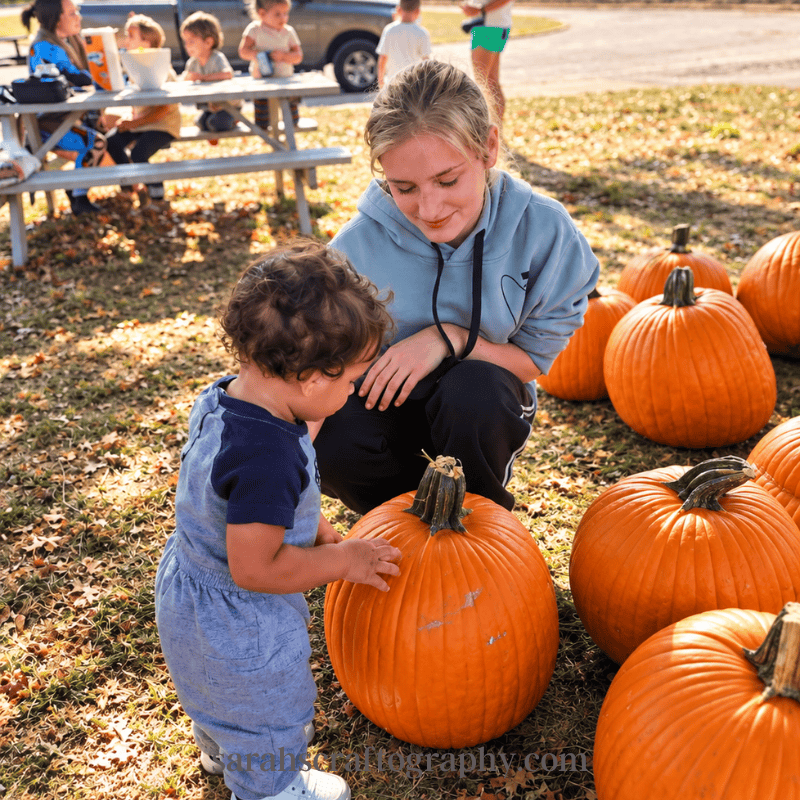
Sensory-friendly Halloween celebration with children and pumpkins

There Is No One Right Way to Do Halloween

Your child does not have to wear a costume.

They do not have to trick-or-treat.

They do not have to stay until an event ends, pose for every picture, touch pumpkin guts, walk through a haunted house, speak to strangers, or enjoy something simply because other children do.

One child may love the lights and hate the costume.

Another may happily wear an elaborate costume but need headphones outside.

Someone else may want to hand out candy from home instead of walking door to door.

All of those Halloweens count.

When I stopped measuring the night against what Halloween was “supposed” to look like, it became much easier to notice what my kids actually enjoyed.

Making Halloween About Joy, Not Perfection

As a mom, I want my children to know they do not have to perform for other people to belong.

I believe God created each of us with worth that does not depend on how well we fit somebody else’s expectations.

That changes the way I look at celebrations too.

Sometimes loving our children well means changing the plan, leaving early, choosing the quieter event, or celebrating at home.

If you are also curious about where some of the holiday’s familiar traditions came from, you can read my newly updated post about the legends of Halloween.

This Halloween, pay attention to the moments when your child relaxes, laughs, explores, communicates, or simply feels safe enough to be themselves.

Those are the memories worth keeping.

What sensory-friendly Halloween tradition works best for your family?

Share it in the comments.

Your idea may be exactly what another parent needs this year.

Filed Under: Family Life, Halloween, Life With Kids, Seasonal

Preparing an Autistic Child for Halloween

by Sarah Stults Leave a Comment

Preparing an autistic child for Halloween with a predictable and flexible plan

How do you prepare an autistic child for Halloween when the costumes, decorations, crowds, and changes can make an exciting night feel like a lot all at once?

Halloween looks very different in our house now than it did when my oldest daughter, Trinity, was little.

Back then, our Halloween nights could be chaotic.

We did not really have a set plan, and I did not know nearly as much as I know now about helping my children prepare for transitions, sensory needs, and all the unexpected pieces that can come with a holiday.

I learned a lot while raising Trinity.

Later, I was able to carry those lessons with me as I parented Alivia and Darnell.

Moving to the Cincinnati area also made a difference for our family because, in our experience, we found more autism-focused resources and understanding than we had where we lived before.

These days, we usually do the same basic thing every Halloween.

That familiarity means there is much less preparation involved than there used to be.

Still, the things I learned during those earlier years continue to shape how I prepare my kids for Halloween today.

So grab the candy bucket, check the costume for scratchy tags one more time, and let’s get ready for Halloween. 🎃

Preparing an autistic child for Halloween with a predictable and flexible plan

Preparing an Autistic Child for Halloween Starts Before Halloween Night

One of the biggest things I have learned is that preparation does not have to be complicated.

Sometimes it is simply talking about what is going to happen before it happens.

We talk ahead of time about Halloween, make our plans, and choose costumes early enough that we can figure out whether they are actually going to work.

That predictability can be helpful because some autistic people find changes in routine and unexpected events difficult, while visual schedules and other supports can make upcoming events easier to understand.

Planning ahead can make an unfamiliar event easier to understand. Visual schedules, pictures, and other visual prompts can help with routines, transitions, choices, and knowing what comes next.

The important words there are for some.

Autistic children are not all going to need the same amount or type of preparation.

Even within my own family, what helps one child may not be what another child needs.

Using visual supports to prepare an autistic child for Halloween

First/Then Cards Helped Us Break Halloween Into Smaller Steps

When Alivia was younger, we used First/Then cards a lot.

Halloween was not presented as one giant event that she simply had to get through.

We could break the evening down step by step.

  • First dinner, then costume.
  • After dinner, we put on the costume.
  • Next comes getting into the car and driving.
  • Once we arrive, it is time to trick-or-treat.

Those little pieces made a big evening easier to understand.

Visual supports can show a sequence of events, upcoming transitions, routines, or expectations. They can be as simple as pictures showing dinner, costume, car, trick-or-treating, and home.

I do not need to use those supports with Alivia for Halloween the way I once did.

That is another thing parents sometimes need permission to hear: a support can be incredibly useful during one season of your child’s life without needing to be used forever.

A familiar Halloween routine can help autistic children know what comes next

Our Halloween Routine Became Part of the Preparation

Now we tend to follow the same general Halloween routine every year.

There is less explaining because the kids already have a pretty good idea of what comes next.

That did not happen overnight.

We built that familiarity by doing it over and over.

When the kids were younger, I thought preparation meant I needed to anticipate every possible problem.

These days, I see routine differently.

I do not need to predict every detail if the kids have enough familiar pieces around the unfamiliar ones.

We also keep Halloween day a little lighter when we can, while keeping the main parts of our normal routine in place.

I am not trying to turn the entire day upside down in preparation for an evening that is already different.

Trying on a Halloween costume early to check sensory comfort

Please Try the Costume Before Halloween

I could probably open a small costume shop with the number of costumes my children have refused to wear over the years. 😂

We have had costumes that looked adorable and sounded like a great idea right up until somebody actually had to wear them.

Then it was too itchy.

Maybe another one was too hot.

A different costume might feel too tight.

Sometimes the fabric simply felt wrong.

That taught me that liking a costume and being comfortable wearing that costume are two completely different things.

Sensory differences can include sensitivity to touch, textures, sounds, lights, and other input, and comfortable clothing can be an important accommodation for some autistic people.

Trying the costume ahead of time gives us a chance to notice those sensory problems before Halloween night.

So we plan costumes ahead and make sure everything is comfortable. If carving pumpkins is part of your family’s tradition too, I also have some autism-friendly pumpkin carving ideas for making that activity more flexible.

I would much rather discover the problem in our living room than after we have left the house.

Choosing a comfortable Halloween costume for an autistic child

If the Costume Comes Off, the Costume Comes Off

This may be one of the biggest differences between younger-mom me and the mom I am now.

If a costume fails halfway through Halloween, my kids can take it off.

That’s it.

I am not fighting through another costume.

I am also not carrying a million backup things when I already have enough to keep track of.

I might bring something simple like a Halloween headband, but I am not packing an emergency costume department in the car. 😂

If my child ends up trick-or-treating in regular clothes, Halloween is not ruined.

The costume was supposed to add to the fun.

Once it becomes the thing preventing the fun, I am perfectly happy to let it go.

Letting an autistic child remove an uncomfortable Halloween costume

Prepare for the Sensory Parts Without Assuming What Your Child Can Handle

Halloween can involve flashing decorations, masks, loud sounds, crowded sidewalks, unusual smells, people getting close, and houses that suddenly move or make noise.

Those things are fun for some children and overwhelming or frightening for others.

When my children were younger, masks, makeup, and faces that looked distorted could be especially difficult for them to process.

Noise can still affect them differently.

Darnell and Alivia are more sensitive to it, while Trinity can often put on headphones and keep going.

That is why I do not think preparing an autistic child for Halloween should mean creating one giant checklist and assuming every autistic child needs it.

Watch your child.

Prepare for the things that are hard for them.

If your child uses headphones, bring them.

A house that feels too scary can simply be skipped.

When crowds make communication or regulation harder, a smaller or more familiar place may work better.

Our family generally prefers familiar places and places where we have had good experiences before.

A Quick Halloween Prep Checklist

  • Talk through the plan before Halloween night.
  • Try the costume early and pay attention to comfort, not just appearance.
  • Bring communication supports, headphones, or other familiar tools your child already uses.
  • Choose a familiar route or smaller celebration if crowds are difficult.
  • Let your child skip decorations, houses, or activities that feel like too much.
  • Decide ahead of time that leaving early is okay.

The goal is not to prepare for every possible thing that could happen. It is to bring the supports that help your child feel understood and able to participate in their own way.

Preparing for sensory needs during Halloween trick-or-treating

Practice Can Create Predictability Without Demanding a Performance

We have practiced parts of Halloween with our kids before.

That can include what happens when you walk up to a house, what someone might say, where the candy goes, and what happens next.

The purpose is not to make my child perform Halloween correctly.

It is to make an unfamiliar situation a little more familiar.

That distinction matters to me.

My children have struggled with things like eye contact, unfamiliar people, social expectations, and saying the expected words at the expected moment.

Practice can help them know what might happen.

It does not mean I expect perfection when we get there.

If communication is part of your concern, I have also written about Halloween AAC boards and communication supports.

Practicing trick-or-treating without requiring an autistic child to perform

Have an Exit Plan Before You Need the Exit

I want my kids to know that leaving is an option.

We do not have to finish every street.

There is no rule saying we have to stay until a certain time.

A crowded house can be skipped.

Going back to the car is always an option.

When we have had enough, we can go home.

That flexibility is part of the preparation too.

I have learned that I would rather end Halloween while we still have some good memories from the night than push everybody past their limit because I had a picture in my head of how long trick-or-treating was supposed to last.

If you want more of the sensory side of that planning, my post on sensory-friendly Halloween ideas for kids goes deeper into ways families can adjust the celebration itself.

Planning an early exit when Halloween becomes overwhelming

Preparation Is Not a Guarantee That Everything Will Go Smoothly

This is probably the lesson I wish I had understood when Trinity was little.

You can prepare.

Practice can make the evening more familiar.

A comfortable costume can be ready and waiting.

The schedule can be planned out.

Headphones can be packed.

Even the familiar neighborhood can be chosen ahead of time.

And things can still fall apart.

Preparation is support, not a guarantee.

When my kids were younger, I did not always understand that.

If Halloween went badly, I could feel like I had done something wrong.

Sometimes I was hard on myself.

And looking back, I know there were times I was harder on Trinity than I needed to be because I was trying so hard to make things work.

Halloween preparation supports autistic children without guaranteeing a perfect night

What I Would Tell the Mom I Was Back Then

If I could go back and change one thing, it would not be the costume we bought or the route we took.

The biggest change I would make is how hard I was on myself and Trinity when things fell apart.

That younger version of me needed to hear that a hard Halloween did not mean I had failed.

Trinity had not failed either.

We were both learning.

I was learning my child.

At the same time, she was trying to navigate a world that I did not yet fully understand from her perspective.

Over the years, I learned more.

Better tools came with that experience.

Eventually, I learned to recognize when comfort mattered more than the costume and when going home mattered more than one more handful of candy.

Most importantly, I learned that when a plan falls apart, my relationship with my child matters more than saving the plan.

Flexible Halloween preparation that makes room for an autistic child’s needs

Preparing an Autistic Child for Halloween Is Really About Making Room for Them

Every autistic child is different.

Some children may want every decoration, every costume piece, and every house on the street.

Another child may enjoy Halloween best from the couch with a movie and a bowl of candy.

Plenty of kids will fall somewhere in between.

Preparing an autistic child for Halloween is not about teaching them to tolerate Halloween exactly the way everyone else celebrates it.

For our family, preparation means creating enough predictability to help our kids know what is coming while leaving enough flexibility to change the plan when they tell us they need something different.

And if the costume ends up in the stroller, somebody refuses the scary house, or we head home earlier than expected?

We can still call that Halloween.

I would love to hear what helps in your house if your family celebrates Halloween with an autistic child.

Share your experience in the comments because another parent may find the idea they needed in something your family has learned.

Did this post help you?

Please like it and share it with another parent who may need a little less pressure going into Halloween.

You can also subscribe to my email list for more real-life autism parenting, family life, and practical ideas from Sarah’s Craftography.

Sometimes becoming the change starts with something very small: letting our kids experience a tradition in the way that works for them. 🎃


Filed Under: Autism, Autism in Everyday Life, Family Life, Halloween, Parenting Autistic Children, Seasonal, Sensory Experiences

Why Victims Stay in Abuse: There’s More Behind That Door

10/07/2026 by Sarah Stults Leave a Comment

Woman reflecting on why victims stay in abuse and the realities hidden behind closed doors

Have you ever wondered why victims stay in abuse, even when it seems obvious from the outside that they should leave?

It is one of those questions that sounds simple until you have been the person standing inside that house.

From the outside, people see a door.

They see a car in the driveway, a phone in her hand, or a domestic violence shelter somewhere in the city and wonder why she does not simply pack a bag and go.

What they cannot see is everything tied to that decision.

I know because I have stood on the other side of that question.

When I hear someone ask why a woman stays, I think about the children’s beds, their favorite toys, the food in the refrigerator, the bills that still have to be paid, and the routines those children depend on.

Woman reflecting on why victims stay in abuse and the realities hidden behind closed doors

My mind also goes to the home she has worked to build while someone inside it has slowly taken pieces of her away.

There is the fear.

Money can become another trap.

Children may love their father and have no idea what is happening between their parents.

Family members may have been pushed away, faith may have been twisted against her, and years of being told that nobody else will ever want her can make the outside world feel very far away.

Then there is the terrifying question waiting on the other side of the front door.

Where do I go now?

For me, leaving was not one brave moment where I packed a suitcase, shut the door, and never looked back.

I tried to leave more than once.

I was found more than once.

Eventually, I had to rebuild a life that looked very different from the one I had worked so hard to hold together.

That is why I believe understanding why victims stay in abuse starts with changing the way we ask the question.

Instead of asking, “Why doesn’t she just leave?” maybe we should be asking, “What is making it so hard for her to leave, and how can we help her get somewhere safe?”

There is a whole lot more packed into that suitcase than clothes.

So, let’s open that suitcase together and talk about what “just leaving” actually means.

Woman considering the difficult realities of leaving an abusive relationship

Emotional and Psychological Factors

Fear is one reason leaving can feel impossible.

An abusive partner may threaten violence, take away support, or make the unknown feel more frightening than staying.

Love can complicate things too.

A survivor may remember the good moments and still hope the person she loves will change.

Over time, constant criticism and control can also damage her confidence.

She may begin to believe the terrible things she has been told about herself.

Money, children, housing, and custody concerns can add even more weight to an already frightening decision.

Cultural or family expectations may create another layer of pressure.

Someone who has been taught that keeping a family together is her responsibility may carry enormous guilt about leaving.

All of these pieces can exist at the same time.

Understanding them helps us respond with compassion instead of assuming a survivor simply refuses to leave.

Woman facing emotional and psychological barriers while living with abuse

Societal Pressure Can Make Leaving Harder

Outside pressure can become another reason a survivor feels trapped.

Family expectations, fear of gossip, religious beliefs, or the stigma of divorce may all affect the decision.

Some women are terrified of being judged as a bad wife or mother.

Others have spent years trying to make everything look normal because admitting what is happening feels embarrassing or frightening.

That pressure can be especially strong when everyone else sees what appears to be a happy family.

A survivor may also have limited information about abuse, legal protections, or the help available in her community.

Judgment only adds another burden.

Compassion, practical help, and a safe person to talk to can make it easier for someone to begin seeing a path forward.

Woman dealing with social pressure and judgment surrounding domestic violence

The Practical Side of Starting Over

Leaving also requires practical things that are easy to overlook from the outside.

A survivor may need money for rent, a security deposit, utilities, food, transportation, and childcare.

Housing can become an immediate concern when there is nowhere safe to go.

Children make those decisions even more complicated.

Custody concerns, school routines, familiar belongings, and fear of retaliation can all affect what happens next.

Isolation may mean there is no friend or relative waiting with a spare bedroom.

Even when someone wants to help, they may not understand everything involved in safely leaving.

Rebuilding takes resources as well as courage.

Having practical support can make an enormous difference when someone is trying to create a safe life from the ground up.

Woman preparing to start over after leaving an abusive relationship

Abuse Changes the Way You See Your Choices

Living with abuse can make it difficult to think beyond the next argument, threat, or change in mood.

Survival often becomes the priority.

Manipulation and control can cause a person to question her own judgment.

Moments of kindness may bring hope that things are finally getting better.

Isolation can make it harder to hear another perspective.

After enough criticism, a survivor may stop trusting herself altogether.

That does not mean she is incapable of making decisions.

It means abuse can affect the circumstances in which those decisions are being made.

Support should help her regain choices, safety, and confidence rather than taking more control away from her.

Choosing Compassion Instead of Judgment

Understanding why victims stay in abuse starts with choosing compassion over judgment.

For the survivor reading this, please remember that needing help does not make you weak, and having a complicated story does not make your life any less worth protecting.

For the friend, family member, neighbor, or church member who loves someone living through abuse, be a safe person instead of another voice telling her what she should have done.

Listen.

Support and compassion for a survivor making difficult choices after abuse

Offer help when you can.

Leave the door open for the day she is ready to walk through it.

If this post helped you understand why victims stay in abuse a little differently, please share it.

Someone in your life may need the reminder that leaving is rarely as simple as walking out the door.

I would also love to hear from you in the comments, whether this changed the way you think about domestic violence or you have something you feel safe adding to the conversation.

Please like and share this post so we can keep replacing judgment with understanding and help these conversations reach the people who need them.

For more honest conversations about domestic violence, healing, faith, family, and rebuilding, subscribe to my email list and stay connected with Sarah’s Craftography.

Awareness matters, but what we do with that awareness matters even more.

Let’s become the change by replacing judgment with compassion, silence with support, and “Why didn’t you leave?” with “How can I help?”

Woman moving toward hope and a new beginning after domestic violence

For More Information

For more information, you can check out these trusted resources:

National Domestic Violence Hotline: Why People Stay in Abusive Relationships

World Health Organization: Violence Against Women

National Domestic Violence Hotline: Create a Safety Plan

Filed Under: Understanding Abuse

Autism-Friendly Pumpkin Carving

by Sarah Stults Leave a Comment

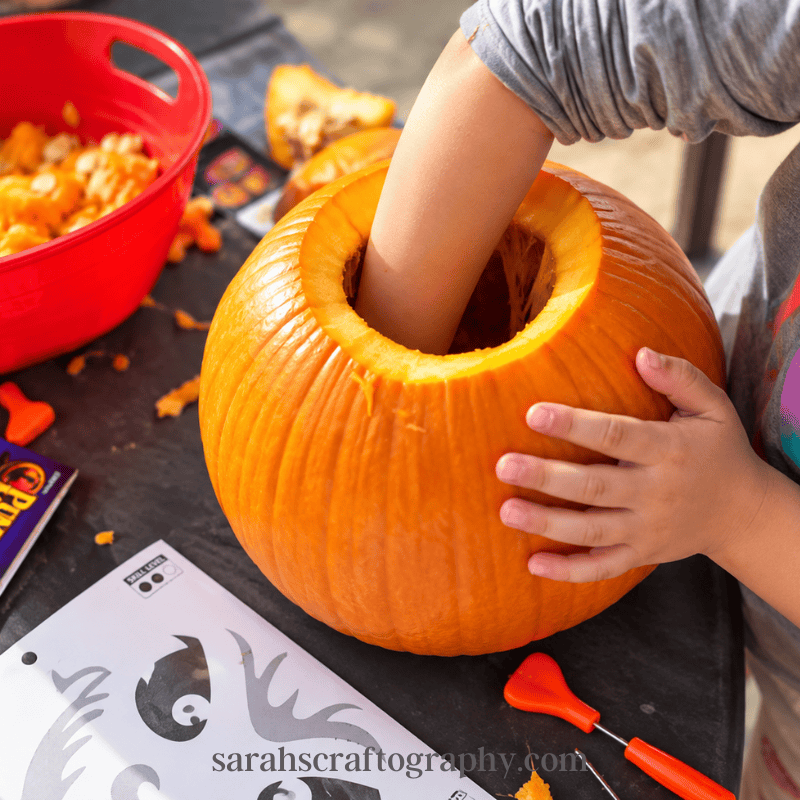
Does autism-friendly pumpkin carving have to mean getting every child to scoop out pumpkin guts and carve a jack-o’-lantern?

Pumpkin carving is one of those fall traditions that sounds simple until you actually sit down with a child who experiences all those textures, smells, sounds, and mess differently.

In our house, I have learned that enjoying pumpkin season does not have to mean everyone participates in exactly the same way.

Some years that means carving.

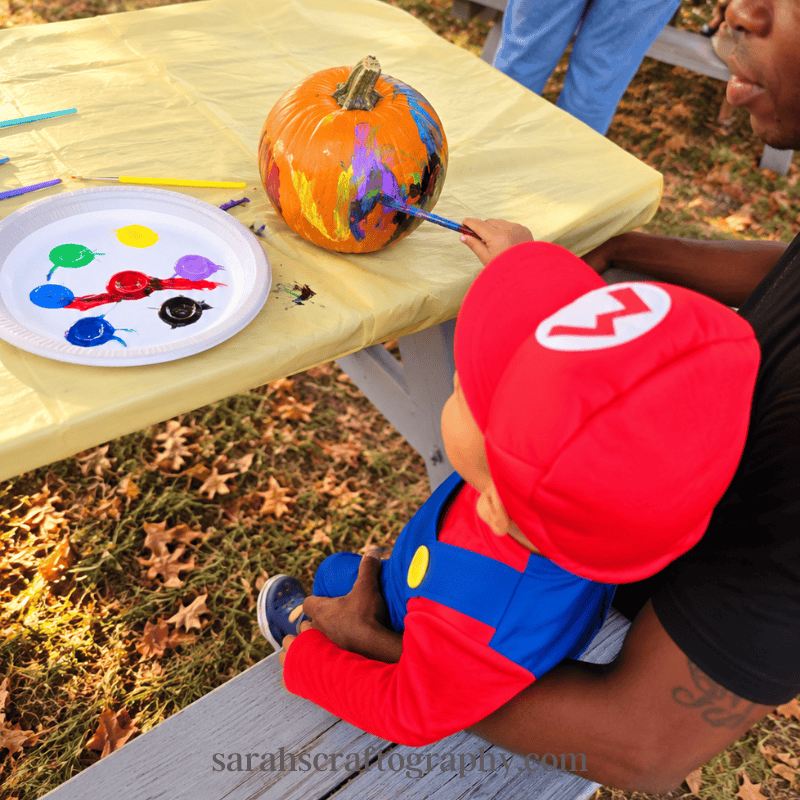
Other times it means painting.

And occasionally it means handing Mom the pumpkin and saying, “You get the guts out.”

What matters most to me is that my kids get to be part of the memory without feeling like they have to push through something uncomfortable just because that is how pumpkin carving is “supposed” to look.

Over the years, I have also learned that sensory preferences can change.

What one of my kids loved when they were little may be the very thing they avoid now, while something another child once could not tolerate may become something they enjoy with the right support.

That is what I want to talk about in this post: how we can make autism-friendly pumpkin carving fit the child instead of expecting the child to fit the tradition.

So grab the pumpkins, set out the paint, keep the hand-washing station close, and let’s make a little Halloween magic—sensory-friendly style.

Let’s begin decorating! 🎃

Autism-Friendly Pumpkin Carving Starts With the Child

After years of carving and decorating pumpkins with my own kids, I have seen firsthand just how different this tradition can look from one child to another.

When Trinity was little, I have a funny video of her pulling the insides out of a pumpkin and happily announcing, “I’ve got the pumpkin guts, ha ha ha.”

Now that she is older, she wants nothing to do with having pumpkin guts on her hands.

She would much rather decorate the outside with paint, stickers, markers, or whatever else we have available.

Alivia’s experience has almost gone in the opposite direction.

When she was younger, she would scream if she came into contact with the inside of a pumpkin because she did not like the feeling at all.

Today, she enjoys both carving and decorating, as long as she has a way to wash the pumpkin guts off her hands when she needs to.

Darnell gives us yet another version of pumpkin fun.

He likes decorating the outside and enjoys carving, but he does not want to touch the pumpkin guts.

Three kids, three different experiences, and even those experiences have changed as they have grown.

That is why I think the best autism-friendly pumpkin carving tradition begins by letting go of the idea that there is one “right” way to do it.

Pumpkin Carving Can Be a Full Sensory Experience

Pumpkin carving involves more sensory input than we sometimes realize.

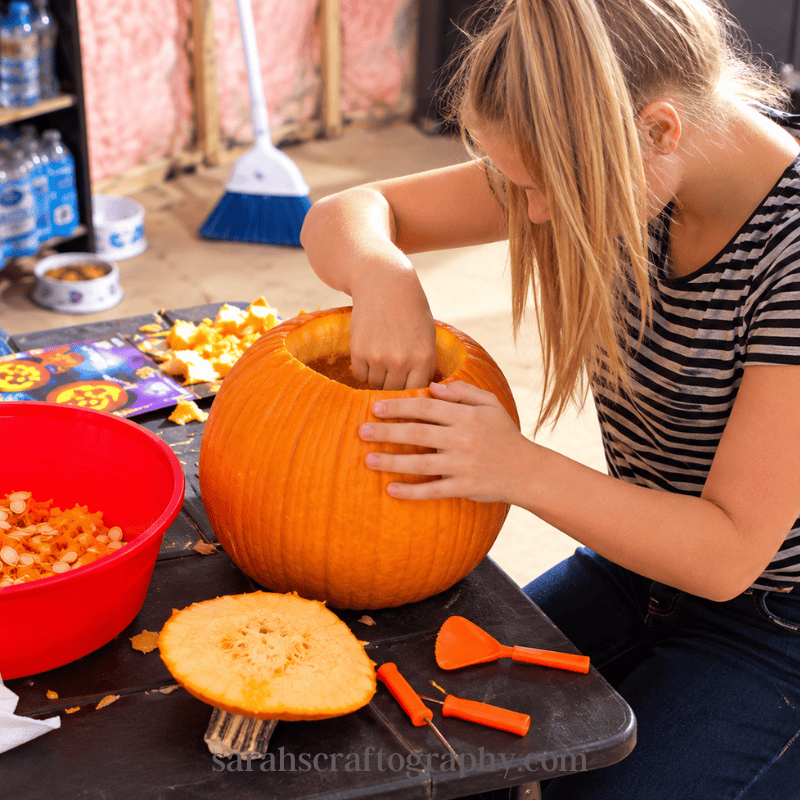
There is the slimy texture inside the pumpkin, its smell, the scraping sounds, the pressure of using tools, the mess on the table, and all the sights and sounds happening around the activity.

Autistic people can experience sensory input such as touch, smell, light, and sound more or less intensely, and those experiences vary greatly from one person to another.

The National Autistic Society also notes that sensory experiences can be mixed and can vary depending on things such as stress, tiredness, and the surrounding environment.

You can read more about autism and sensory processing from the National Autistic Society.

For pumpkin night, that means we should not assume what our child will enjoy based on another autistic child’s experience, a sibling’s reaction, or even what our own child enjoyed last year.

Trinity is my perfect reminder of that.

The little girl who once thought pumpkin guts were hilarious grew into a teenager who would rather keep them off her hands.

Alivia reminds me of the other side.

A child who once could not tolerate that texture may later decide she wants to participate when she knows she can clean her hands.

Do Not Make Tolerating Pumpkin Guts the Goal

I think this is one of the biggest things parents can take away from our experience.

The goal is not getting an autistic child to finally put their hand inside a pumpkin.

The goal is letting them be part of a family tradition in a way that feels comfortable and enjoyable to them.

If your child loves squishing pumpkin guts between their fingers, wonderful.

Using a spoon so none of it touches their skin is wonderful too.

They may want you to clean the entire pumpkin while they wait for the decorating part, and that counts too.

And if they never want the pumpkin cut open at all, hand them the paint.

Participation does not have to look the same for everyone.

Build Your Own Pumpkin Experience

Instead of announcing that everyone is going to carve pumpkins, I like the idea of breaking the tradition into choices.

Your child can participate in one step, several steps, or all of them.

  • Choose the pumpkin.
  • Wash or wipe down the outside.
  • Choose or draw the design.
  • Watch an adult cut the top.
  • Scoop with a spoon or pumpkin tool.
  • Touch the pumpkin pulp if they want to.
  • Help with age-appropriate carving steps.
  • Paint the outside.
  • Add stickers, markers, or decorations.
  • Choose where the finished pumpkin will be displayed.
  • Simply watch siblings or family members participate.

A child does not need to complete the whole list for pumpkin night to belong to them too.

Set Up a Hand-Washing Plan Before You Begin

One small thing can make a surprisingly big difference in our house: knowing there is a way to get clean.

Alivia can enjoy the messy part now, but she wants to be able to wash her hands when she is ready.

I would rather plan for that from the beginning than wait until she is uncomfortable and scrambling to get the texture off.

If you are carving near a sink, make sure the path to it is clear and have a towel ready.

If you are outside, plan how your child will clean up afterward and keep appropriate cleaning supplies nearby.

You can also place a trash bowl beside the pumpkin so the pulp has somewhere to go immediately.

For some children, simply knowing, “I can wash this off whenever I want,” may make trying the activity feel much more manageable.

Offer Ways to Carve Without Touching the Inside

Darnell proves that liking pumpkin carving does not automatically mean liking pumpkin guts.

He can enjoy the activity while wanting nothing to do with touching the inside.

Large spoons, pumpkin scoops, or other age-appropriate utensils can create distance between little hands and the texture.

Some children may prefer gloves or another comfortable barrier.

A parent or sibling can also do the scooping while the child handles the parts they actually enjoy.

If your child is curious about the pumpkin pulp but does not want direct contact, you could place some inside a securely sealed clear bag and let them decide whether they want to explore it through the bag.

None of these options should be used to pressure a child into tolerating a sensation that is distressing to them.

Remember That Smell and Sound Can Matter Too

Texture gets most of the attention when people talk about pumpkins and sensory needs, but touch is only one piece of the experience.

A freshly opened pumpkin has a smell that may be much stronger to one child than it seems to you.

Scraping the inside can create sounds a child dislikes.

Halloween music, siblings talking, adults giving instructions, costumes, bright lights, and a cluttered table can add even more sensory input.

Autism Central, an NHS-backed resource, explains that autistic people may notice sensations such as smells, sounds, and touch more intensely and that the surrounding sensory environment can contribute to overwhelm.

You can read its guidance on sensory differences and the sensory environment.

If pumpkin night starts becoming too much, sometimes the best accommodation is not another tool.

It may be turning off the music, clearing some clutter, moving to a quieter space, or letting your child take a break.

Painting a Pumpkin Still Counts

I really want parents to hear this one.

Painting a pumpkin is not the consolation prize for a child who “couldn’t” carve one.

It is pumpkin decorating.

It is creative.

It is festive.

And most importantly, it can be fun.

Trinity would now much rather decorate the outside of her pumpkin than dig through the inside.

Our family photos over the years show both sides of this tradition: messy carving days and colorful painted pumpkins.

Both belong in our memories.

No-carve options can include washable or child-appropriate paint, markers, stickers, foam shapes, googly eyes, ribbon, or other decorations that suit your child’s age and interests.

You can even put carving and decorating supplies out at the same time so the no-carve choices do not feel like a backup plan.

Let the child choose from the beginning.

Let Their Pumpkin Look Like Their Pumpkin

Kids do not need to create a perfect jack-o’-lantern face.

A painted pumpkin might be covered in colorful streaks that only make sense to the artist.

Somebody else may want a spooky face.

Another child may cover the entire pumpkin in stickers.

That freedom can be part of what makes the activity enjoyable.

Try asking, “What do you want your pumpkin to look like?” instead of handing over an example they are expected to copy.

If your child has a favorite character, color, animal, or special interest, that can become the inspiration.

The finished pumpkin does not have to match the rest of the porch.

Prepare for the Activity Before Pumpkin Night

Preparation can make the whole experience calmer, especially for a child who likes to know what is coming.

You might show your child the pumpkin and supplies earlier in the day and explain the basic steps.

Let them know which parts are optional.

If pictures help your child, make a simple visual sequence such as choose, decorate, clean up, and display.

Keep favorite sensory or calming items available if your child uses them.

Most of all, avoid building up pumpkin carving as something they are required to finish.

Knowing there is an exit can make an activity feel much safer.

I use the same idea throughout our other seasonal activities. You can find more options in my sensory-friendly Halloween ideas for kids, along with more ways to plan ahead in Preparing an Autistic Child for Halloween.

When Siblings Have Completely Different Sensory Needs

This is real life in our family.

One child may want to carve while another wants paint.

One may need clean hands immediately while somebody else is perfectly happy making a mess.

You do not have to choose one family method.

Set up different jobs or stations if that works better.

One child can design faces while another paints.

Someone can scoop while somebody else sorts seeds.

A younger child can decorate while an adult handles cutting.

When we stop expecting everybody to participate identically, it becomes much easier to create a tradition that includes everybody.

What If Your Child Changes Their Mind?

Let them.

This may be my favorite lesson from watching Trinity and Alivia grow.

What a child tolerated, loved, or avoided several years ago does not have to define what they do this year.

We can ask again without pressure.

“Do you want to scoop it this year, or would you rather decorate?”

Then we can believe the answer.

Sensory experiences are individual and can vary over time and depending on circumstances, so flexibility makes more sense than assuming last year’s preference is permanent.

It also teaches our kids that we are listening when they tell us what their bodies are comfortable with.

Keep Pumpkin Carving Safe

Making the activity sensory-friendly should never mean overlooking basic safety.

The American Academy of Pediatrics recommends that small children decorate pumpkins rather than carve them and that adults handle the cutting.

It also recommends battery-operated flameless candles, flashlights, or glow sticks as alternatives to open flames inside jack-o’-lanterns.

You can review its Halloween safety and pumpkin decorating guidance.

Match every tool and task to your child’s age and abilities, and supervise children closely around anything sharp.

If a child becomes overwhelmed, pause the activity before worrying about finishing the pumpkin.

When “I’m Done” Needs to Be Enough

A child might choose a pumpkin, paint three lines, and decide they are finished.

Another child may begin carving and discover that the smell is too much.

Maybe they thought they wanted to scoop the inside until they touched it.

That is okay.

We do not need to turn a family tradition into a test of endurance.

There is always another pumpkin, another craft, or another Halloween.

The memory I want my children to carry is not that Mom made them finish.

I want them to remember that we made room for them at the table.

Creating Halloween Traditions That Grow With Our Kids

Looking back at our old pumpkin pictures makes me smile because they capture more than Halloween crafts.

They show different ages, different reactions, and different versions of my kids.

I can remember little Trinity laughing about having pumpkin guts on her hands.

I can remember a younger Alivia wanting absolutely nothing to do with that feeling.

Now those preferences look different.

Darnell is creating his own version of the tradition too.

That is why autism-friendly pumpkin carving is not really about finding the perfect sensory trick.

It is about paying attention to the child standing in front of us right now.

Give them choices.

Keep the sink nearby.

Bring out the paint.

Let somebody else scoop the guts.

Change the plan when the plan stops working.

Let the Memory Matter More Than the Finished Pumpkin

Most of all, let the goal be connection instead of compliance.

Your pumpkin may end up carved, painted, sticker-covered, half-finished, or completely untouched.

Your child still gets to belong in the family memory.

At the end of the night, the best pumpkin is not necessarily the one with the cleanest carving or the cutest face.

It is the one connected to a memory your child was actually able to enjoy.

Maybe that memory includes sticky pumpkin guts and lots of laughter.

Maybe it includes paint-covered brushes, stickers scattered across the table, or Mom doing all the scooping.

However Halloween looks in your home, I hope you give yourself and your child permission to make the tradition your own.

If communication is another part of your Halloween planning, you can also read Halloween Voices: AAC Boards That Empower for ideas that support children who communicate in different ways.

How does your family make pumpkin decorating work for different sensory needs?

I would love to hear what works in your home, so leave a comment and share your favorite sensory-friendly pumpkin ideas with us.

If this post helped you, please like it and share it with another parent who may need a little encouragement to do Halloween differently this year.

And if you would like more real-life parenting, autism-friendly ideas, family activities, faith, and encouragement from Sarah’s Craftography, be sure to subscribe to my email list so you do not miss what is coming next.

Let’s keep creating traditions where our kids do not just participate—they know they belong. 🎃

Filed Under: Autism, Autism in Everyday Life, Sensory Experiences

Resilience in Autistic Teens: Beyond Grades

by Sarah Stults Leave a Comment

Have you ever wondered what resilience in autistic teens really looks like during an ordinary high school day?

From the outside, everything may look fine.

The grades are there. Attendance is steady. Assignments get completed, and teachers see a capable student sitting in their classroom.

What they may not see is everything happening underneath.

For my daughter Trinity, getting through school can mean navigating noise, changing expectations, disrupted routines, social situations, anxiety, and a level of exhaustion that does not show up on a report card.

By the time the final bell rings, sometimes she has very little left to give.

As her mom, I have learned that success and struggle can exist at the same time. A teenager can be intelligent, capable, funny, creative, and doing well academically while still needing significant support.

That is why I want to talk about resilience in autistic teens beyond grades and attendance. Sometimes the greatest effort our kids make is the part nobody else gets to see.

What School Takes Out of Her

High school is a lot.

There is noise, movement, expectations, different personalities, changing classrooms, schedules, assignments, and social situations to navigate throughout the day.

For Trinity, the hardest part usually comes after lunch.

Something about that stretch of the school day seems to drain whatever energy she has left. When she has to leave for an appointment and return afterward, things can become even harder.

Her rhythm has been interrupted.

Getting it back takes real effort.

Coming Home to Recover

Once Trinity gets home, she usually goes straight to her room and puts on music.

Sometimes fifteen minutes is enough.

On harder days, she needs much longer.

I have learned to give her that time.

She is not being rude. She is not avoiding the family, and I am not allowing her to get out of something simply because she does not feel like doing it.

For her, that time is regulation.

She has spent hours navigating an environment that asks a lot from her. Home needs to be somewhere she can finally exhale.

Understanding resilience in autistic teens also means understanding that being resilient does not mean never needing to recover.

Sometimes strength looks like knowing when you have had enough.

Friendship Has Not Always Been Easy

The social side of school brings its own challenges.

More recently, Trinity has made friends at school, and I am thankful for that.

At the same time, she can become annoyed or feel disconnected because she does not always relate to them.

She enjoys seeing her friends at school but does not really want to hang out with them afterward.

I have learned that this is okay too.

There were earlier years when Trinity would tell me she had no friends.

Those words stayed with me.

It was not necessarily that nobody was ever around her.

The relationships she had did not always feel genuine or safe to her.

Freshman year was particularly difficult.

Trinity thought she had found a friend, only to discover that the other child was using her to steal items from a store.

Other friendships have included bullying or hurtful comments about the way she is.

Those experiences affect trust.

For Trinity, they have made relationships something she approaches cautiously.

We sometimes measure teenagers’ social lives by how many friends they have, how often they go somewhere, or whether they attend all the typical teenage events.

I am learning not to measure hers that way.

A smaller social world is not automatically an unhappy one.

Her Interests Are Part of Her Strength

One of my favorite things is seeing Trinity in the spaces where she feels completely comfortable being herself.

She loves gaming, music, and writing.

Trinity has played violin and viola, and music has always been important to her.

What she listens to changes with her mood, and sometimes music can help when emotions are difficult to put into words.

Gaming is another place where she shines.

She loves Roblox, The Sims 3, and Dreamlight Valley.

To someone looking in from the outside, they are simply video games.

I see something more.

These are structured worlds where rules make sense, creativity is encouraged, and Trinity has control over what happens next.

In those spaces, she is confident.

Her creativity comes through in the worlds she builds and the choices she makes.

I get to see how capable she is.

Most importantly, she is herself.

When we discuss resilience in autistic teens, I do not want the conversation to focus exclusively on difficulties.

Our kids are more than accommodations, IEPs, sensory needs, anxiety, or struggles at school.

What brings them joy matters too.

When Anxiety Becomes Physical

Anxiety has been very real in our home.

In the past, Trinity experienced meltdowns.

At other times she would shut down, avoid people, or become physically sick.

Her anxiety has even caused her to vomit.

Sleep has also been difficult for her, and when sleep is off, everything else becomes harder.

Certain times seem to demand more from her than others.

Testing season is hard.

A new semester can be hard.

Schedule changes can throw things off.

Social events may require more recovery afterward.

Those are often the times when Trinity needs to come home and recover emotionally and physically.

Someone seeing her at school might simply see an intelligent student who completed her work.

They do not necessarily see what happens afterward.

That is something parenting Trinity has taught me: being able to accomplish something does not automatically mean accomplishing it was easy.

Sometimes the real question should not be, “Can she do it?”

We should also ask, “What does doing it cost her?”

Smart Kids Can Still Need Support

One comment changed the way I thought about this.

Someone questioned why Trinity needed an IEP because she was smart.

That stayed with me.

Being intelligent does not erase a disability.

Good grades do not automatically erase the need for accommodations either.

Two autistic students can also have completely different experiences in the same school. I have written more about those individual differences and the ways autism can shape daily life in Family Insights: Unraveling the Unique Tapestry of Autism.

One may be unable to function well in a traditional classroom. Another may appear to function successfully while using nearly everything they have to make it through the day.

Both deserve support.

A child’s struggles should not have to become catastrophic before adults believe them.

That is something I wish more people understood about resilience in autistic teens.

Support is not evidence that a teenager is weak.

Sometimes the support is exactly what allows them to succeed.

Resilience Does Not Mean Doing It Alone

We tend to think resilience means pushing through.

Try harder.

Do not quit.

Keep going.

Those messages are not always bad, but I have learned that resilience can look very different.

Sometimes resilience means recognizing that you are overwhelmed.

It might mean asking for a break, using an accommodation, following a predictable routine, putting on headphones, stepping away from an overwhelming situation, or coming home and closing your bedroom door for a while. We have also learned how much sensory-friendly choices can matter during overwhelming situations, something I share more about in Sensory-Friendly Halloween Ideas Kids Will Love.

Needing those things does not erase everything it took to get through the day.

I do not want Trinity to spend adulthood believing independence means never needing another person.

Real independence also includes understanding yourself.

It means knowing your limits, communicating your needs, recognizing unsafe situations, making choices, setting boundaries, and knowing when to ask someone trustworthy for help.

Those are skills too.

Growing Up Does Not Have One Timeline

Right now, Trinity has no interest in dating.

Her focus is school and passing.

She does not like the idea of someone touching her or being physically close to her, and she is very clear about that.

I respect her boundary.

Growing up does not have one correct timeline.

There is not an age when someone must start dating to prove they are developing normally.

She does not have to want a relationship simply because other teenagers do.

As Trinity gets older, I care much more about whether she understands her own boundaries than whether she reaches somebody else’s idea of a milestone.

I want her to know she can say no.

She can decide what feels comfortable.

She can take her time.

Knowing what you do not want is valuable too.

The Fear I Carry as Her Mom

Like most parents, I worry.

I think about Trinity’s happiness, safety, future, independence, and self-esteem.

Now that high school is getting closer to ending, some of those thoughts carry more weight.

One question is especially difficult.

When I am no longer able to take care of her, who will?

I do not have an easy answer.

What I do know is that preparing Trinity for adulthood does not mean suddenly expecting her to navigate everything alone.

Anytime she calls me, I am there.

I advocate when she needs me.

When she struggles to express something or is not being heard, I help make sure her needs are not overlooked.

At the same time, I want her to know that her own voice matters.

My job is not to replace that voice.

It is to help her learn how to use it, stand beside her when she needs support, and speak up when she truly cannot.

I want Trinity to know her boundaries, recognize when something is not right, and understand that asking for help does not mean she has failed at independence.

What Grades Cannot Tell Us

Grades tell us something.

So does attendance.

Neither tells us everything.

A report card cannot show how much energy it took to walk into a noisy classroom after barely sleeping the night before.

Attendance does not reveal the effort involved in managing emotions throughout a school day.

A test score cannot tell us how exhausting the social part of school was.

Those numbers certainly do not tell us that a teenager held herself together until she got home, closed her bedroom door, turned on her music, and finally felt safe enough to stop trying so hard.

That is the part I want people to remember.

Resilience in autistic teens does not always look impressive from the outside.

Sometimes nobody sees it at all.

Capable and Struggling Can Coexist

I wish more people understood this.

  • Smart and disabled can exist at the same time.
  • Independent and supported can exist at the same time.
  • Happy and overwhelmed can exist at the same time.
  • Capable and struggling can exist at the same time.

Those things do not cancel one another out.

Perhaps we also need to stop assuming that because someone can do something, doing it must be easy.

There is a difference between completing something and completing it without an enormous personal cost.

That difference matters when we are making decisions about accommodations, school expectations, recovery time, and support.

Instead of asking only, “Can she do this?” maybe we should start asking, “What does it take for her to do this?”

That question has changed the way I look at my daughter.

God Did Not Make Her by Accident

As a Christian mom, there is something else I want Trinity to understand.

She is not a mistake.

I do not believe God accidentally made her different and now our job is to turn her into somebody else.

“I praise you because I am fearfully and wonderfully made; your works are wonderful, I know that full well.” — Psalm 139:14 (NIV)

That does not mean life will always be easy.

It does not mean we ignore struggles or pretend support is not necessary.

For me, it means Trinity’s worth was never dependent on how easily she could fit into a classroom, make friends, tolerate noise, reach a milestone, or appear like everyone else.

Her value is not measured by how well she can hide the things that make life harder.

I want to help her grow.

I want to prepare her for adulthood.

There will always be skills we work on and challenges we face.

But growth is different from trying to erase who someone is.

My daughter does not need to become somebody else to be worthy of love, dignity, patience, opportunity, and belonging.

A Final Word

This journey is not about fixing our kids.

It is about loving them as they are while helping them navigate a world that does not always make room for differences.

When I think about resilience in autistic teens, I do not picture someone endlessly pushing through without help.

Sometimes resilience looks like making it through a noisy school day and coming home to put on music.

It can look like trying to trust again after a friendship hurt you.

Other times, it is recognizing that you do not want to socialize after school, asking for an accommodation, setting a boundary, or simply surviving a day that demanded more from you than anyone realized.

That is the resilience I see in Trinity.

Her grades can tell you what she learned.

Attendance records can tell you whether she showed up.

Neither can tell you what it took for her to do it.

If you are raising an autistic teen, your child’s story may look very different from ours. That is exactly why listening to autistic teenagers as individuals matters.

Do not measure their strength only by how successfully they can appear like everyone else.

Some days resilience will be obvious.

Other days, it might happen quietly behind a closed bedroom door with music playing after an exhausting day.

Both count.

If you are walking this road as a parent, I would love to hear from you.

What is something about your autistic teen that you wish teachers, family members, or the rest of the world understood?

Share your experience in the comments if you feel comfortable.

You never know when your family’s story may help another parent feel a little less alone.

And if you know someone raising an autistic teen, please share this post with them.

Sometimes the greatest thing we can give our kids is not another push to be stronger.

It is a safe place where they do not have to be strong for a little while.

Filed Under: Autism, Autism in Everyday Life, Family Life

Domestic Violence and Homelessness

09/05/2026 by Sarah Stults Leave a Comment

Have you ever wondered how domestic violence and homelessness are connected?

For many survivors, finding safety can mean losing almost everything they once called home.

We hear people say, “Why doesn’t she just leave?” all the time.

What we don’t talk about nearly enough is what happens after she does.

Leaving may be the first step toward safety, but it can also be the beginning of an entirely different fight.

Where will she live?

How will she support her children?

What happens if she has no money, no childcare, damaged credit, missing documents, or nowhere safe to go?

There is so much more happening behind the words “just leave” than most people realize.

So, let’s talk about that part.

Let’s talk about what leaving can actually look like, why domestic violence and homelessness are so often connected, the systems survivors have to navigate while trying to rebuild, and most importantly, what we can do to make that road a little easier for the person walking it.

Why Doesn’t She Just Leave?

This is probably one of the most common questions asked about domestic violence.

I wish leaving were that simple.

Walking away from an abusive relationship isn’t only an emotional decision.

There are practical questions attached to almost every part of it.

Where will I live?

How will I pay rent?

What will happen to my children?

Can I afford childcare?

Will I still have a job?

Do I have transportation?

Can I safely take my belongings?

What happens to our pets?

Will the person I’m leaving come looking for me?

Do I have enough money for a security deposit?

Can I even qualify for an apartment?

Those aren’t excuses. They are real problems requiring real solutions.

An abusive person may also have spent years making sure their partner isn’t in a good position to leave.

Isolation, financial control, damaged credit, threats, lack of transportation, and fear can all make walking out that door incredibly complicated.

That is one reason domestic violence and homelessness can become so closely connected.

We need to stop reducing such a complicated situation to the words “just leave.”

Financial Abuse Can Follow You Out the Door

Not every form of abuse leaves a visible bruise.

Financial abuse can involve controlling access to money, interfering with employment, taking someone’s paycheck, refusing access to bank accounts, creating debt, damaging credit, hiding financial information, or making someone account for every dollar spent.

The relationship may end while the financial damage remains.

Now imagine trying to rent an apartment.

A landlord may want proof of income, rental history, references, a deposit, application fees, and a credit check.

An application doesn’t tell your story.

It cannot explain that your credit was damaged while you were being abused.

Numbers on a page don’t show that someone controlled your money.

Rental history may not explain why you had to leave somewhere suddenly.

Nothing on that application tells a landlord how hard you worked to get yourself and your children somewhere safe.

A survivor may be trying to rebuild employment, credit, savings, transportation, childcare, and housing all at once while also healing from trauma.

That is an enormous amount to carry, and it is another part of the connection between domestic violence and homelessness that people often don’t see.

Sometimes You Leave With Almost Nothing

There is an idea that leaving domestic violence looks like someone carefully packing suitcases, arranging transportation, collecting paperwork, and calmly walking out the door.

Sometimes a survivor does have time to prepare.

Other times, the safest opportunity to leave comes suddenly.

You may walk out with your purse, your phone, whatever clothes you’re wearing, and your children.

When immediate safety becomes the priority, nobody should expect a survivor to stop and pack a perfectly organized moving box.

Think About Everything a Family May Leave Behind

Look around your own home for a minute.

Beds.

Towels.

Dishes.

Cleaning supplies.

Clothing.

Food.

Toiletries.

Pots and pans.

School supplies.

Furniture.

Family photographs.

Children’s favorite toys.

Those ordinary things may not seem particularly valuable until you have to replace almost all of them at once.

Finding four walls and a roof is an incredible step forward.

Still, an empty apartment has to become a home.

That is another part of the connection between domestic violence and homelessness that we can easily overlook.

Finding housing doesn’t instantly replace everything a family lost while escaping.

Even Proving Who You Are Can Become a Battle

Then comes something people rarely mention when discussing domestic violence and homelessness.

Paperwork.

Nearly every assistance program requires some type of documentation.

Depending on what you’re applying for, you may need identification, birth certificates, Social Security information, proof of income, information about your children, school records, custody paperwork, rental information, bank statements, insurance information, or other documents.

That sounds simple when everything is sitting safely inside a filing cabinet.

Domestic violence isn’t always that simple.

An abusive person may deliberately control or withhold important documents.

Someone else might have access to the bank account, insurance information, lease, vehicle paperwork, or children’s records.

Other survivors simply don’t have time to grab any of it.

If you are running because you’re afraid for your life or your children’s safety, you’re probably not standing in the hallway wondering whether you remembered everyone’s birth certificate.

Your focus is getting out.

I want to make something very clear.

If you are in immediate danger, do not stay in an unsafe situation because you don’t have every document you think you might need.

Documents can be replaced.

You cannot.

If You Can Safely Prepare, It Can Make Things Easier

When you have the opportunity to plan before leaving, and doing so doesn’t increase your danger, gathering important information can make some of the next steps easier.

Helpful documents may include:

  • identification
  • birth certificates for yourself and your children
  • Social Security cards or numbers
  • health insurance or Medicaid information
  • school records
  • custody or court documents
  • pay stubs or other proof of income
  • bank information you can safely access
  • vehicle registration and insurance
  • lease or housing paperwork
  • medical information
  • prescription information
  • documentation for benefits you already receive
  • passports or immigration documents when applicable
  • protective orders or other important legal paperwork

You may not have all of those things.

That’s okay.

This isn’t another impossible checklist someone has to complete before she is “ready” to leave. It’s simply something to consider when preparing is possible.

Safety Comes Before Paperwork

When it is safe to do so, copies of important documents may sometimes be kept with someone you trust.

Digital copies can also help, but shared phones, computers, email accounts, cloud storage, and other online accounts may be monitored.

A trained domestic violence advocate can help you create a safety plan based on your individual circumstances.

I also talk more about preparing and things to consider when looking for a shelter in my post, “Picking A Domestic Violence Shelter.”

Planning ahead can help tremendously, but not everybody gets that opportunity.

Prepare when you safely can.

Get out when you have to.

The paperwork can come later.

Missing Documents Can Slow Down Everything Else

This is one of the less obvious ways domestic violence and homelessness can become connected.

You finally get somewhere safe, but now you need permanent housing.

There’s paperwork.

Childcare becomes necessary so you can work, which brings more forms and requirements.

Another benefit may require something else.

Perhaps one document has to be replaced before you can even complete an application for another program.

Meanwhile, you’re parenting, searching for housing, trying to earn money, attending appointments, finding transportation, recovering from trauma, and figuring out an entirely new life.

A person can spend hours simply proving she qualifies for help.

That doesn’t mean she’s irresponsible.

Sometimes it means she escaped.

Government Assistance Isn’t as Simple as People Think

People who have never needed assistance sometimes talk about these programs as though help is sitting there waiting for anyone who asks.

“She can get Section 8.”

“Childcare assistance is available.”

“Food assistance can help.”

“She can go to a shelter.”

Yes, these programs exist.

Thank God they do.

They have helped countless families, including mine.

Knowing a program exists and successfully navigating it, however, are two completely different things.

I have been the mother filling out applications and gathering documents.

At other times, I have spent hours making phone calls or trying to understand what needed to happen next.

Landlords have been part of the process too.

At different points in my life, I have needed childcare assistance and housing assistance.

I have also experienced homelessness and lived in a domestic violence shelter.

There is a reality on the other side of these programs that people who have never needed them don’t always see.

Understanding that reality matters if we really want to understand domestic violence and homelessness.

Waiting for Housing When You Need It Now

Government-assisted housing can be life-changing for a family.

The problem is that needing housing doesn’t mean housing is immediately available.

Here in Cincinnati, CMHA’s Housing Choice Voucher waiting list is currently closed.

For people selected for the 2026 Housing Choice Voucher waiting list through the lottery, CMHA currently estimates that the wait for an eligibility appointment can range from six months to three years. The actual wait depends on things such as placement on the waiting list and available funding.

Now think about that from the perspective of someone experiencing domestic violence.

You don’t get to schedule a crisis around a housing waiting list.

An abusive person cannot be told, “I need you to stop hurting me until my housing assistance becomes available.”

A survivor may need somewhere safe tonight even though long-term housing assistance could be months or years away.

That gap matters.

It is also one of the reasons conversations about domestic violence and homelessness have to include what happens between leaving abuse and obtaining permanent housing.

Shelters, family, friends, churches, nonprofits, homelessness programs, and other community resources can become incredibly important during that waiting period.

Housing Choice Vouchers and Public Housing Aren’t the Same Thing

People often use “Section 8,” “government housing,” “public housing,” and “housing assistance” as though they all mean the same thing.

They don’t.

A Housing Choice Voucher generally allows an eligible family to find qualifying privately owned housing.

The family has to locate the property, and the landlord has to participate in the program.

Public or subsidized housing properties can have their own application processes and waiting lists.

CMHA’s public housing process, for example, allows applicants to select preferred properties and join waiting lists based on the appropriate bedroom size.

When an applicant reaches the next stage, CMHA completes additional eligibility steps before offering an available unit.

Why does that distinction matter?

Because one waiting list being closed doesn’t necessarily mean every housing option is closed.

Ask questions.

Find out which programs are accepting applications.

Check whether there are property-based programs you may qualify for.

Another type of housing assistance may also be available.

You may still encounter waiting lists and closed programs.

Hearing “no” more than once is possible.

Keep asking.

A Housing Voucher Still Isn’t a Home

Finally receiving a Housing Choice Voucher can feel like an enormous victory.

It is.

Still, a voucher and an apartment are not the same thing.

CMHA currently issues vouchers for 90 days.

During that time, the family has to find a suitable property, locate a landlord willing to work with the program, complete the necessary paperwork, and get through the approval and inspection process.

Meanwhile, the voucher clock keeps running.

CMHA currently tells voucher holders who have difficulty finding a unit that they can request an extension within seven days before their voucher expires.

CMHA reviews those extension requests on a case-by-case basis.

I have personally lived with that pressure.

Ninety days may sound like plenty of time when you already have somewhere safe to live.

The same ninety days feel very different when they may determine whether your children have a permanent home.

Reaching that final week knowing you can ask for more time, without knowing for certain whether you’ll receive it, brings another kind of fear.

For survivors caught between domestic violence and homelessness, that uncertainty can feel enormous.

A program designed to create housing stability shouldn’t leave families feeling like they are racing a clock toward homelessness.

The Housing Search Is More Than Finding an Apartment Online

Receiving the voucher is really the beginning of another process.

First, you have to find an available property that works with the program.

The landlord has paperwork to complete.

Next, the proposed unit has to meet program requirements and go through the required inspection process.

Only then can the assistance turn into actual housing.

That is one reason I get frustrated when people talk about receiving a voucher as though somebody just handed you an apartment.

They didn’t.

What you received was an opportunity to find one.

There is a difference.

CMHA does currently offer “Your Rental Connection” events on Tuesdays from 1:00 p.m. to 3:00 p.m., where approved applicants can meet potential landlords.

Resources like that are worth knowing about.

Anything that connects families directly with landlords willing to participate in the program can make the housing search a little easier.

We need more solutions that help people actually turn their vouchers into homes.

Landlords Have More Power in This Process Than People Realize

Receiving a voucher doesn’t create an apartment.

You still need someone willing to rent one to you.

This is something I have personally struggled with.

Someone coming out of domestic violence and homelessness may already have fewer housing options because of income, credit, rental history, debt, or other circumstances.

Add an expiring voucher to that situation, and desperation can begin changing the balance of power.

There is another side of this conversation that I think we need to be willing to acknowledge.

Vulnerable people can become targets for exploitation.

A person who knows a tenant has nowhere else to go may also realize that tenant is more likely to tolerate things another renter wouldn’t.

I have personally seen people with very few options living in properties that needed significant work or accepting conditions that someone with more money and more choices probably would not accept.

There have also been situations where vulnerable people become dependent on the same person for housing and employment.

Someone’s desperation should never become another person’s opportunity to take advantage of them.

Having Fewer Choices Doesn’t Mean You Deserve Less

A person shouldn’t have to be grateful for unsafe or poorly maintained housing simply because she was previously homeless.

Having a voucher doesn’t mean you should accept anything you’re offered.

Poverty doesn’t take away your right to dignity.

Surviving domestic violence doesn’t mean you should be expected to tolerate another person controlling or taking advantage of you.

That last part matters tremendously.

A survivor fought to get away from one situation where somebody held enormous power over her. She shouldn’t have to enter another one simply because she needs somewhere to live.

I’ve personally dealt with serious landlord problems while receiving housing assistance.

My situation eventually ended up in court after I exercised my rights as a tenant.

During that experience, I did not feel protected by CMHA when I needed that protection.

It changed how I see the system.

At the same time, I don’t believe every landlord is bad.

Some landlords participate in housing programs, maintain their properties, treat tenants respectfully, make repairs, and provide families with decent places to live.

We need more of them.

People working inside housing programs can genuinely care about the families they serve too.

Both things can be true.

The goal should be making the system work better.

Being a Landlord Can Be a Form of Service Too

I don’t believe making money from rental property is wrong.

Landlords invest money, pay expenses, maintain properties, take risks, and deserve fair compensation.

Earning an income isn’t the problem.

The problem comes when somebody’s vulnerability becomes an excuse to give them less while taking as much as possible.

Luke 6:31 says:

“Do to others as you would have them do to you.” — Luke 6:31 (NIV)

That applies to business too.

If you wouldn’t want your own children living in a home with serious health or safety problems, another mother’s children shouldn’t be expected to live that way.

Likewise, concerns you would want taken seriously as a tenant deserve the same consideration when they come from someone receiving housing assistance.

A person’s income doesn’t change God’s standard for how we treat one another.

When domestic violence and homelessness have already left a family with fewer choices, a good landlord can actually become part of that family’s path toward stability.

Keep Records When You Can

After everything I have experienced, this is one practical piece of advice I would give anyone navigating housing assistance, childcare assistance, or other benefit programs.

Keep records whenever you safely can.

Save emails and notices.

Make copies of applications and forms.

Write down the dates of important phone calls and, when possible, the name of the person you spoke with.

Anything involving your voucher, lease, inspection, benefits, childcare, income, or other assistance may be worth keeping.

If you submit something important online, save whatever confirmation the system provides.

When you’re already overwhelmed, paperwork can easily turn into a pile you promise yourself you’ll deal with later.

I understand that.

Unfortunately, there may come a time when you need to remember exactly when something happened or show that you submitted something.

Having your own records can help.

Safety still comes first.

If keeping physical paperwork or electronic records could put you in danger because an abusive person may find them, talk with a domestic violence advocate about safer ways to preserve important information.

Poverty Can Become a Full-Time Administrative Job

This is something I wish more people understood.

Being poor can take an incredible amount of work.

Rebuilding after domestic violence and homelessness can too.

Applications have to be completed. Families need to gather documents and provide proof of income. Offices require phone calls, and sometimes those calls mean spending long stretches of time on hold.

Meanwhile, emails need checking while appointments, housing searches, transportation, childcare, work, parenting, trauma, and deadlines all compete for attention.

One program may require something completely different from another.

Everything Affects Something Else

Housing affects childcare.

Without childcare, employment can become difficult.

Changes in employment affect income, which can then affect benefits.

Transportation determines whether someone can get to work in the first place.

Nothing exists in a neat little box.

Then society looks at the person struggling through all of this and tells her she needs to “get on her feet.”

She may be working harder to get there than anyone realizes.

That complicated web is another reason domestic violence and homelessness cannot be solved by simply handing someone a phone number and assuming everything else will fall into place.

Childcare Can Become Another Catch-22

This part is personal for me too.

When I was homeless and living in a domestic violence shelter, I received childcare assistance.

I needed it.

Childcare wasn’t a luxury. It was one of the things that made it possible for me to work toward rebuilding my life.

Eventually, I got housing.

At that point, I was doing exactly what we tell people receiving assistance that we want them to do: trying to become more stable, take care of my children, improve our situation, and move forward.

You would think that would be when things became easier.

Instead, I found myself fighting another battle.

I lost my childcare assistance and was told I first needed to prove my income.

Think about how backwards that can feel when you’re the parent actually living it.

Childcare allows you to work.

Employment provides income.

That income helps maintain housing.

Without childcare, though, how exactly is a parent supposed to go to work to earn it?

That is the catch-22 families can find themselves facing.

For survivors rebuilding after domestic violence and homelessness, losing one form of support can threaten progress in several other areas at once.

Now Add the Actual Cost of Childcare

This conversation becomes even more important when we look at what childcare actually costs in Ohio.

Recent Ohio data shows that infant care typically costs more than $13,000 a year, while preschool care costs more than $10,000 a year.

For a family with two children, childcare takes an average of about 29% of household income in Ohio.

One recent analysis put the average cost of center-based childcare for an infant and a four-year-old at approximately $25,532 per year.

That works out to more than $2,100 a month.

Consider what that means for someone rebuilding from domestic violence and homelessness.

A survivor may have just left an abusive relationship with damaged credit, little or no savings, and very few belongings.

Finding somewhere to live is only the beginning.

Rent comes first, followed by utilities, food, transportation, clothing, household supplies, and possibly legal expenses. Debt from the abusive relationship may still exist too.

Now add potentially thousands of dollars a month for childcare.

How is someone supposed to become financially independent if going to work requires paying an amount she cannot possibly afford before she has had the chance to become financially stable?

This is why childcare assistance matters.

It isn’t simply somebody else “paying for a babysitter.”

For some families, childcare assistance makes employment possible in the first place.

Childcare Is Part of Housing Stability Too

We tend to put all of these needs into separate boxes.

Housing becomes one program.

Childcare falls under another.

Food assistance sits somewhere else, while employment gets treated as something completely separate.

Real life doesn’t work that way.

Losing childcare may cause a mother to lose work hours. Reduced hours can mean less income, and less money makes paying rent harder.

Eventually, that chain reaction can put a family at risk of homelessness again.

That possibility becomes particularly important when talking about domestic violence and homelessness because a survivor may have fought incredibly hard to establish a safe home.

Losing one piece of support can threaten everything she has been building.

Stability Has to Be the Goal

That’s why I believe we need to look at the whole family when we’re talking about helping people become independent.

Getting somebody out of a shelter shouldn’t be the final goal.

We should want her to remain safely housed, maintain employment, have safe childcare, build savings, and eventually need less assistance because she has actually become financially stable.

You cannot build stability by constantly pulling pieces out from underneath someone while she is still trying to stand.

Getting Better Shouldn’t Make Life Harder

There can be an uncomfortable place between poverty and financial independence.

A parent gets a job.

Her income increases.

Then a benefit changes, and suddenly she is responsible for an expense that the small increase in her paycheck doesn’t come close to covering.

On paper, she is doing better.

In her bank account, she may actually be worse off.

Childcare is a perfect example of why that matters.

If a mother earns a little too much for one form of assistance but full-price childcare could cost her more than $1,000 a month for one young child, that isn’t a small adjustment to the family budget.

For two young children, the cost can rival or even exceed what many families spend on housing.

We should want people to become independent.

I believe in working, taking responsibility, learning new skills, budgeting, and building a stable future when someone is able to do those things.

Assistance should help create that path rather than becoming a cliff.

There shouldn’t be shame in using the bridge while you’re still crossing it.

Once somebody begins reaching the other side, we should be careful not to pull that bridge away before her feet are actually on solid ground.

Breaking the cycle of domestic violence and homelessness requires more than helping someone survive the initial crisis. It means giving families a realistic opportunity to become stable afterward.

The Stigma Around Assistance Needs to Stop

This is where I think we need to look at ourselves too.

People make comments about “Section 8 people.”

Families using food assistance get judged.

Public housing is sometimes treated like a character flaw.

A mother receiving childcare assistance may hear somebody complain that another person is paying to raise her children.

You have no idea what brought someone to that place.

Maybe she escaped an abusive husband.

Perhaps he controlled all the money.

Someone else could have lost almost everything when she left.

Another mother may have spent months in a shelter trying desperately to keep her children safe.

Receiving assistance doesn’t tell you whether somebody is hardworking, responsible, loving, intelligent, faithful, or determined.

It tells you she needed help.

That’s it.

Domestic violence and homelessness can happen to people whose lives once looked completely different. Needing help during that season should never become someone’s entire identity.

We Need to Stop Judging Where Someone Lives Too

An address doesn’t tell you somebody’s worth.

Behind the doors of subsidized housing are ordinary families.

One mother may be making dinner while children do homework nearby.

Someone else is getting ready for work.

A family could be celebrating a birthday.

Down the hall, a little boy might be playing with his toys on the living room floor.

Somewhere, a survivor may be sleeping peacefully for the first time in months.

A home doesn’t become less meaningful because housing assistance helps pay the rent.

For someone who has experienced domestic violence and homelessness, those walls may represent something money cannot measure.

Safety.

How Domestic Violence and Homelessness Affect Children

My heart especially goes to the children because they didn’t choose any of this.

They didn’t choose the violence, and leaving home wasn’t their decision.

A child didn’t decide to leave favorite toys behind, sleep somewhere unfamiliar, change schools or routines, leave friends, or listen to adults whisper about things they don’t understand.

Younger children may ask when they’re going home.

Older children sometimes understand far more than adults realize.

Some become quiet, while others act out.

School can become harder because concentrating on spelling words or math problems isn’t easy when your entire world feels uncertain.

Meanwhile, their parent is trying to reassure them while privately wondering how she’s going to make everything okay.

Sometimes survival doesn’t look organized.

Dinner may be whatever is easiest.

Tears might come unexpectedly, and everybody may be exhausted.

Healing doesn’t require a family to pretend everything is fine.

Children need safety, love, stability, patience, and time.

Little by little, ordinary life can begin feeling ordinary again.

Emergency Shelter Can Be the Beginning

Domestic violence shelters save lives.

They can provide somewhere safe for survivors and their children to go while figuring out what comes next.

A shelter can also offer something incredibly important that a friend’s couch or hotel room may not provide: people who understand domestic violence and know how to help someone navigate the next steps.

Here in Greater Cincinnati, YWCA provides domestic violence crisis services, safety planning, emergency shelter, advocacy, children’s programming, housing support, work support, and connections to other resources.

Emergency shelter isn’t meant to be the end of the journey.

Families still need permanent housing.

Employment may need to be rebuilt.

Children need stability.

Finances and legal issues may require attention too.

Trauma doesn’t disappear simply because the immediate danger is over.

Getting through tonight matters.

So does helping someone reach a point where she no longer has to wonder where her family will be sleeping six months from now.

That long-term stability has to be part of our conversation about domestic violence and homelessness.

Cincinnati’s Central Access Point Is Another Place to Start

People experiencing homelessness or at risk of homelessness in Hamilton County should also know about the Central Access Point, usually called CAP, operated by Strategies to End Homelessness.

CAP can provide information about homelessness services, assess whether someone needs emergency shelter, check shelter availability, and make certain referrals to appropriate programs.

That matters because someone already in crisis shouldn’t have to spend the entire day calling place after place without even knowing where to begin.

One phone call may not solve everything.

Having somewhere to start still matters.

How Churches Can Respond to Domestic Violence and Homelessness

This is an area where I believe Christians can make a real difference.

James 2:15–16 says:

“Suppose a brother or a sister is without clothes and daily food. If one of you says to them, ‘Go in peace; keep warm and well fed,’ but does nothing about their physical needs, what good is it?” — James 2:15–16 (NIV)

I believe deeply in prayer.

Prayer matters.

Our prayers should also move our hearts toward compassion and action.

A church doesn’t need to become a domestic violence agency.

Some situations absolutely require trained advocates and professionals.

That doesn’t leave the church without a role.

Practical needs still exist.

A meal can remove one worry from a mother’s day. Gift cards might cover groceries or gas, while furniture can turn an empty apartment into a home.

Another family may need dishes, towels, bedding, cleaning supplies, clothing, diapers, or school supplies.

A trusted person could provide transportation to an appointment. Someone else might sit beside a survivor while she works through an application or tries to replace missing documents.

Even when a church cannot meet a particular need itself, knowing the people and organizations in the community that can help is valuable.

What I Have Seen Through BLOC Ministries

Here in Cincinnati, one ministry I can personally speak about is BLOC Ministries because I have had the opportunity to be involved with them myself.

BLOC is difficult to describe in just a sentence or two because they do so much.

Their ministry reaches people experiencing homelessness, women in difficult circumstances, children, teenagers, families, and others throughout the community.

A kitchen prepares food for people who are homeless and hungry. Shelter and residential support are another part of the work.

BLOC also has ministries specifically reaching women who need a safe place, relationships, support, and resources.

Programs for children and teenagers provide another layer of care before those young people ever become adults trying to navigate difficult circumstances on their own.

Horses on the Hill is one of those programs.

Through horses and relationships, children, teenagers, women, and families have a place where they can connect, grow, and receive support.

Girls Wanted is another part of BLOC’s ministry. It serves girls ages 13 and older on an individual basis, providing mentoring, discipleship, relationships, encouragement, and support based on the needs of each girl.

That individual approach matters because not every young person needs exactly the same thing.

Sometimes a teenager needs a safe adult who consistently shows up.

Perhaps she needs somebody who listens, encourages her, and reminds her that she has value.

At another point, what matters most may simply be having someone willing to walk beside her instead of only showing up once everything has already fallen apart.

Ministry Can Look Different for Different People

BLOC also provides opportunities for people to learn practical skills, find community, receive food and other necessities, and begin taking steps toward stability.

I have personally seen what can happen when ministry moves outside the walls of a church building.

Sharing the love of Christ may look like sitting across the table and listening to somebody.

At another moment, it could mean feeding a person who is hungry.

Helping a woman who has nowhere else to turn is ministry too.

For a teenager, it may mean having a safe place and trustworthy adults.

Teaching somebody a skill that could eventually help them earn an income can change a future.

Other times, ministry might simply mean helping someone figure out where to make the next phone call.

Small Churches Can Still Make a Difference

Every congregation cannot do everything BLOC does.

Most churches couldn’t, and they don’t have to.

A small church may not be able to open a shelter or pay someone’s rent.

There might not be enough space to operate a food pantry, residential program, job-training program, or something like Horses on the Hill.

Supporting organizations already doing those things is another way to serve.

One person can volunteer.

Another may be able to donate.

A congregation could collect needed items, prepare meals, help furnish an apartment, or keep information about trusted community resources available.

Churches can also build relationships with ministries such as BLOC so that when someone walks through our doors needing help, our only response isn’t, “I don’t know what to tell you.”

Other faith-based organizations throughout Cincinnati are doing important work too.

St. Vincent de Paul helps families with practical needs including food, clothing, furniture, household items, utilities, and housing-related assistance.

The Healing Center connects people with food and other community resources, while Found House Interfaith Housing Network works with families experiencing homelessness and housing instability.

We don’t have to duplicate work that someone else is already doing well.

Sometimes one of the most valuable things a church can do is know where help exists and help someone reach it.

Our Churches Should Be Safe Places to Ask for Help

Most importantly, our congregations should be places where someone isn’t afraid she will be blamed or shamed if she admits something is wrong at home.

Domestic violence should never be excused by twisting Scripture.

Marriage does not give another human being permission to terrorize, threaten, control, humiliate, or physically harm their spouse.

A woman shouldn’t have to convince an entire congregation that what happened to her was “bad enough” before Christians are willing to help.

Christian compassion shouldn’t require someone to prove she suffered enough before we’re willing to care.

Listening is a place to start.

When something is clearly wrong, we can help a survivor connect with trained advocates without pretending we are qualified to investigate everything ourselves.

Practical help can accompany prayer.

Encouragement can remind someone that asking for help isn’t a failure of faith.

The body of Christ was never meant to be one person or one congregation trying to do everything.

Each of us brings what God has given us.

One church may provide food, while another ministry offers shelter. Someone else might donate furniture. An advocate can help create a safety plan as a volunteer provides transportation.

Perhaps another Christian simply becomes the safe person who answers the phone.

All of those things matter.

Addressing domestic violence and homelessness requires many people doing different things well.

Sometimes being part of the safety net means providing help yourself.

Other times, it means knowing where that net is and helping someone reach it.

Either way, when somebody is hurting, the church should never be another place she has to be afraid to ask for help.

Helping Someone Doesn’t Mean Taking Control of Her Life

This matters too.

Leaving one controlling situation shouldn’t mean immediately entering another one where everybody starts telling you what you’re going to do.

Abuse takes away choices.

Healthy support helps give them back.

Instead of saying, “Here’s what you need to do,” try asking, “What would be helpful right now?”

Rather than demanding every detail of someone’s story, listen to what she is comfortable sharing.

If immediate danger is involved, encourage professional help and safety planning while still treating the survivor like an adult whose voice matters.

Sometimes helping means doing something.

Other times, the most helpful thing is sitting beside someone and listening.

Wisdom is knowing the difference.

We Can Tell the Truth Without Losing Compassion

I don’t believe every landlord is bad.

Nor do I believe every government employee doesn’t care.

People working in shelters, housing programs, nonprofits, churches, and government agencies aren’t automatically the problem.

There are incredible people doing this work.

I’ve received help that mattered tremendously while also experiencing parts of these systems that failed me.

Both are true.

Talking about problems isn’t the same as attacking every person working inside the system. In fact, honestly discussing what happens to people navigating these programs can help us improve them.

My own experience with housing taught me that.

When My Own Housing Situation Ended Up in Court

For nearly two years, I had been asking my landlord to make needed repairs to my home.

Eventually, Section 8 required the landlord to complete repairs.

You would think that would have finally solved the problem.

Instead, I began receiving numerous 24-hour notices for workers to enter my home. At times, those notices came daily.

I want to be clear because this distinction matters.

I wasn’t refusing necessary repairs.

I had been asking for them for years.

My concern centered on what began happening once those repairs were ordered.

Workers would spend hours inside my home. They entered my kitchen, bathroom, laundry room, garage, and other areas, yet from my perspective, very little meaningful repair work seemed to get completed.

I told my landlord that I wasn’t comfortable with people repeatedly coming into my home without accountability for what work they were there to complete.

For me, another layer existed that someone who hasn’t experienced domestic violence may not immediately understand.

I am a domestic violence survivor.

Having control over who enters my home matters to me. Knowing why somebody is inside matters too.

Privacy is important.

So is feeling safe when I close my front door.

After living through a relationship where someone took away my sense of safety and control, finally having a home was supposed to mean I had somewhere secure.

Instead, my home became a source of stress again.

That experience reminded me that domestic violence and homelessness aren’t only about obtaining an address. Survivors also need to feel safe once they are housed.

I Did What Tenants Are Told to Do

I documented what was happening.

Text messages, voicemails, and notices became part of my records.

Over time, I kept information showing what had been happening.

Eventually, the situation ended up in court, and I had an attorney.

Even with the documentation I had collected, my attorney explained that although I believed I could prove I was experiencing retaliation, there was still no certainty that I would win my case.

That was difficult to hear.

Tenants hear that they should know their rights.

People tell us to document everything, save messages and notices, speak up when something is wrong, get legal help, and go through the proper channels.

I did those things.

Still, I had to face the reality that following every recommended step does not guarantee a particular outcome.

Evidence doesn’t automatically mean a judge will interpret events the way you do.

Likewise, believing you can demonstrate retaliation doesn’t guarantee a court will ultimately agree.

That uncertainty becomes much more frightening when your family’s housing is on the line.

“Just Move” Isn’t Always an Answer

Someone with plenty of money and housing options might look at a serious landlord dispute and say, “I would just move.”

But where?

For a family receiving a Housing Choice Voucher, moving may mean finding another landlord willing to participate in the program.

The family must locate another qualifying property. More paperwork follows, along with another approval process, another inspection, moving expenses, packing an entire household, and possibly changing the children’s routines, transportation, or schools.

All of it has to happen while trying not to become homeless again.

That creates an enormous imbalance of power.

It also explains why telling someone to “just report the landlord” or “just take them to court” can sound very different to the person whose housing is actually at risk.

Legal protections, tenant rights, documentation, attorneys, courts, and housing authorities all matter.

Having those things available, however, doesn’t make the process easy or guarantee the outcome someone desperately needs.

When domestic violence and homelessness are already part of someone’s story, the possibility of losing housing again can carry an entirely different weight.

Listening to the People Using These Systems

None of this means we should give up on housing programs or the people working inside them.

Instead, we should listen to the people actually using them.

When families repeatedly struggle to find landlords before vouchers expire, we should ask what would make the housing search more successful.

After a family finally receives housing assistance following months or years of waiting, that voucher should have a realistic chance of becoming safe, stable housing.

Serious tenant complaints deserve attention.

Someone who believes she is experiencing retaliation after asserting her rights should know where she can turn for meaningful help.

Childcare rules that create another obstacle while a parent transitions out of homelessness and into employment deserve examination too.

Programs should provide understandable information, explain people’s rights, and create meaningful ways for participants to raise concerns.

People using these systems should have a place in conversations about improving them because they often know exactly where the cracks are.

I can be grateful that housing assistance helped my family while also telling the truth about the parts of my experience that were incredibly difficult.

Appreciating the people who helped me doesn’t require ignoring the times I didn’t feel protected.

Gratitude does not require silence.

Humility doesn’t mean allowing people to take advantage of you.

Being Christian doesn’t mean pretending something wrong is right just to avoid making someone uncomfortable.

At the same time, I don’t want my experiences to turn into hatred toward landlords, government workers, housing authorities, or anyone else.

We can speak truth without hatred while calling for accountability without trying to destroy another person.

My purpose in sharing this isn’t to attack the people involved in my story.

I want people to understand what these systems can actually feel like from the other side of the desk.

If we really want programs designed to address domestic violence and homelessness to succeed, then we have to listen when the people using those programs tell us where something isn’t working.

That isn’t complaining.

That is how we learn to do better.

What Could We Do Better?

After talking about all of this, I don’t want to leave anyone believing nothing can change.

There are things we can do better.

Housing programs can provide more meaningful support when voucher holders struggle to find a safe home before their time runs out.

More landlords can choose to participate while providing safe, properly maintained homes and treating families with dignity.

Community organizations can help people obtain missing documents, complete applications, access computers, find transportation, understand deadlines, and learn about their rights.

Transitions from crisis assistance to independence deserve closer attention too.

Getting a job shouldn’t immediately create a childcare crisis.

Leaving a shelter shouldn’t mean someone suddenly has to figure everything out alone.

Receiving a housing voucher shouldn’t mark the end of housing assistance when a family still cannot find a landlord willing to accept it.

The goal should be stability, not simply checking off that someone received a service.

Lived Experience Belongs in the Conversation

Churches can build relationships with organizations already doing this work so they know where to turn when someone needs more help than the congregation can provide.

Friends and family can stop asking, “Why doesn’t she just do this?” and start asking, “What is standing in her way, and is there something I can do to help?”

Landlords, advocates, housing workers, churches, nonprofits, attorneys, and the people actually receiving these services all have something valuable to bring to the conversation.

I especially believe we need to listen to people who have lived through domestic violence and homelessness.

We know where we got stuck.

Some of us can point directly to what helped.

Other experiences taught us that something sounding simple on paper can become incredibly difficult in real life.

Small acts of kindness can also make an enormous difference when everything feels impossible.

That’s one reason I’m willing to talk about my own experiences.

Something I learned the hard way may save another woman months of frustration.

Perhaps something that failed me becomes a problem we recognize needs to change.

An experience that helped me might inspire another church, landlord, organization, or community to do the same thing for somebody else.

I can’t change what I went through.

But I can decide what I do with it now.

I don’t want bitterness to be what comes out of the things I’ve survived.

I want something useful to come from them.

Finding Help for Domestic Violence and Homelessness in Cincinnati

If you are experiencing domestic violence in Cincinnati or the surrounding area, you do not have to figure everything out alone.

YWCA Greater Cincinnati provides 24-hour domestic violence crisis support, safety planning, emergency shelter, advocacy, children’s services, housing support, work support, and connections with other resources.

YWCA Greater Cincinnati Domestic Violence Hotline

Call: 513-872-9259

Text: 513-436-3606

If you are experiencing homelessness or are at risk of homelessness in Hamilton County, the Central Access Point Helpline through Strategies to End Homelessness is another place to start.

Central Access Point (CAP)

Call: 513-381-SAFE (7233)

CAP currently accepts calls Monday through Friday from 9:00 a.m. to 5:00 p.m. and Saturday and Sunday from 9:00 a.m. to 1:00 p.m. CAP is closed from noon until 12:45 p.m. on weekdays.

CAP can provide information about homelessness services, determine whether someone needs immediate shelter, check emergency shelter availability, and make certain referrals to housing or homelessness-prevention programs.

CAP is not a general rental-assistance program.

If you need help with rent, utilities, food, crisis support, or other basic needs, call United Way 211.

If you are trying to use a CMHA Housing Choice Voucher and have questions about your voucher, housing search, or program requirements, CMHA Housing Choice Voucher Customer Service can be reached at:

513-977-5800

CMHA also currently offers “Your Rental Connection” events on Tuesdays from 1:00 p.m. to 3:00 p.m. for approved applicants to meet potential landlords.

If you or your children are in immediate danger, call 911.

Please think about technology safety too.

An abusive person may have access to a shared phone plan, location information, email, social media, cloud accounts, passwords, or internet history.

If you believe your technology may be monitored, use a safer device when possible and talk with a trained domestic violence advocate about creating a safety plan.

Don’t Let Pride Keep You From Making the Next Call

One of the hardest parts of asking for help can be making that first phone call.

You may feel embarrassed.

Judgment might be another fear.

Perhaps you’ve already called three places and been told they couldn’t help.

Make the next call anyway.

When one organization cannot provide what you need, ask whether they know who might.

Write down the referral and call that number.

Keep asking questions.

There is nothing shameful about trying to keep yourself and your children safe.

Unfortunately, finding help can sometimes become a matter of knocking on several doors before one opens.

That shouldn’t be as difficult as it is.

While we work toward better systems for domestic violence and homelessness, I want people navigating the systems we have now to know that hearing “no” from one program doesn’t necessarily mean there is nowhere else to turn.

If You’re Preparing to Leave

If you are in a position where you can safely plan ahead, I encourage you to also read my post, “Picking A Domestic Violence Shelter.”

I go deeper there into things you may want to consider when researching shelters and preparing to leave.

There is one thing I want you to carry with you from this post, though.

Preparing is wonderful when you can do it safely.

Documents help.

Having some money saved can make things easier.

Researching shelters and knowing where you’re going are valuable when circumstances allow.

Childcare arrangements and important belongings can also make the transition smoother.

None of those things are requirements for deserving safety.

If the moment comes when staying is more dangerous than leaving and you don’t have the perfect plan, your birth certificate, a packed bag, money in the bank, or any idea what happens next, please don’t convince yourself that you have to finish preparing before you’re allowed to seek help.

Ask for help.

The next step can be figured out once you’re somewhere safe enough to take it.

Maybe We’re Asking the Wrong Question

Maybe it is time to retire the question:

“Why didn’t you leave?”

Let’s ask better questions.

What do you need to be safe?

Is there somewhere you can go?

Are your children safe?

Do you have access to money?

Which important documents do you have?

Is there someone you trust?

Would help finding resources make things easier?

What would make your next step safer?

Those questions don’t assume we know what somebody needs.

Instead, they give that person room to speak.

If you’ve never experienced an abusive relationship, some of a survivor’s decisions may not make sense to you.

That’s okay.

You don’t have to completely understand someone else’s trauma to treat them with compassion.

Changing the way we talk about domestic violence and homelessness can begin with changing the questions we ask.

There Is Dignity in Receiving Help

Christians especially need to be careful about the way we speak about poverty.

Galatians 6:2 tells us:

“Carry each other’s burdens, and in this way you will fulfill the law of Christ.” — Galatians 6:2 (NIV)

There are seasons when we help carry somebody else’s burden.

At another point in life, we may be the person who needs help carrying ours.

Neither position makes somebody more valuable to God.

Government assistance doesn’t determine your worth.

Neither does your address.

A credit score cannot measure human value.

Homelessness doesn’t define who you are.

Living in a shelter doesn’t change your worth either.

Accepting legitimate help when you need it isn’t something to be ashamed of.

I’ve been the person who needed that help.

That’s why I will never look down on somebody else for needing it too.

There Is Life After Domestic Violence and Homelessness

I don’t want to end this conversation with homelessness, waiting lists, paperwork, courtrooms, and everything that can go wrong.

Because that isn’t the whole story either.

There can come a point after leaving when survival slowly begins turning into living again.

Maybe it’s the first night you realize you slept without being afraid.

Perhaps it’s signing a lease with your own name on it.

It could be watching your children laugh in a living room that finally feels peaceful.

One day you notice nobody is checking what you spent at the grocery store.

Another victory might be decorating your home exactly the way you want.

Eventually, things that once felt impossible can become ordinary.

After chaos, ordinary can be beautiful.

Psalm 34:18 says:

“The LORD is close to the brokenhearted and saves those who are crushed in spirit.” — Psalm 34:18 (NIV)

I don’t believe God only meets us once everything has been put back together.

He is with us while we’re picking up the pieces.

Rebuilding after domestic violence and homelessness doesn’t happen according to somebody else’s timeline.

There isn’t a deadline for when you should be completely healed.

Finances don’t have to be repaired overnight.

An entire life cannot be expected to rebuild itself in ninety days.

Your story can move forward one safe decision at a time.

For those of us standing beside survivors, our job isn’t to write the next chapter for them.

Our role can be helping make sure they have enough safety, dignity, encouragement, resources, and support to begin writing it themselves.

What I Hope We Take From This

I don’t expect one blog post to fix domestic violence and homelessness.

It certainly won’t solve every problem surrounding housing assistance, childcare, poverty, landlords, affordable housing, or the complicated systems survivors encounter after leaving.

What I do hope is that it changes the way we look at the person standing in the middle of all those systems.

When you see someone receiving assistance, consider what you may not know about her story before deciding she is lazy.

Those keys to a subsidized apartment might not look like much to someone else, but to the person holding them, they could represent the first safe home she and her children have had in years.

Instead of asking why a woman didn’t leave sooner, think about everything she may have been trying to figure out before leaving was even possible.

Poverty doesn’t remove someone’s right to live in a safe, properly maintained home. Nobody should have to accept unsafe conditions simply because she needed help paying the rent.

Needing assistance shouldn’t become a reason for shame either.

Life can change incredibly quickly, and circumstances none of us planned for can completely alter what we need to survive.

Most importantly, if God has placed us in a season where our own needs are met, perhaps we could spend less time deciding whether somebody else deserves help and more time asking how we can be useful.

Our Experiences Can Become Something Useful

Something I learned the hard way might help another survivor know which question to ask.

A church could read this and better understand what a family actually needs when starting over.

Perhaps a landlord sees the family holding a voucher a little differently.

Someone who has never experienced poverty might think twice before making another joke about “Section 8 people.”

Somewhere, a woman sitting in a domestic violence shelter may read these words and realize that needing help right now doesn’t mean this is where her story ends.

If any of those things happen because I was willing to tell the truth about what I experienced, that would be enough.

There is life after survival.

Hope exists after homelessness.

Healing is possible after abuse.

The road there may not be simple, and sometimes the systems designed to help will make you want to scream.

Keep going.

Your hardest season doesn’t get to decide the rest of your story.

Now Let’s Do Something With What We Know

For those of us who are currently in a position to help, I hope we don’t finish reading something like this, feel sad for a few minutes, and then move on with our day.

Knowledge gives us an opportunity to act.

Listen without immediately judging.

Learn which resources are available in your community.

Support organizations already doing good work.

Choose to become a better landlord, neighbor, friend, church member, advocate, or simply a safer person for someone to approach when life falls apart.

Rather than looking at someone receiving assistance and assuming we know her story, become curious about what she actually needs.

Even one person choosing compassion can make the road a little easier for the next woman who finally finds the courage to walk out the door.

Those of us who have lived through domestic violence and homelessness have something valuable to contribute too.

Our experiences can become more than painful memories.

Hard lessons can become information.

Survival can grow compassion.

Sharing what we learned can help create change.

Add Your Voice to the Conversation

I want to hear from you.

If you have experienced domestic violence, homelessness, housing assistance, shelters, childcare assistance, poverty, or rebuilding after a crisis, what is something you wish other people understood?

Which resources or people actually helped you?

Where did you find yourself getting stuck?

How could our communities do better?

Share your experience in the comments if you feel safe and comfortable doing so. Something you learned the hard way might be exactly what another person needs to hear today.

If this post taught you something, changed the way you look at domestic violence and homelessness, or made you think of someone who needs to read it, please like and share it.

Send it to someone who might benefit from this conversation.

Bring the subject up with your church, talk about it with your family, or start a conversation within your organization or community.

Real change doesn’t always begin with an enormous program, a huge donation, or someone with a powerful title.

Sometimes it begins when ordinary people decide that what is happening to their neighbors matters.

Today, you might listen instead of judge.

Tomorrow, someone else might decide to volunteer.

A church could begin collecting household supplies for families moving out of shelters.

One landlord may decide to give a family with a voucher an opportunity.

Perhaps another person learns the name and number of a local resource so they are prepared when someone asks for help.

None of those things will solve domestic violence and homelessness by themselves.

Together, however, small acts of compassion can become something much bigger.

That is how communities begin changing.

It is how we become safer people for survivors to approach.

Most importantly, it is one way we can begin making the road out of abuse a little less lonely for the person who has to walk it.

If You Are the Person Who Needs Help Right Now

If you are trying to figure out how to get yourself or your children somewhere safe, please remember this:

You don’t have to figure out the rest of your life today.

The next safe step is enough.

Ask for help.

Accept it when you need it.

Keep going when rebuilding takes longer than you thought it would.

Needing help during one chapter of your life does not determine who you will be in the next one.

For everyone else, let’s do more than talk about what needs to change.

Listen.

Learn.

Show up.

Then, little by little, let’s start becoming part of the change we keep saying we want to see.

Because leaving abuse shouldn’t mean choosing between being hurt and being homeless.

Safety should be the beginning of someone’s new life, not another battle they have to fight alone.

A Note About This Post

This post shares my personal experiences along with faith-based encouragement, educational information, and community resources.

It is not a substitute for professional domestic violence advocacy, legal advice, medical care, mental health treatment, or emergency services.

If you or your children are in immediate danger, call 911.

Filed Under: Understanding Abuse

Reclaiming Your God-Given Voice After Domestic Violence

08/29/2026 by Sarah Stults Leave a Comment

How do we begin reclaiming our strength after trauma?

For many domestic violence survivors, part of the answer is learning to become assertive.

Assertiveness is not about becoming harsh, demanding, or unkind.

It is learning to communicate honestly, set healthy boundaries, and recognize that your thoughts, needs, and safety matter.

For a long time, I believed being loving meant keeping everyone else happy, even when it cost me my peace.

Healing taught me something different.

God calls us to love others, but He does not ask us to erase ourselves in the process.

Our voices matter because we matter to God.

Abuse can make a person question their worth, instincts, and ability to make decisions.

It can leave us feeling as though saying no is wrong or that having boundaries makes us selfish.

Those lies do not reflect the loving heart of God.

God created each of us with value and purpose.

He sees the person behind the pain, and He cares about our safety, healing, and freedom.

Learning to speak again can become part of the way we accept the dignity He has already given us.

Assertiveness was an important part of my healing.

So were prayer, therapy, trusted friends, and slowly learning what healthy love looks like.

If you are still living with abuse, please remember that confronting an abusive person may not be safe.

You do not have to risk your safety to prove that you are strong or faithful.

A domestic violence advocate or trained professional can help you create a safety plan based on your circumstances.

Healing is not about taking one brave leap.

Often, it is a collection of small, faithful steps toward safety, peace, and the person God created you to be.

Reclaiming Your Voice with Grace

When I first practiced assertiveness, it felt like standing on shaky ground.

After being controlled or silenced, even simple words can feel frightening.

Saying, “I am not comfortable with that,” or “I need time to think,” may sound small to someone else, but to a survivor, those words can represent tremendous growth.

One tool that helped me was role-playing different conversations with my therapist. Practicing in a safe place prepared me for real situations.

It allowed me to hear my own voice and learn that I could be clear without being cruel.

Prayer also became part of that process.

Before a difficult conversation, I could ask God for wisdom, calmness, and the right words.

Prayer did not remove every fear, but it reminded me that I was not facing that moment alone.

Learning to say no was another important step.

No is not hateful.

A boundary is not revenge.

Protecting your emotional, physical, and spiritual well-being does not make you a bad person.

Jesus showed compassion throughout Scripture, but He also stepped away from crowds, refused demands, and spoke truth when necessary.

Love and boundaries can exist together.

Positive self-talk also helped me challenge the painful messages abuse had planted in my mind.

As a Christian, I began learning to measure those thoughts against what God says about my worth.

When the thought “I am weak” surfaced, I could remind myself, “God is helping me grow stronger.”

The lie that my needs did not matter was replaced with the truth: “God cares about every part of my life.”

Whenever I felt responsible for keeping everyone happy, I could tell myself, “I can be loving without surrendering my safety or peace.”

Blogging and journaling became another safe place to find my voice.

Writing down my thoughts helped me recognize patterns, name my feelings, and see how far I had come.

Sometimes I wrote prayers.

Another time I wrote what I wished I could say.

Sometimes I simply wrote the truth I was finally beginning to believe.

Therapy and faith did not compete with one another in my healing.

A good therapist helped me develop practical skills, while God gave me hope, comfort, and a deeper understanding of my worth.

Assertiveness Is Not Aggression

Many survivors have seen anger, intimidation, and control disguised as “speaking your mind.”

Because of that, assertiveness can initially feel uncomfortable or even wrong.

But assertiveness and aggression are not the same.

Aggression tries to control another person.

Assertiveness communicates your needs and boundaries while respecting the dignity of everyone involved.

Assertiveness may sound like:

“I am not able to do that today.”

“Please do not speak to me that way.”

“I need time to pray and think before I answer.”

“That does not work for me.”

“I am ending this conversation because it is no longer respectful.”

These statements are not cruel. They are clear.

Healthy boundaries can protect the peace God is restoring in us.

They can also help us recognize which relationships are willing to honor mutual respect and which ones only feel comfortable when we remain silent.

Gentleness does not prevent us from standing firm.

Forgiving someone does not mean giving them unlimited access to our lives.

It is possible to pray for a person while maintaining a safe distance from harmful behavior.

Building Confidence with God and Safe Support

Healing was never meant to be walked alone.

God can work through many kinds of support, including therapists, advocates, trusted friends, support groups, pastors, and mature believers who understand the seriousness of abuse.

For me, a supportive therapist and friends who became like family were lifesavers.

They gave me safe places to practice saying no, expressing my needs, and trusting my own judgment again.

A healthy support system does not pressure a survivor to return to danger, rush forgiveness, or remain silent to protect someone else’s reputation.

It listens without judgment, respects the survivor’s choices, and helps connect them with qualified support.

Faith communities can be a beautiful part of healing when they reflect God’s compassion.

Sometimes that looks like prayer and encouragement.

Other times it looks like helping someone find shelter, attending court with them, providing a meal, watching their children, or connecting them with a domestic violence advocate.

We can remind survivors that God has not forgotten them, while also helping meet the practical needs directly in front of them.

Support systems also act as mirrors.

When abuse has distorted the way we see ourselves, safe people can reflect our growth back to us.

They can remind us that setting a boundary is progress, asking for help is courage, and choosing peace is not selfish.

Facing the Challenges of Speaking Up

Learning assertiveness after domestic violence is rarely easy.

One of the greatest challenges is the fear that speaking up will lead to anger, punishment, rejection, or abandonment.

That fear is understandable.

For many survivors, staying quiet was once a way to survive.

We should never shame ourselves for the coping skills that helped us through dangerous circumstances.

Healing simply gives us an opportunity to learn new skills for a safer season.

Start small.

Practice expressing a preference with someone you trust.

Ask for a few minutes to think before answering.

Say no to a minor request when you genuinely do not have the time or energy.

Notice the guilt that may arise, then remind yourself that discomfort does not mean you did something wrong.

Taking a pause can also help.

A few slow breaths, a short prayer, or a moment to collect your thoughts may keep fear from answering for you.

You might quietly pray, “God, give me wisdom and help me speak with truth and grace.”

Not every conversation will go perfectly.

Sometimes your voice may shake.

Sometimes you may think of the words you wanted to say after the moment has passed.

That does not mean you failed.

God is patient with our growth, and we can learn to be patient with ourselves too.

Practicing Assertiveness in Daily Life

Opportunities to practice assertiveness are woven into ordinary days.

It might mean choosing what you would like for dinner, sharing an honest opinion with a friend, asking for help, protecting time for rest, or telling someone that you need to check your schedule before committing.

These choices may appear small, but they help rebuild trust in your own voice.

As a mother, I also want my children to see that respect goes both ways.

Their thoughts and feelings matter, and so do mine.

When we communicate expectations, work through disagreements, and make room for one another’s needs, we model the foundation of healthy communication.

Creative outlets can help too.

Photography, writing, crafting, music, or time outdoors can give us a gentle way to express what feels difficult to say aloud.

Rest can also be a boundary.

Protecting time for prayer, hobbies, exercise, counseling, or quiet does not mean we are neglecting others.

Sometimes it is how God restores us so that we can continue loving and serving from a healthier place.

There is no single right way to become assertive.

Your journey may look different from mine.

What matters is that each step leads toward greater honesty, safety, dignity, and peace.

Faithful Practices for Lasting Confidence

Assertiveness is not something we learn once and master forever.

It grows through continued practice, reflection, and grace.

Continue Learning

Read trustworthy resources, work with a therapist, connect with a domestic violence advocate, or attend a survivor support group.

Learning how healthy boundaries and communication work can help replace the harmful patterns abuse taught us.

Pray for Wisdom

Prayer can help us slow down and seek God before responding.

We can ask Him to help us recognize what is healthy, notice warning signs, and speak with both courage and grace.

Practice Consistently

Begin in safe, low-pressure situations.

Assertiveness becomes more natural as we use it.

Small choices prepare us for larger ones.

Reflect Honestly

Journaling can help you notice when your boundaries were honored, when communication was clear, and where you may want additional support.

It also gives you a place to celebrate growth and record the ways God has carried you.

Let Your Values Guide You

Identify the values you want your life and relationships to reflect.

For me, honesty, respect, faith, safety, and compassion provide direction.

Assertiveness becomes steadier when it grows from deeply held values rather than a desire to win.

Show Empathy Without Abandoning Yourself

We can understand another person’s feelings without agreeing to behavior that harms us.

Compassion does not require us to compromise our safety or convictions.

Seek Wise Feedback

A trusted therapist, advocate, or emotionally healthy person can help you consider how your words may be received and whether your boundary is clear.

Choose someone who respects your safety and does not minimize abuse.

Manage Expectations

You cannot control how another person reacts to your boundary.

Their disappointment, anger, or refusal to understand does not automatically mean your boundary was wrong.

Celebrate Growth

Every healthy no, honest conversation, request for help, and protected moment of peace deserves recognition.

Thank God for each step forward, even when it feels small.

Your Voice Still Matters

Learning assertiveness after domestic violence is about more than saying no.

This journey is part of rebuilding a life grounded in dignity, truth, respect, and peace.

Along the way, we learn that we can be loving without accepting mistreatment.

Forgiveness does not erase wisdom or consequences, and boundaries are not walls against love.

Healthy boundaries help us identify where love is safe, mutual, and respectful.

If you stumble, give yourself grace.

Healing is not a straight line, and courage does not always sound loud.

Courage may sound like a trembling voice saying, “I need help.”

It can look like quietly leaving an unsafe room.

Other acts of courage include calling an advocate, attending therapy, praying through tears, or choosing not to answer a message that threatens your peace.

God sees every one of those steps.

What someone did to you never took away your worth.

Your voice still matters, and the boundaries you set are valid.

Seeking safety, support, and healing is not selfish.

Most importantly, you do not have to walk this road alone.

God can meet you in the middle of your pain and place safe people beside you as you move forward.

Today, consider one small and safe way to practice using your voice.

That step might be expressing a preference, asking for help, writing a boundary in your journal, scheduling a counseling appointment, or praying for the courage to move forward.

Healing does not make you worthy.

It helps you recognize the worth God placed within you from the very beginning.


If this article encouraged you, please take a moment to like, follow, and share it with someone who may need this reminder today.

You can also subscribe to my email list for more stories, resources, faith-filled encouragement, and honest conversations about healing.

Always remember that your voice matters, your boundaries are valid, and your past does not determine your future. God is still writing your story, and there is hope in every step forward.

Filed Under: Healing After Abuse

Your Rights as a Domestic Violence Survivor in Ohio

08/29/2026 by Sarah Stults Leave a Comment

Have you ever wondered what rights and protections are available to victims of domestic violence in Ohio?

Domestic violence affects people from all walks of life and can leave victims feeling frightened, isolated, and unsure of where to turn.

No one deserves to live in fear, and no one should have to face abuse alone.

In Ohio, there are laws, protections, and support services designed to help survivors find safety, protect their rights, and begin rebuilding their lives.

Understanding these rights can be an important first step toward finding hope, support, and a path forward.

Legal Protections Available in Ohio

Ohio law provides several legal protections for individuals experiencing domestic violence.

One option may include seeking a Domestic Violence Civil Protection Order (CPO).

A CPO can place restrictions on contact and help improve a victim’s safety.

Depending on the circumstances, a court may order an individual to stay away from a victim’s home, workplace, school, or other locations.

In some cases, protection orders may also include children or other household members who may be at risk.

Protection orders can remain in effect for several years.

Violating a protection order may result in legal consequences.

Many survivors worry about their privacy and safety.

Ohio offers the Safe at Home program for eligible victims.

This program may help keep a survivor’s residential address confidential by providing a substitute mailing address for certain public records.

Some victims may also qualify for assistance through Ohio’s Crime Victims Compensation Program.

This program may help cover certain expenses related to the crime.

Examples can include medical bills, counseling costs, and lost wages.

Every situation is different.

The information in this article is intended for educational purposes only.

It should not be considered legal advice.

If you have questions about your specific circumstances, consider speaking with a domestic violence advocate, legal aid organization, or qualified attorney.

Understanding Your Rights Under Ohio and Federal Law

Domestic violence victims are protected by both Ohio and federal laws.

These laws are designed to help improve safety, hold offenders accountable, and provide support for survivors.

One important federal law is the Violence Against Women Act (VAWA).

This law helps fund programs that support victims of domestic violence, sexual assault, dating violence, and stalking.

It also helps ensure that protection orders can be recognized and enforced across state lines.

Ohio law provides additional protections for victims.

These protections may include civil protection orders, criminal charges for acts of violence, victim advocacy services, and access to resources that support safety and recovery.

In some situations, federal law may restrict firearm possession for certain individuals convicted of domestic violence offenses or those subject to qualifying protection orders.

These laws are intended to help reduce the risk of further harm.

Laws and protections can vary depending on the circumstances of each case.

Because of this, many survivors find it helpful to work with a domestic violence advocate, legal aid organization, or qualified attorney when exploring their options.

Domestic violence is not just a private matter.

It is a serious public safety issue.

Ohio and federal laws recognize the impact abuse can have on individuals, families, and communities.

These laws exist to help protect victims and provide pathways toward safety and healing.

The information in this article is intended for educational purposes only and should not be considered legal advice.

Workplace Rights for Domestic Violence Victims

Domestic violence can affect many areas of a person’s life, including their job.

Survivors may need time away from work to attend court hearings, meet with attorneys, seek medical care, or receive counseling.

These challenges can make it difficult to balance personal safety with employment responsibilities.

Ohio law provides certain protections for crime victims in the workplace.

Employers may not retaliate against employees for attending criminal proceedings when their participation is reasonably necessary to protect their rights as a victim.

This can include attending court hearings or meeting with prosecutors when requested.

Some survivors may also qualify for leave under federal laws such as the Family and Medical Leave Act (FMLA).

Eligibility requirements apply, and not all situations will qualify.

However, FMLA leave may help some individuals address medical or mental health needs related to domestic violence.

Workplace safety is another important concern.

Survivors may choose to inform their employer about safety risks.

In some situations, employers may be able to help by adjusting work schedules, changing contact information, updating security procedures, or taking other reasonable steps to improve workplace safety.

No one should have to choose between their safety and their ability to earn a living.

Understanding the protections that may be available can help survivors make informed decisions while working toward safety, stability, and healing.

Financial and Housing Rights for Survivors

Financial and housing protections can play an important role in helping survivors rebuild their lives after domestic violence.

Safe housing and financial stability are often key steps toward long-term independence.

Many survivors face housing challenges when leaving an abusive situation.

Some may need to relocate quickly for safety reasons.

Others may need help finding emergency shelter or transitional housing.

Domestic violence organizations throughout Ohio may offer assistance with safety planning, emergency housing, advocacy services, and connections to community resources.

Financial abuse is another common form of domestic violence.

An abuser may control household finances, prevent a victim from working, hide financial information, or create debt in the victim’s name.

These actions can make it more difficult for survivors to leave unsafe situations.

There are steps survivors can take to help protect their financial future.

These may include reviewing credit reports, placing a security freeze on credit files, opening new bank accounts, and updating passwords on financial and personal accounts.

Ohio also offers the Safe at Home program for eligible survivors.

This program helps keep a participant’s address and certain personal information confidential through the use of a substitute mailing address.

Some victims may qualify for assistance through Ohio’s Crime Victims Compensation Program.

This program may help cover certain crime-related expenses, including medical bills, counseling costs, lost wages, and other eligible expenses.

Every survivor deserves the opportunity to live in a safe home and build a secure future.

Understanding the resources and protections that may be available can help victims take important steps toward safety, stability, and independence.


Finding Help and Support in Ohio

No one should have to face domestic violence alone.

If you are experiencing abuse, there are organizations and advocates who can help you create a safety plan, find emergency shelter, obtain a protection order, access counseling services, and connect with local resources.

The National Domestic Violence Hotline is available 24 hours a day, 7 days a week.

Survivors can call 1-800-799-7233, text START to 88788, or chat online at TheHotline.org for free and confidential support.

Trained advocates can help with safety planning, crisis intervention, and referrals to local services.

The Ohio Domestic Violence Network (ODVN) helps connect survivors with domestic violence programs throughout Ohio.

ODVN can help individuals locate shelters, legal advocacy services, support groups, counseling resources, housing assistance, and other community programs.

Survivors can contact ODVN at 1-800-934-9840 for help finding services in their area.

For readers in the Cincinnati area, the YWCA Greater Cincinnati offers a wide range of domestic violence support services.

These services include a 24-hour crisis hotline, emergency shelter, housing assistance, court advocacy, case management, safety planning, support groups, children’s services, employment assistance, and referrals to community resources.

Survivors can call 513-872-9259 or text 513-436-3606 to speak with an advocate.

Additional resources may be available through legal aid organizations, victim advocates, healthcare providers, faith communities, counseling services, and local domestic violence programs.

Some survivors may also qualify for relocation assistance, legal assistance, housing support, or financial assistance through Ohio programs.

If you are using a shared phone, tablet, or computer, remember to consider your digital safety.

An abusive partner may monitor internet activity, phone records, text messages, emails, or social media accounts.

If it is safe to do so, consider clearing your browser history, search history, and call logs after seeking help.

You may also want to use a private browsing window, a trusted friend’s device, or a public computer at a library.

Reaching out for help can feel overwhelming.

However, taking that first step may connect you with people who understand what you are experiencing and can help you move toward safety, healing, and hope.


Understanding your rights is an important step toward safety, healing, and independence.

Whether you are seeking legal protection, workplace support, housing assistance, financial resources, or simply a safe place to turn, there are people and organizations ready to help.

Domestic violence can leave survivors feeling isolated and powerless, but help is available, and you do not have to navigate these challenges alone.

If you are currently experiencing abuse, remember that your safety matters.

Your voice matters.

And your future matters.

Reaching out for support is not a sign of weakness.

It is often the first step toward reclaiming control of your life.

If you found this article helpful, please consider sharing it.

You never know who may need this information today.

Be sure to like, comment, and share your thoughts below.

Your engagement helps this information reach more people who may be searching for answers and support.


To receive future articles, resources, and encouragement from Sarah’s Craftography, subscribe to my email list.

Together, we can continue raising awareness, supporting survivors, and reminding others that healing and hope are possible.

Filed Under: Uncategorized

Leaving While Pregnant: My Story of Strength and Survival

by Sarah Stults Leave a Comment

Leaving while pregnant story of strength and survival digital art.

Have you ever wondered what domestic violence during pregnancy really looks like?

For me, it wasn’t just something I read about or saw on TV.

It was my life.

It was fear mixed with hope, heartbreak mixed with new beginnings.

Leaving while pregnant wasn’t a choice, it was survival.

This kind of violence isn’t always visible.

Sometimes it’s hidden in words, control, or silence.

Many women live through it quietly, unsure where to turn when their hearts are breaking and life inside them is still growing.

I have lived that story three times.

Once when I was pregnant with my oldest, Trinity, and again with my daughter Alivia and my son Darnell.

Each time, I had to make the choice to walk away, even when I didn’t know what would come next.

[Read more…]

Filed Under: Domestic Violence & Healing

Teen Beans: Unraveling Java Journeys and Habits

by Sarah Stults Leave a Comment

Teen-beans-unraveling-java-journeys-and-habits.jpg.

Ever wondered about the surge in teenage java consumption?

Peer influence, clever marketing, and a global coffee culture are reshaping the narrative.

As a survivor and advocate, I understand the importance of delving into these trends, considering the potential health impacts on teens.

Let’s explore the intricacies, from cultural shifts to the significance of managing this emerging phenomenon.

[Read more…]

Filed Under: Family Life Tagged With: beverages, health

Rescue to Recovery: Healing Through Adoption

by Sarah Stults Leave a Comment

Adoption rescue dog healing through bonding and trauma recovery.

Ever wondered if adopting a dog could be your first step toward healing from a tough past?

Spoiler alert: It absolutely can!

This post dives into the amazing connection between rescuing a dog and bouncing back from domestic violence.     

My own journey after an abusive relationship led me to Arrow, a scrappy little furball who needed as much healing as I did.

But this isn’t just about giving a dog a home; it’s about two survivors finding comfort and strength in each other.

Together, we faced our fears, learned to trust again, and started a whole new chapter of love, laughter, and wagging tails.

Could adopting a dog be the key to your healing?

Let’s find out how rescuing a pet might just rescue you too!

Playful puppies behind chain-link fence, adoption and rescue, dog therapy, animal bonding, pet recovery.

Baggage Claim: Emotional Edition

If you’ve ever been through the wringer of domestic violence, you know the deal: it’s a long, painful road to trusting again.

But here’s the twist—I never thought I’d be walking that road with a four-legged sidekick!

Then I met Arrow at Cincinnati Animal Care, and let me tell you, it was love at first sight.

Arrow was just 21 pounds of pure uncertainty, but those big, scared eyes?

They had me hooked.

“This is it,” I thought, “This is my forever friend.”

Oh boy, what a ride it’s been!

Arrow came with more emotional baggage than an airport carousel.

Like many of us, he was terrified, unsure, and ready to bolt at the slightest hint of trouble.

And bolt he did—twice!

I remember sprinting after him, heart pounding, thinking, “Oh no, I’ve lost him for good.”

But just like me, Arrow kept coming back, ready to face another day.

Yawning dog close-up in outdoor park setting.

The Great Kennel Caper (And Other Shenanigans)

Now, let me tell you, Arrow wasn’t content with just the occasional runaway act—no, this pup had a flair for the dramatic!

One day, I left him in a kennel, thinking, “He’ll be fine for a bit.”

Ha!

Big mistake.

I came back to find the kennel absolutely destroyed—reduced to a twisted pile of metal that looked like it had been through a tornado.

And the doorway?

Arrow had tried to eat his way out of that too!

There I was, tears streaming down my face, wondering, “Am I really cut out for this?”

But then Arrow looked at me with those big, soulful eyes, and I realized something important: we were both just trying to find our way out of the mess life had thrown at us.

Sad dog behind cage at animal shelter.

Trust Issues? We’ve Got ‘Em

Trust doesn’t come easy when you’ve been hurt, and Arrow and I both had walls up that could rival the Great Wall of China.

But little by little, we started chipping away at those barriers.

For every door trim Arrow chewed, there was a cuddle session on the couch reminding us both that love, even when it’s tough, is always worth fighting for.

I remember those nights when I’d be lying in bed, tears flowing, and Arrow would be right there, offering a snuggle.

He got me when no one else did.

Trust wasn’t something Arrow or I gave freely, but every time he curled up next to me or wagged his tail when I walked through the door, I knew we were getting closer.

Trust, it turns out, is built one small act of kindness at a time—whether you’re a person or a pup.

Happy dog hugging woman with long brown hair, cozy indoor setting, pet friendship, adorable pet owner bond, Sarahs Craftography.

Healing, One Wag at a Time

There’s something downright magical about the bond between a person and a dog who’ve both been through the wringer.

Arrow and I?

We were like two puzzle pieces that didn’t seem to fit anywhere else, but together, we made something beautiful.

Every day with him was a lesson in patience, love, and the incredible power of second chances.

Sure, there were bumps along the way—chewed doorways, shredded kennels, and all—but with every obstacle, we both grew stronger.

The more I helped Arrow heal, the more I healed too.

It wasn’t always easy, but it was worth every tear, every doubt, and every late-night cuddle session.

Soft-hearted dog being gently loved and petted outdoors.

Why You Should Adopt (And Maybe Cry a Little)

If you’ve ever thought about adding a dog to your family, here’s a tip: adopt, don’t shop!

The dogs in shelters have stories—stories of resilience, survival, and the desperate need for someone to show them that not all humans are bad.

No matter how small their battles may seem, they’ve chosen to live on and overcome them.

When you adopt, you’re not just saving a life; you’re forging a bond with a fellow survivor.

These dogs, like us, have been through the worst but still have so much love to give.

Together, you can create something amazing—a journey of healing, trust, and maybe a few chewed-up door trims along the way.

Gentle dog paw being held by a person against a blurred natural background.

Ready for Your Forever Friend?

So, if you’re ready to open your heart and your home to a dog who needs you, remember: adopt, don’t shop.

The life you save won’t just be theirs—it might be yours too.

I’d love to hear your stories!

Have you adopted or fostered a dog who’s been through the wringer?

How has that experience changed your life?

Let’s swap tales, share some laughs (and maybe a few tears), and build a community of survivors—both human and canine.

Adoption rescue dog healing through bonding and trauma recovery.

Finding Forever

In the end, adopting a dog isn’t just about giving them a home; it’s about finding your own forever.

It’s about healing, loving, and proving that even after the darkest times, there’s always a chance for a happy ending.

But remember, adoption might not be for everyone, and that’s perfectly okay!

Everyone has their own path to healing, and what works for one person might not work for another.

Whether you find solace in a wagging tail or in other ways, what’s important is finding what helps you move forward.

So go ahead—adopt, love, or discover your own way to heal, and watch how the smallest acts of kindness can mend even the most broken of hearts.

[mv_create key=”18″ layout=”circles” thumbnail=”https://sarahscraftography.com/wp-content/uploads/2021/05/Teen-dating-violence-insta.jpg” title=”Domestic Violence” type=”list”]


Filed Under: Family Life Tagged With: abuse, domestic violence, health

Breaking the Cycle: Media’s Role in Domestic Violence

07/28/2024 by Sarah Stults Leave a Comment

Media's role in domestic violence awareness and media influence on behavior.

Have you ever considered how the media’s role in domestic violence influences our perceptions and responses?

The media is a powerful force in shaping societal norms and attitudes, but how often do we stop to think about the messages it conveys, especially about domestic violence?

Imagine a victim of abuse turning on the TV or scrolling through social media, only to be met with glamorized portrayals of toxic relationships or minimized depictions of abuse.

This can perpetuate harmful stereotypes, normalize violence, and hinder victims’ ability to seek help.

In this post, we’ll delve into how the media portrays domestic violence, the challenges it poses, and the impact on both survivors and society.

By understanding these dynamics, we can begin to challenge and change the narrative, breaking the cycle of violence perpetuated by the media.

[Read more…]

Filed Under: Understanding Abuse

Mastering Quality Conversations with Teens

by Sarah Stults Leave a Comment

Effective communication tips for teens, fostering understanding and trust, connecting with your teen.

Have you ever wondered how to have quality conversations with teens?

Navigating the journey from childhood to adulthood can be a challenging time, both for teenagers and their parents.

This phase is marked by intense pressure for teens to form their identities, face societal expectations, and navigate the complexities of social media.

As parents, it’s crucial to support them through this critical period by mastering the art of quality conversations.

This means understanding their unique world, respecting their emerging individuality, building trust, and handling difficult topics with care.

By doing so, we not only strengthen our bond with our teens but also help them develop into confident, well-rounded individuals.

Let’s explore practical strategies to achieve this.

[Read more…]

Filed Under: Family Life

Communicating Effectively with a Narcissistic Co-Parent

by Sarah Stults Leave a Comment

Child holding hands with adult for effective communication advice.

Have you ever wondered why communicating with a narcissistic co-parent feels like an uphill battle?

Navigating co-parenting is tough enough, but adding a narcissist into the mix can turn it into a nightmare.

I’ve been there, grappling with the emotional rollercoaster of trying to maintain a peaceful environment for my child while dealing with constant manipulation and drama.

It’s a journey filled with unexpected challenges and frustrating roadblocks.

But amidst the chaos, there are strategies that can help you regain control and ensure a stable, loving environment for your child.

In this post, I’ll share practical tips and personal insights on how to effectively communicate with a narcissistic co-parent.

From setting firm boundaries to seeking professional support, we’ll explore ways to protect your peace and prioritize your child’s well-being.

Let’s dive in and tackle this complex issue together, one step at a time.

[Read more…]

Filed Under: Domestic Violence & Healing, Single Parenting

Recognizing Signs of Elder Emotional Abuse

by Sarah Stults Leave a Comment

Elder emotional abuse recognition sign image.

Have you ever seen signs of elder emotional abuse without knowing it?

Elder emotional abuse is like a hidden enemy, quietly causing harm where it’s least expected.

In this post, we’ll explore the quiet but serious signs of this emotional abuse, and why it’s so important to notice them.

Often, older people suffer quietly because many people think being unhappy is just part of getting older.

We’ll challenge that idea and show you how to spot the signs of abuse and help.

Let’s learn together how to protect our elders and give them the joyful, respectful lives they deserve.

[Read more…]

Filed Under: Domestic Violence & Healing Tagged With: abuse, domestic violence, family

Surviving Narcissism: Solo Parenting Resilience

by Sarah Stults Leave a Comment

Surviving narcissism solo parenting resilience infographic with mother and child playing together.

Ever wondered how to handle being a single parent when dealing with the challenges of narcissism from an ex who acts self-centered?

Imagine it’s like going through unexplored territory, where there are lots of tough challenges at every step.

It gets even trickier when the other parent shows signs of narcissism – thinking they’re really important, wanting lots of praise, and not caring much about others.

Let’s talk about the ups and downs of being a single parent in this tricky situation.

We’ll look at the problems and, more importantly, find some practical ideas to help you out.

From understanding what narcissism looks like to finding supportive friends and learning how to talk better, I am writing this to give you strength and help.

By knowing what to expect, getting legal advice, taking care of yourself, and improving how you communicate, you can create a more stable and peaceful life for your family.

[Read more…]

Filed Under: Family Life

End Abuse, Protect Families: Break the Silence

by Sarah Stults Leave a Comment

End domestic violence awareness and support for families breaking silence against abuse.

Are you ready to break the silence?

Domestic violence, an insidious problem woven into the fabric of our society, continues to cast its dark shadow over countless lives.

Its far-reaching impact knows no bounds, transcending cultural, socioeconomic, and demographic barriers, affecting entire communities.

This deeply rooted issue manifests not only in physical abuse but also in the insidious forms of emotional, financial, and psychological torment.


For me, Sarah, a survivor turned advocate, this cause is personal.

Having overcome domestic violence, I’ve embarked on a mission to raise awareness, especially as a mother to two beautiful girls and a boy.

Join the fight against domestic violence by understanding its multifaceted nature and its profound implications. `

Together, let’s dismantle the cycle of abuse and safeguard the well-being of our families and communities.

Take a stand, break the silence, and be a catalyst for positive change.

[Read more…]

Filed Under: Domestic Violence & Healing

Empowering Adolescents: Escaping Domestic Violence Shadows

by Sarah Stults Leave a Comment

Self-harm awareness graphic for adolescents escaping domestic violence shadows.

Did you ever wonder about the hidden struggles that adolescents might face in their romantic relationships?

Domestic violence, a pervasive issue, casts its dark shadow over the lives of teens, a reality often underestimated.

In the tumultuous journey of adolescence, the emergence of romantic connections brings with it the potential for abuse, echoing the complexities of adult relationships.

This post delves into the silent epidemic of domestic violence among teens, shedding light on alarming statistics, nuanced types of abuse, and the unique challenges faced by young individuals.

By fostering awareness, we aim to unravel the early warning signs and empower those affected.

As we navigate the intricate dynamics of these relationships, let’s remember that harm’s echoes can be both blatant and subtle.

Vigilance is our key to safeguarding the vulnerable journey of our youth.

[Read more…]

Filed Under: Domestic Violence & Healing Tagged With: abuse, family, kids, parenting skills, Relationships, Teen dating violence

Guide to Empower Kids’ Emotional Expression Journey

by Sarah Stults Leave a Comment

Ever wondered how to navigate your child’s emotional maze?

Emotions weave a complex tapestry in everyone’s life, especially for kids embarking on this journey.

I understand the challenge, having navigated similar complexities in my own advocacy for emotional health.

As a survivor of domestic violence, I recognize the vital role parents play in unraveling this emotional tapestry.

My journey, from escaping abuse to fostering emotional resilience, fuels my passion for guiding parents.

Building a foundation in emotional literacy empowers children, fostering communication, empathy, and resilience.

It’s about recognizing, discussing, and regulating feelings.

Join me in this transformative journey, and let’s equip our kids for a life rich in emotional well-being.

[Read more…]

Filed Under: Family Life, Parenting, Sarah's Life Tagged With: family, kids, parenting skills, Relationships

Family Insights: Unraveling the Unique Tapestry of Autism

by Sarah Stults Leave a Comment

Autism family support and celebration imagery.

Have you ever wondered about the unique tapestry that Autism Spectrum Disorder (ASD) weaves into the lives of individuals?

Picture unlocking a door to a room where thoughts, emotions, and experiences form distinctive patterns.

As a passionate advocate, I’ve navigated this intricate realm, embracing the diverse hues that define each person’s world.

For parents and caregivers stepping into this journey, understanding ASD is the key to providing compassionate support.

From decoding social nuances to tailoring approaches for individual needs, it’s a path that unveils the potential for a fulfilling life.

Join me in unraveling the complexities of autism, gaining insights that demystify this fascinating journey and celebrate the vibrant individuality it adds to our human mosaic.

[Read more…]

Filed Under: Autism Tagged With: about, autism, Autism acceptance, Autism awareness, parenting skills

Understanding Domestic Violence: The Dr. Jekyll and Mr. Hyde Duality

by Sarah Stults Leave a Comment

Domestic violence awareness poster with Dr. Jekyll and Mr. Hyde imagery promoting understanding and empowerment.

Have you ever felt like you were in a a relationship with Dr. Jekyll and Mr. Hyde?

Entering the intricate dance of love and domestic violence, a haunting duality emerges, reminiscent of Dr. Jekyll and Mr. Hyde.

This personal journey navigates the delicate balance between affection and brutality, highlighting the struggle to break free.

Recognizing the signs becomes crucial for victims and society.

It extends beyond personal experiences, emphasizing a collective responsibility to unveil hidden hate.

Together, we explore the profound complexities, acknowledging unsettling truths.

This understanding becomes a catalyst for change, urging us to protect our families by equipping them with knowledge to combat pervasive situations.

Join me in unraveling the layers of this unsettling reality, advocating for a world free from the chains of domestic violence.


[Read more…]

Filed Under: Domestic Violence & Healing Tagged With: abuse, domestic violence

Festive Delight: Kids with Autism in Inclusive Christmas Fun

by Sarah Stults Leave a Comment

Festive kids with autism celebrating Christmas, wearing reindeer headbands, and enjoying inclusive holiday fun.

Wondering if your festive magic includes kids with autism?

Can Christmas be more than merry, but truly inviting for all?

Join me in unwrapping joyous possibilities, infusing warmth and inclusion into every holiday moment.

Let’s transform this season into a celebration that embraces every child, ensuring the magic of Christmas is felt by each unique heart.

[Read more…]

Filed Under: Autism, Christmas

Silent No More: Navigating Holiday Domestic Violence

by Sarah Stults Leave a Comment

Facing domestic violence during holidays can be overwhelming; seek support and resources.

As we enjoy the holiday lights and music, let’s talk about something important to me: stopping domestic violence during this season.

Sometimes, the joy of the holidays hides a serious problem: people hurting each other at home.

This happens more during the holidays when emotions run high.

For me, it’s not just a choice; it’s a personal mission to teach myself and others about domestic violence signs, how to talk about it, ways to help, and how to stop it from getting worse.

Also, I want to make sure everyone knows about the help and support available.

It’s not just something I care about; it’s something I’m committed to.

When we stand together, we can help those going through tough times during the holidays.

Let’s make this season warm and supportive for everyone.


[Read more…]

Filed Under: Christmas, Domestic Violence & Healing, Seasonal Tagged With: abuse, domestic violence

Festive Cranberry Margaritas: A Merry Twist!

by Sarah Stults Leave a Comment

Fresh cranberry margaritas served in glasses, with scattered cranberries and a wooden scoop on rustic table.

Are you on the prowl for the absolute best festive drink to kick your holiday bash up a few notches?

Well, buckle up because I’ve got just the scoop for you, and it’s a game-changer!

Dive into the vibrant realm of Christmas Margaritas, where each sip crafts a festive celebration.

Imagine tradition and innovation doing the cha-cha in your glass—talk about setting the party on fire!

Straight outta Mexico and making waves on Tex-Mex tables, the Christmas Cranberry Margarita isn’t your run-of-the-mill beverage; it’s a festive bear hug in a glass.

Now, come along as we unravel the sheer magic concocted by the delightful mash-up of fresh ingredients, cranberries, and lime.

As we delve into this flavor fiesta, brace yourself for a journey that transcends the ordinary and catapults your taste buds into a realm of festive ecstasy.

Cheers to festive drinks, good company, and the joyous spirit of the season! 


Fresh cranberry margaritas served in glasses, with scattered cranberries and a wooden scoop on rustic table.

[Read more…]

Filed Under: Christmas, Recipes, Seasonal

Mastering Holiday Season Autism: Tips for Success

by Sarah Stults Leave a Comment

Colorful holiday string lights for festive season photography.

Ever wondered how to make the holiday season a joy for everyone, especially our pals on the autism spectrum?

You know, the bright lights and festive hustle might not be everyone’s cup of tea.

So, let’s dive into a chat about crafting a delightful holiday experience for all, taking into account those unique needs.

We’ll shed light on the world of  autism, specifically tackling how sensory overload can throw a curveball during Christmas.

But hey, no worries – I’ve got some practical tips for you!

Want to know how to prep for the season or give your space an autism-friendly twist?

We’ve got it covered.

And when it comes to navigating through festive activities and social visits without a hitch, I’ve got your back.

After the jingle bells quiet down, we’ll even guide you on easing back into your regular routine smoothly.

So, why not grab a cup of cocoa and join me on this journey to make this Christmas not just wonderful but wonderfully inclusive for everyone?

Ready to sprinkle a bit of understanding and joy this holiday season?


[Read more…]

Filed Under: Autism, Christmas, Seasonal Tagged With: autism, Autism awareness

Ten Reasons To Drink Coffee Every Day

by Sarah Stults 2 Comments

Coffee latte art in a black cup on a saucer.

Have you ever pondered the incredible perks that come with indulging in your daily coffee ritual?

I mean, there are countless ways to savor that magical brew.

But let’s dive into the real question: What are the fantastic benefits of making coffee a part of your everyday routine?

And the answer is a resounding yes!

Beyond its delightful taste, coffee is like a secret elixir that keeps on giving, offering a plethora of long-term health benefits.

How cool is that?

Now, brace yourself for the top ten amazing health boosts that accompany sipping on that cup of joe each day!

Colorful acrylic paint jars for arts and crafts projects.  

[Read more…]

Filed Under: Recipes Tagged With: beverages, health

How To Make A Corrugated Easter Door Hanger

by Sarah Stults Leave a Comment

This DIY Easter door hanger is a cute way to spruce up your front door or even a bedroom door.

The Easter season definitely would not be complete without an adorable door décor.

Making this Easter door decor is also a great way to involve your kids in seasonal activities.

Door décor can include wreaths, garlands or even simple seasonal signage, like the one that we will be learning to make in this blog. 

DIY corrugated Easter door hanger template

[Read more…]

Filed Under: Crafts & DIY, Easter, Seasonal Tagged With: crafts, diy, door decor, door hanger, Easter, handmade

How To Make Paper Mache Easter Eggs

by Sarah Stults Leave a Comment

These DIY Paper Mache Easter Eggs are absolutely a cute idea for Easter. 

They can be a little messy, but defiantly a must do with the kids.

There’s nothing better then rolling up your sleeves and get a little messy once in awhile and find that creative side inside you. 

Colorful paper mache Easter eggs with vibrant patterns and designs for DIY spring decorations.

[Read more…]

Filed Under: Crafts & DIY, Easter, Seasonal Tagged With: crafts, diy, Easter, handmade, kids

Easy DIY Easter Bunny Door Decor

by Sarah Stults 2 Comments

This DIY Easter Bunny Door Décor is not only easy to make, but a great way to teach your kids how to turn recyclable items into something useful they will treasure.

This is a great way to get your kids involved with their creative side and give you a chance to spend some quality time with them.

What better way to show others your kids art work then by including it in your holiday decorations. 

Your kids will be so proud when they see their own Easter decorations on your front door.

This absolutely cute and colorful door décor is made with recycled cardboard and can brighten your home for the Easter holiday.


[Read more…]

Filed Under: Crafts & DIY, Easter, Seasonal Tagged With: crafts, diy, door decor, door hanger, Easter, kids

How To Make A Button Easter Egg Ornament

by Sarah Stults Leave a Comment

This DIY button Easter Egg ornament is bright and colorful and very simple to make. 

Kiddos love engaging with crafts which is a great way to help them developed their motor skills, self expression, and visual processing.

Children need more engagements with hands on crafts they spend so much time with handheld devices now days.

 This is the perfect activity for your kids it is highly safe and fun to make. 

This craft will add a cute and unique touch to your Easter celebrations.

[Read more…]

Filed Under: Crafts & DIY, Easter, Seasonal Tagged With: crafts, diy, Easter, handmade, kids

How To Make Miniature Easter Egg Potted Flowers

by Sarah Stults Leave a Comment

This DIY Miniature Easter Egg Potted flowers craft will be so much fun for the whole family and an extra cute and easy way to bring in the Easter holiday.

This craft is also a great way to use those Easter eggs after the Easter holiday too! 

This decoration will look great as a center piece on the table where everyone can enjoy it. 

Or place it on a table outside near your front door.

It will look cute with either the Easter door hanger or the Easter Bunny door decor, especially if you color coordinate the decorations.

Let’s begin!

[Read more…]

Filed Under: Crafts & DIY, Easter, Seasonal Tagged With: crafts, diy, Easter, handmade, kids

How To Have An Autism Friendly Easter

by Sarah Stults Leave a Comment

Bright Easter egg painting activity for children with autism-friendly craft ideas and sensory-friendly tips.

Have you ever wondered how you can have an autism friendly Easter?

It’s finally spring time flowers are blooming, the days are getting longer, and the weather is finally starting to get nice. 

With Easter right around the corner we are all making plans for Easter egg hunts, visiting the Easter bunny, and making up Easter baskets.

For children with autism holidays can be extremely overwhelming. 

[Read more…]

Filed Under: Autism, Easter Tagged With: autism, Autism acceptance, Autism awareness, Easter

Ways To Build Fine Motor Skills For Autism

by Sarah Stults Leave a Comment

Build fine motor skills with sensory toy lacing activities for children with autism.

Have you wondered what activities would help build fine motor skills for your child on the spectrum?

Many children with Autism struggle with fine motor skills.

This can be very frustrating for both you and your child. 

Fine motor skills are so important to have because we use them to live out our daily lives. 

As parents we want to help our children grow to be independent and able to do everyday activities.  

So how do we help our child who is diagnosed with Autism develop these fine motor skills?

Let’s begin!

Fine motor skills for autism developmental activities for children.

[Read more…]

Filed Under: Autism Tagged With: autism, Autism acceptance, Autism awareness, kids

Reasons To Drink Coffee

by Sarah Stults Leave a Comment

Creamy iced coffee drinks with whipped cream and chocolate syrup, served on a dark tray.

There are many great reasons to drink coffee.

Coffee has tons of great health benefits but it also is great to share with family and friends.

Coffee tastes great and it boosts your mood.

It makes many people happier and helps them be ready to go in the morning.

You can drink coffee warm or cold and there are many options out there for flavors.

[Read more…]

Filed Under: Recipes Tagged With: beverages, food intake, health

How To Get Picky Kids To Eat

by Sarah Stults 2 Comments

Picky kids eating strawberries, healthy kids snacks, children's eating habits, kid-friendly food tips, Sarah's Craftography.

Have you ever wondered how to get picky kids to eat?

If so, I have some good advice for you!

I am a mother of 3 very different children both personality wise and definitely in terms of what they like to eat.

At every meal it was no surprise to me to find that one of them would complain about something.

[Read more…]

Filed Under: Parenting Tagged With: choosy eating, eating behavior, food intake, kids, picky eating

Benefits Of Giving Your Children Household Chores

by Sarah Stults Leave a Comment

Getting children to do household chores through fun and engaging activities.

Have you ever wondered if it would be beneficial for your child to do household chores? 

A lot of parents go back and fourth on if it is a good idea to give children chores or not. 

Do children actually benefit from doing chores around the house?

Does it make us as parents lazy or to harsh to expect our children to learn these skills?

Let’s get started!

Kids doing household chores in kitchen, children helping with cleaning and chores, family household chores, kids chores activity.

[Read more…]

Filed Under: Parenting Tagged With: family, kids, parenting skills

Ways To Be More Involved With Your Children

by Sarah Stults Leave a Comment

Building family connections with children engaging in craft activities.

Are you a parent wondering how you can be more involved with your children?

Trust me, I’ve been there too!

In today’s fast-paced world, it’s not uncommon to feel a bit disconnected from our children.

Between parents working outside the home, kids engrossed in electronic devices, and the separation that comes with school, it’s a challenge.

But fear not, because I’m here to offer some guidance on how we, as parents, can become more involved with our children.

Let’s embark on this journey together!


Helpful strategies for family involvement in children’s activities.

[Read more…]

Filed Under: Family Life, Parenting Tagged With: family, kids, parenting skills, Relationships

  • 1
  • 2
  • Next Page »
  • Email
  • Facebook
  • Instagram
  • LinkedIn
  • Pinterest
  • Snapchat
  • Tumblr
  • Twitter
  • YouTube

Categories

  • About Sarah
  • Autism
  • Autism in Everyday Life
  • Christmas
  • Crafts & DIY
  • Domestic Violence & Healing
  • Easter
  • Family Life
  • Halloween
  • Healing After Abuse
  • Life With Kids
  • Parenting
  • Parenting Autistic Children
  • Recipes
  • Sarah's Life
  • Seasonal
  • Sensory Experiences
  • Single Parenting
  • St. Patrick's Day
  • Understanding Abuse

Copyright © 2026 · Foodie Pro & The Genesis Framework