Category: Halloween

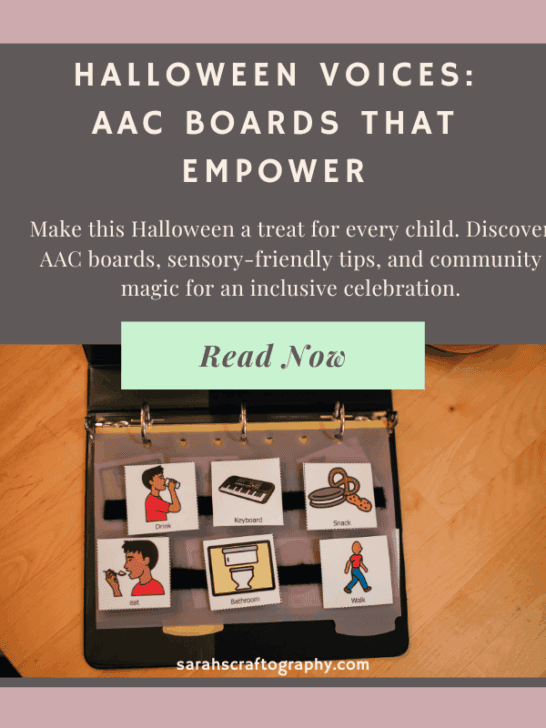
  • Halloween Voices: AAC Boards That Empower

    Halloween Voices: AAC Boards That Empower

    Have you ever wondered how AAC boards can make Halloween more inclusive and enjoyable for everyone?

    For many children and adults who use augmentative and alternative communication (AAC), holidays like Halloween can bring both excitement and communication challenges.

    From saying β€œtrick-or-treat” at the door to joining in games, parties, and conversations, communication is at the heart of the celebration.

    AAC boards can be one helpful option for making Halloween communication more accessible, especially when they are used alongside the person’s regular communication system.

    With themed vocabulary, visual prompts, and easy-to-use designs, these tools can give AAC users another way to express themselves, share in the fun, and participate in traditions on their own terms.

    During a holiday filled with costumes, candy, and community, AAC boards open the door to connection and belonging.

    So grab your pumpkin pail, slip on your costume, and let’s unlock the magic of Halloween together! πŸŽƒ

    (more…)

  • The Legends Of Halloween

    The Legends Of Halloween

    Have you ever wondered about the legends of Halloween and how so many of the traditions we know today came to be?

    Halloween has changed a lot over the centuries. What we now know as a night of costumes, candy, pumpkins, spooky movies, and family fun grew from a mixture of old seasonal traditions, folklore, Christian observances, immigration, and good old-fashioned storytelling.

    I have always loved learning where traditions come from.

    Halloween is especially interesting because the history behind it is not one simple story.

    Some customs can be traced back hundreds or even thousands of years, while others are much newer than we might think.

    So grab a cup of coffee or maybe some apple cider and come explore a few of my favorite Halloween legends with me.

    Where Did Halloween Begin?

    Many discussions about Halloween begin with Samhain, a Gaelic seasonal festival associated with the end of the harvest and the beginning of the darker half of the year.

    Samhain was observed around the transition from October 31 to November 1, and traditions surrounding it became part of the much larger story of Halloween.

    The exact relationship between ancient Samhain and every modern Halloween custom is not as simple as some popular retellings make it sound. What we call Halloween today developed over centuries as customs from Ireland and Britain, Christian observances, immigration, folklore, and later American traditions blended together.

    Halloween developed over many centuries as older customs mixed with later Christian observances such as All Saints’ Day and All Souls’ Day.

    The name Halloween itself comes from All Hallows’ Eve the evening before All Saints’ Day.

    That long, layered history is part of what makes the legends of Halloween so fascinating.

    There is rarely just one neat explanation.

    Spooky seasonal scene representing the ancient origins and folklore of Halloween

    How Trick-or-Treating Became a Halloween Tradition

    Modern trick-or-treating did not appear all at once.

    One tradition often connected to it is medieval β€œsouling.”

    People in need would visit homes and receive food, including small cakes, in exchange for prayers for deceased family members.

    Another influence came from β€œguising” in Scotland and Ireland.

    Costumed visitors went from house to house and might sing, tell a joke, recite something, or perform a small trick in exchange for food, coins, or other treats.

    Irish and Scottish immigrants brought Halloween customs with them to North America during the 19th century.

    By the early 20th century, Halloween pranks had also become common in the United States.

    Communities gradually encouraged more organized celebrations for children, and trick-or-treating became especially popular after World War II.

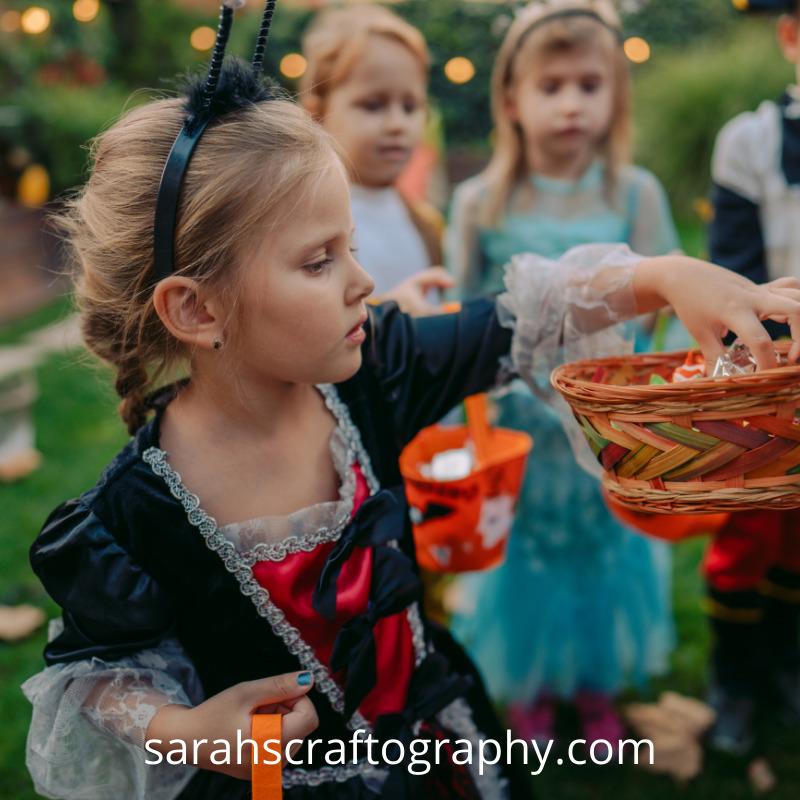
    That means the little superheroes, princesses, dinosaurs, and ghosts knocking on our doors today are part of a tradition that took centuries to become what we recognize.

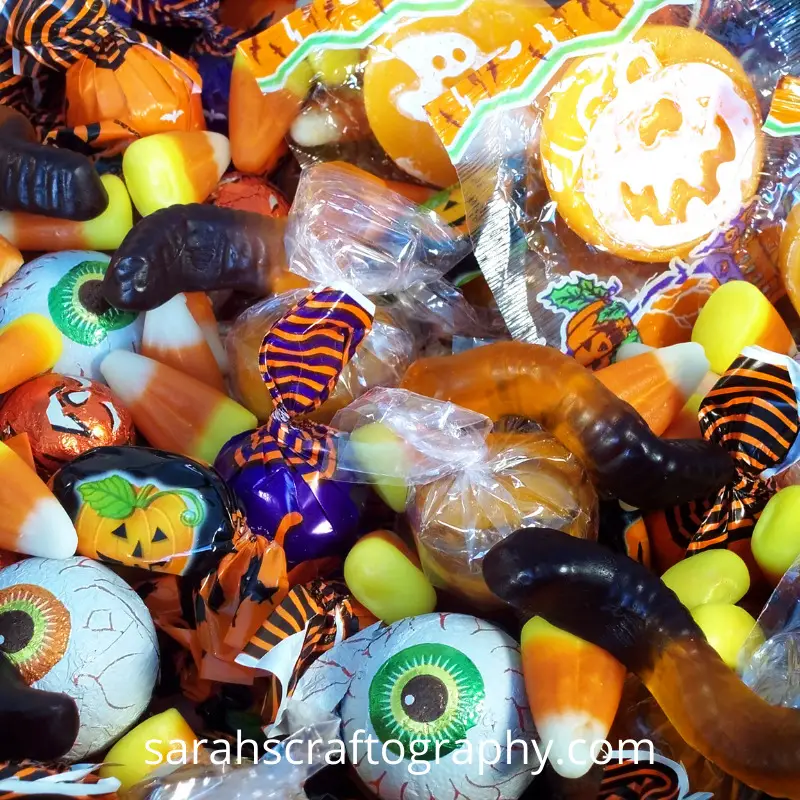
    Colorful Halloween candy representing the history of trick-or-treating

    Halloween Costumes, Candy, and My Own Family Memories

    History is interesting, but Halloween traditions also become special because of the memories we make with them.

    I still remember dressing up as a bum one year, complete with tattered clothes and a smudged face.

    Another year, I transformed into a giant M&M.

    The costume itself was only part of the fun.

    My family would get ready together and head outside into the cool autumn air.

    Leaves crunched under our feet while we went from house to house collecting treats.

    Afterward, we would come home and dump out our candy bags.

    Mom and Dad checked everything before we started sorting through our favorites.

    Those are the parts of Halloween I remember most: the laughter, anticipation, costumes, candy, and being together.

    As a mom, I also know that Halloween does not feel fun for every child in exactly the same way.

    If costumes, crowds, noises, or unexpected changes are difficult for someone in your family, my sensory-friendly Halloween ideas offer gentler ways to enjoy the season.

    Why Do We Carve Jack-O’-Lanterns?

    Jack-o’-lanterns are one of my favorite examples of an old legend changing as people carried it to a new place.

    Before pumpkins became the star of American porches, people in Ireland and Britain carved root vegetables such as turnips.

    One popular Irish folktale tells of a troublesome figure known as Stingy Jack, who tricked the Devil and was eventually left to wander with only a glowing coal for light.

    According to the legend, Jack placed the coal inside a carved turnip to make a lantern.

    When Irish immigrants came to America, pumpkins were plentiful and much easier to carve than turnips.

    Over time, the glowing pumpkin became one of the most recognizable symbols of Halloween.

    I am thankful for the pumpkin upgrade, because carving a turnip sounds like considerably more work for considerably less porch decoration. πŸ˜‚

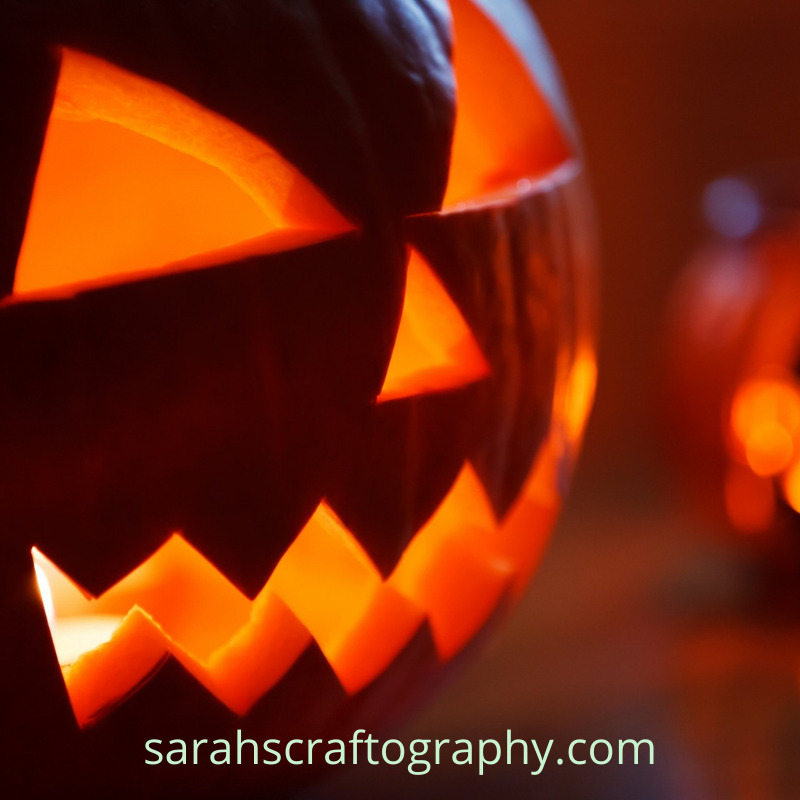
    Glowing carved jack-o-lantern connected to Irish Halloween folklore

    How Witches Became Part of Halloween

    Witches have a much more complicated history than the pointy hats and bubbling cauldrons we see in Halloween decorations.

    Beliefs about witchcraft existed in different cultures long before modern Halloween.

    In Europe and colonial America, fear of witchcraft sometimes led to accusations, trials, imprisonment, and executions.

    The Salem witch trials are one well-known American example, but they were not the beginning of beliefs about witches, nor were people accused simply because they were educated women or practiced medicine.

    The history involved religious beliefs, social tensions, superstition, local conflict, and fear.

    Over time, folklore, books, plays, movies, and Halloween imagery helped create the familiar fictional witch: black clothing, pointed hat, broomstick, cauldron, and sometimes a black cat nearby.

    Today that character can be scary, funny, glamorous, or downright adorable depending on the costume.

    Why Are Black Cats Associated With Halloween?

    Black cats have been tangled up in superstition for centuries.

    In European folklore, cats were sometimes connected with witchcraft.

    Stories claimed that witches could keep animal companions called familiars, and later folklore sometimes suggested that a witch could even take the form of a cat.

    Those beliefs helped connect black cats with bad luck, darkness, witches, and eventually Halloween imagery.

    Of course, folklore is not reality. A black cat is just a cat and I have personally loved my own black kitties.

    They have been loving, friendly companions rather than tiny agents of Halloween doom.

    That is one legend I am very happy to leave in the folklore category.

    What About the Halloween Candy Scares?

    For generations, parents have heard frightening warnings about strangers hiding poison, razor blades, or other dangerous objects in Halloween candy.

    Those stories became especially powerful in the 20th century and changed the way many families approached trick-or-treating.

    Individually wrapped commercial candy became the expected treat, while homemade goodies from unfamiliar homes largely disappeared.

    Real crimes involving Halloween treats have occurred, but decades of research into reported cases have not supported the popular idea that unknown strangers routinely poison random children’s trick-or-treat candy.

    That does not mean parents should ignore ordinary food-safety concerns, allergies, damaged packaging, or choking hazards. Checking treats for those practical concerns still makes sense. It simply helps to separate reasonable safety precautions from a frightening legend that has been repeated for generations.

    Halloween Legends Keep Changing

    Ghosts, witches, black cats, jack-o’-lanterns, monsters, and haunted houses did not all join Halloween at the same moment.

    Our modern celebration is more like a scrapbook.

    Different generations and cultures added traditions, stories, symbols, foods, and entertainment until Halloween became the holiday we recognize today.

    Even now, families continue changing it.

    Some children love a dark haunted house.

    Others would rather decorate pumpkins, attend a church fall festival, watch a not-too-spooky movie, or simply hand out candy at home.

    Children who communicate differently can participate too.

    My post about Halloween AAC boards shares ways to make trick-or-treating and seasonal activities more accessible for AAC users.

    And if your idea of celebrating involves curling up after the kids are settled and watching something spooky, I also have a list of Halloween horror movies.

    Enjoying Halloween Through Faith and Family

    Families of faith do not all make the same choices about Halloween, and I think there is room to be thoughtful about what we bring into our own homes.

    For me, learning the history behind a tradition does not mean I have to adopt every belief connected to its past.

    I can separate folklore from faith and choose the parts of the season that create good memories with my family.

    Philippians 4:8 (NIV) reminds us to think about whatever is true, noble, right, pure, lovely, admirable, excellent, and praiseworthy.

    That gives me a much better guide for our home than fear does.

    Maybe your family enjoys costumes and candy.

    Maybe you prefer pumpkins, crafts, a fall festival, a bonfire, or apple cider.

    The celebration can look different from one household to another.

    Which Legends of Halloween Do You Love?

    The legends of Halloween show just how much a holiday can change as stories travel from one generation to the next.

    Some traditions have ancient roots.

    Others are surprisingly modern.

    A few of the scariest stories turned out to be more legend than fact.

    That is part of the fun of digging into history.

    Now I want to hear from you.

    Which Halloween tradition does your family look forward to every year?

    Share it in the comments, and send this post to someone who loves discovering the stories behind the season.

    Happy Halloween!

  • Horror Movies Sure To Set The Mood For Halloween

    Horror Movies Sure To Set The Mood For Halloween

    Are you looking for a good hair-raising movie to set the mood for Halloween? 

    A scary movie can be good any time of the year, but there is something especially fun about watching one during the Halloween season. 

    I have set out looking for some spine-chilling movies that are sure to give you a good scare. 

    Get in the spirit of Halloween with family and friends by binge watching your favorite Halloween horror flicks. 

    These are just a few of the many movies out there and it was hard to pick with so many to choose from. 

    Let’s get started!

    Dark forest with eerie lighting perfect for Halloween moodsetting.

    (more…)

  • Sensory-Friendly Halloween Ideas Kids Will Love

    Sensory-Friendly Halloween Ideas Kids Will Love

    Have you been looking for sensory-friendly Halloween ideas kids will love without forcing them through a night that feels too loud, itchy, crowded, or overwhelming?

    Halloween can be exciting, but it can also ask a lot from a child all at once.

    Costumes feel different.

    Doorbells ring.

    Decorations move without warning.

    People wear masks. Streets get crowded, routines change, and everyone seems to expect children to know exactly what to do.

    In our family, I have learned that a successful Halloween is not measured by how many houses we visit or how full the candy bucket gets.

    It is measured by whether my kids felt safe enough to enjoy themselves.

    That may mean a soft costume instead of an elaborate one, an early trick-or-treat walk, headphones in the bag, a quiet break in the van, or skipping an activity altogether.

    Sensory-friendly does not mean taking the fun away.

    It means making room for a child to enjoy the fun in a way that works for them.

    Sensory-friendly Halloween ideas for autistic children and families

    When Halloween Feels Like Too Much

    Halloween has never been as simple as buying costumes and heading out the door with my kids.

    For Trinity, costumes were not always exciting.

    Some scared her, and tight or uncomfortable textures could make her feel trapped.

    Alivia’s needs are different.

    She does not like masks or heavy makeup, but she has loved blow-up costumes and simple combinations that let her participate without feeling weighed down.

    We have done things like a black sweat outfit with butterfly wings, glitter spray in her hair, or a simple pair of cat, dog, or fox ears with a small tail.

    Those little touches still feel festive without turning the costume into something she has to endure.

    Sensory needs can show up in other parts of Halloween too.

    Flashing lights, motion-activated decorations, fog machines, crowded sidewalks, unfamiliar smells, sudden screams, and people bumping into one another can turn a fun evening into sensory overload very quickly.

    Sensory accommodations such as comfortable clothing, headphones, visual supports, quieter spaces, and avoiding crowds can make community activities more accessible. What helps will be different from child to child, so I pay attention to the sensory input my kids seek, avoid, or recover from slowly.

    If your child reaches their limit, leaving is not a ruined Halloween.

    Sometimes leaving at the right time is exactly what protects the good memories you already made.

    Start With a Halloween Plan Your Child Can Understand

    Predictability can make a big difference.

    Before Halloween, talk through what is going to happen in a way your child understands.

    That might be spoken conversation, pictures, a visual schedule, a calendar, a short practice walk, or a personalized teaching story.

    You can practice putting on the costume before Halloween instead of discovering an itchy seam five minutes before leaving.

    Walk through knocking on a familiar door.

    Show your child the trick-or-treat bucket.

    Talk about masks and decorations they may see.

    Most importantly, tell them what the exit plan looks like. Knowing, “We can go back to the car when you need a break,” can be just as important as knowing where you are going.

    If your child benefits from more preparation, pictures or a short personalized story can show where you are going, who may be there, what trick-or-treating looks like, and how the night will end. I go deeper into that kind of planning in Preparing an Autistic Child for Halloween.

    Comfy Halloween Costumes Come First

    The costume may be the star of Halloween for some kids, but comfort gets the starring role in our house.

    Trinity taught me this early.

    Soft cotton and fuzzy outfits worked much better than tight, scratchy costumes.

    One year she surprised me by wanting to be a zombie.

    Instead of using a mask or covering her face in heavy makeup, I tore up an old dress, rubbed it in the dirt, and used a little eyeliner, lipstick “blood,” and dark shading.

    She got the spooky zombie look she wanted without having to tolerate a costume that made her miserable.

    Alivia has her own preferences.

    Sometimes she likes a blow-up costume.

    Other times something as simple as sweats, wings, ears, or a little glitter works better.

    Try the costume at home before the big night. Remove tags.

    Add soft clothes underneath when that helps.

    Skip masks or face paint if they bother your child.

    Bring a backup option that fits in your bag.

    A pair of ears or a favorite Halloween shirt can save the night when the original costume suddenly becomes too much.

    And remember: a child does not have to wear a costume at all to participate in Halloween.

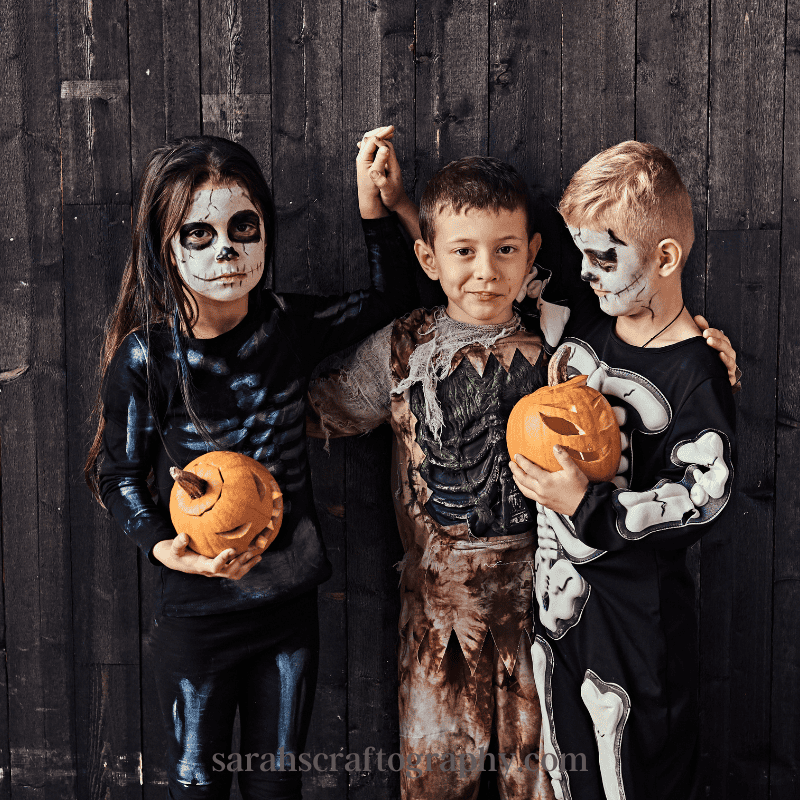
    Children enjoying comfortable sensory-friendly Halloween costumes

    Sensory-Friendly Halloween Fun at Home

    Some of our favorite Halloween memories did not happen while trick-or-treating.

    We have made sensory bins with rice dyed black, orange, green, and purple, then added tiny pumpkins and Halloween trinkets.

    Slime, kinetic sand, or a simple treasure hunt can be fun too, as long as the texture is one your child actually enjoys.

    Pumpkin guts are definitely not a favorite in my house.

    Instead of insisting on carving, we paint and decorate pumpkins.

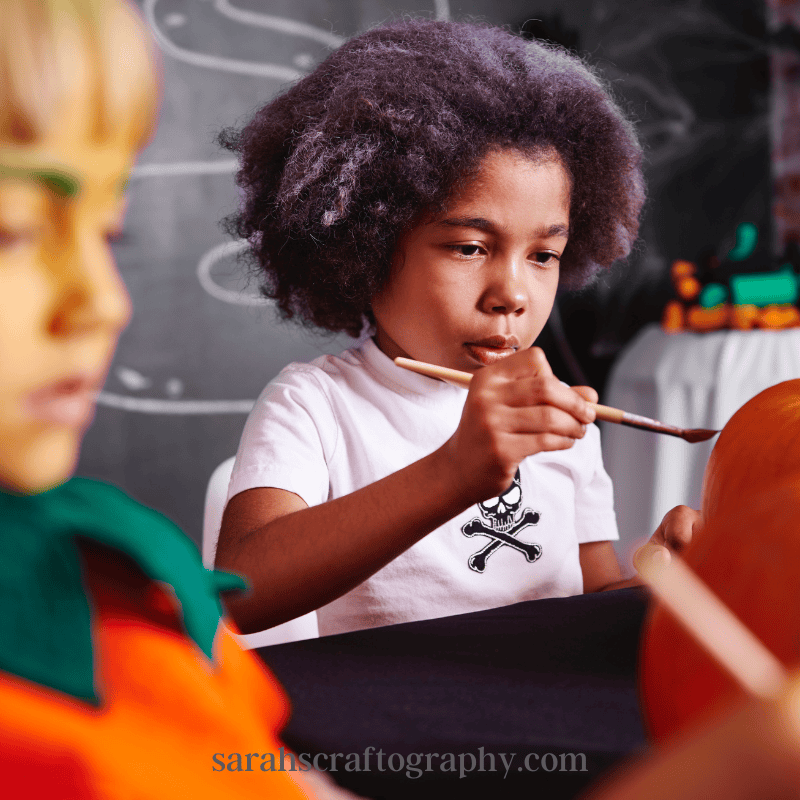
    Stickers, washable paint, markers, craft supplies, or push-in decorations can give kids the pumpkin experience without requiring them to scoop out a texture they cannot stand. I have more alternatives in my autism-friendly pumpkin carving post.

    We have also bobbed for apples, played sensory guessing games, gone on flashlight scavenger hunts, and once turned our garage into our own Halloween party with softer lights, music, a little dance floor, and door prizes.

    The kids still remember it.

    Halloween does not have to look traditional to become a tradition.

    Trick-or-Treating Without the Pressure

    If we go trick-or-treating, I try to make the experience fit my kids instead of expecting my kids to fit the experience.

    Starting earlier can mean smaller crowds and less noise.

    Familiar neighborhoods, friendly cul-de-sacs, smaller trunk-or-treats, church events, and library programs can also feel more manageable than a huge community event.

    I bring the things we may need: headphones, a sensory item, real snacks, and a backup costume piece.

    I also watch for the point where excited energy starts turning into exhaustion.

    Sometimes I will say, “Two more houses, and then we’re heading to the van.”

    A clear ending can make the transition easier.

    Afterward, we may drive around and look at decorations from the safety of the vehicle.

    That gives everyone time to come down from the excitement before heading home.

    What I Pack for a Sensory-Friendly Halloween

    • Headphones or another familiar sensory support
    • A communication device, AAC board, or other communication tool if my child uses one
    • A familiar snack and drink
    • A small sensory or comfort item
    • A simple backup costume piece, such as ears or a Halloween shirt
    • Anything we need to stay visible and safe after dark

    I do not pack every sensory tool I own. I bring the things my kids actually use, because a smaller bag is a lot easier to manage while trick-or-treating.

    Your Child Does Not Have to Say “Trick or Treat”

    This is one Halloween expectation I would love to see more adults understand.

    Not every child can say “trick or treat.” Some communicate with AAC.

    Some use gestures, signs, pictures, or a communication card.

    Others may be able to speak but freeze when an unfamiliar adult opens the door.

    A child may also be using every bit of their energy simply to stand on that porch.

    They still deserve kindness and a piece of candy.

    Eye contact should not be the price of participation either.

    Neither should saying “thank you” on command, tolerating a scary decoration, or explaining a disability to a stranger.

    If your child uses AAC or would benefit from a visual communication option, I put together a separate resource about Halloween AAC boards and giving kids a way to communicate during Halloween.

    For the adults answering the door, a little patience goes a long way.

    Give the child time. Accept the communication they offer.

    Let Halloween be about welcoming the kid standing in front of you rather than testing whether they perform the tradition correctly.

    Create a Safe Signal and a Quiet Escape

    At home, my kids know they can retreat to their rooms when they need a break.

    When we are out, having a simple signal can help them tell me they are reaching their limit before everything becomes too much.

    Alivia uses the phrase “thunder popcorn” when she feels like she is losing control.

    It sounds silly to someone who does not know what it means, but for us it is powerful communication.

    I know what she is telling me, and we can respond.

    Your family’s signal might be a phrase, a hand sign, a picture on an AAC device, pointing to a break card, or simply handing you a particular object.

    Whatever it is, honor it.

    A signal only feels safe when a child learns that the adults around them will listen to it.

    A Few Halloween Safety Adjustments

    Planning for sensory needs and planning for physical safety can work together.

    I like to know our route before we leave and avoid houses with decorations I already know will be too much.

    Glow wands work well for my kids because they enjoy holding them more than wearing glowing necklaces or bracelets.

    Other children may prefer reflective patches or light-up shoes.

    It can also help to take a current photo of your child in their costume before leaving, make sure they have identification or contact information appropriate for their needs, and choose a meeting spot if you are attending a larger event.

    The details will depend on your child, but thinking about visibility, identification, communication, and what you would do if you became separated can make the outing safer without making the night feel scary.

    Sensory-friendly Halloween celebration with children and pumpkins

    There Is No One Right Way to Do Halloween

    Your child does not have to wear a costume.

    They do not have to trick-or-treat.

    They do not have to stay until an event ends, pose for every picture, touch pumpkin guts, walk through a haunted house, speak to strangers, or enjoy something simply because other children do.

    One child may love the lights and hate the costume.

    Another may happily wear an elaborate costume but need headphones outside.

    Someone else may want to hand out candy from home instead of walking door to door.

    All of those Halloweens count.

    When I stopped measuring the night against what Halloween was “supposed” to look like, it became much easier to notice what my kids actually enjoyed.

    Making Halloween About Joy, Not Perfection

    As a mom, I want my children to know they do not have to perform for other people to belong.

    I believe God created each of us with worth that does not depend on how well we fit somebody else’s expectations.

    That changes the way I look at celebrations too.

    Sometimes loving our children well means changing the plan, leaving early, choosing the quieter event, or celebrating at home.

    If you are also curious about where some of the holiday’s familiar traditions came from, you can read my newly updated post about the legends of Halloween.

    This Halloween, pay attention to the moments when your child relaxes, laughs, explores, communicates, or simply feels safe enough to be themselves.

    Those are the memories worth keeping.

    What sensory-friendly Halloween tradition works best for your family?

    Share it in the comments.

    Your idea may be exactly what another parent needs this year.
  • Preparing an Autistic Child for Halloween

    Preparing an Autistic Child for Halloween

    How do you prepare an autistic child for Halloween when the costumes, decorations, crowds, and changes can make an exciting night feel like a lot all at once?

    Halloween looks very different in our house now than it did when my oldest daughter, Trinity, was little.

    Back then, our Halloween nights could be chaotic.

    We did not really have a set plan, and I did not know nearly as much as I know now about helping my children prepare for transitions, sensory needs, and all the unexpected pieces that can come with a holiday.

    I learned a lot while raising Trinity.

    Later, I was able to carry those lessons with me as I parented Alivia and Darnell.

    Moving to the Cincinnati area also made a difference for our family because, in our experience, we found more autism-focused resources and understanding than we had where we lived before.

    These days, we usually do the same basic thing every Halloween.

    That familiarity means there is much less preparation involved than there used to be.

    Still, the things I learned during those earlier years continue to shape how I prepare my kids for Halloween today.

    So grab the candy bucket, check the costume for scratchy tags one more time, and let’s get ready for Halloween. πŸŽƒ

    Preparing an autistic child for Halloween with a predictable and flexible plan

    Preparing an Autistic Child for Halloween Starts Before Halloween Night

    One of the biggest things I have learned is that preparation does not have to be complicated.

    Sometimes it is simply talking about what is going to happen before it happens.

    We talk ahead of time about Halloween, make our plans, and choose costumes early enough that we can figure out whether they are actually going to work.

    That predictability can be helpful because some autistic people find changes in routine and unexpected events difficult, while visual schedules and other supports can make upcoming events easier to understand.

    Planning ahead can make an unfamiliar event easier to understand. Visual schedules, pictures, and other visual prompts can help with routines, transitions, choices, and knowing what comes next.

    The important words there are for some.

    Autistic children are not all going to need the same amount or type of preparation.

    Even within my own family, what helps one child may not be what another child needs.

    Using visual supports to prepare an autistic child for Halloween

    First/Then Cards Helped Us Break Halloween Into Smaller Steps

    When Alivia was younger, we used First/Then cards a lot.

    Halloween was not presented as one giant event that she simply had to get through.

    We could break the evening down step by step.

    • First dinner, then costume.
    • After dinner, we put on the costume.
    • Next comes getting into the car and driving.
    • Once we arrive, it is time to trick-or-treat.

    Those little pieces made a big evening easier to understand.

    Visual supports can show a sequence of events, upcoming transitions, routines, or expectations. They can be as simple as pictures showing dinner, costume, car, trick-or-treating, and home.

    I do not need to use those supports with Alivia for Halloween the way I once did.

    That is another thing parents sometimes need permission to hear: a support can be incredibly useful during one season of your child’s life without needing to be used forever.

    A familiar Halloween routine can help autistic children know what comes next

    Our Halloween Routine Became Part of the Preparation

    Now we tend to follow the same general Halloween routine every year.

    There is less explaining because the kids already have a pretty good idea of what comes next.

    That did not happen overnight.

    We built that familiarity by doing it over and over.

    When the kids were younger, I thought preparation meant I needed to anticipate every possible problem.

    These days, I see routine differently.

    I do not need to predict every detail if the kids have enough familiar pieces around the unfamiliar ones.

    We also keep Halloween day a little lighter when we can, while keeping the main parts of our normal routine in place.

    I am not trying to turn the entire day upside down in preparation for an evening that is already different.

    Trying on a Halloween costume early to check sensory comfort

    Please Try the Costume Before Halloween

    I could probably open a small costume shop with the number of costumes my children have refused to wear over the years. πŸ˜‚

    We have had costumes that looked adorable and sounded like a great idea right up until somebody actually had to wear them.

    Then it was too itchy.

    Maybe another one was too hot.

    A different costume might feel too tight.

    Sometimes the fabric simply felt wrong.

    That taught me that liking a costume and being comfortable wearing that costume are two completely different things.

    Sensory differences can include sensitivity to touch, textures, sounds, lights, and other input, and comfortable clothing can be an important accommodation for some autistic people.

    Trying the costume ahead of time gives us a chance to notice those sensory problems before Halloween night.

    So we plan costumes ahead and make sure everything is comfortable. If carving pumpkins is part of your family’s tradition too, I also have some autism-friendly pumpkin carving ideas for making that activity more flexible.

    I would much rather discover the problem in our living room than after we have left the house.

    Choosing a comfortable Halloween costume for an autistic child

    If the Costume Comes Off, the Costume Comes Off

    This may be one of the biggest differences between younger-mom me and the mom I am now.

    If a costume fails halfway through Halloween, my kids can take it off.

    That’s it.

    I am not fighting through another costume.

    I am also not carrying a million backup things when I already have enough to keep track of.

    I might bring something simple like a Halloween headband, but I am not packing an emergency costume department in the car. πŸ˜‚

    If my child ends up trick-or-treating in regular clothes, Halloween is not ruined.

    The costume was supposed to add to the fun.

    Once it becomes the thing preventing the fun, I am perfectly happy to let it go.

    Letting an autistic child remove an uncomfortable Halloween costume

    Prepare for the Sensory Parts Without Assuming What Your Child Can Handle

    Halloween can involve flashing decorations, masks, loud sounds, crowded sidewalks, unusual smells, people getting close, and houses that suddenly move or make noise.

    Those things are fun for some children and overwhelming or frightening for others.

    When my children were younger, masks, makeup, and faces that looked distorted could be especially difficult for them to process.

    Noise can still affect them differently.

    Darnell and Alivia are more sensitive to it, while Trinity can often put on headphones and keep going.

    That is why I do not think preparing an autistic child for Halloween should mean creating one giant checklist and assuming every autistic child needs it.

    Watch your child.

    Prepare for the things that are hard for them.

    If your child uses headphones, bring them.

    A house that feels too scary can simply be skipped.

    When crowds make communication or regulation harder, a smaller or more familiar place may work better.

    Our family generally prefers familiar places and places where we have had good experiences before.

    A Quick Halloween Prep Checklist

    • Talk through the plan before Halloween night.
    • Try the costume early and pay attention to comfort, not just appearance.
    • Bring communication supports, headphones, or other familiar tools your child already uses.
    • Choose a familiar route or smaller celebration if crowds are difficult.
    • Let your child skip decorations, houses, or activities that feel like too much.
    • Decide ahead of time that leaving early is okay.

    The goal is not to prepare for every possible thing that could happen. It is to bring the supports that help your child feel understood and able to participate in their own way.

    Preparing for sensory needs during Halloween trick-or-treating

    Practice Can Create Predictability Without Demanding a Performance

    We have practiced parts of Halloween with our kids before.

    That can include what happens when you walk up to a house, what someone might say, where the candy goes, and what happens next.

    The purpose is not to make my child perform Halloween correctly.

    It is to make an unfamiliar situation a little more familiar.

    That distinction matters to me.

    My children have struggled with things like eye contact, unfamiliar people, social expectations, and saying the expected words at the expected moment.

    Practice can help them know what might happen.

    It does not mean I expect perfection when we get there.

    If communication is part of your concern, I have also written about Halloween AAC boards and communication supports.

    Practicing trick-or-treating without requiring an autistic child to perform

    Have an Exit Plan Before You Need the Exit

    I want my kids to know that leaving is an option.

    We do not have to finish every street.

    There is no rule saying we have to stay until a certain time.

    A crowded house can be skipped.

    Going back to the car is always an option.

    When we have had enough, we can go home.

    That flexibility is part of the preparation too.

    I have learned that I would rather end Halloween while we still have some good memories from the night than push everybody past their limit because I had a picture in my head of how long trick-or-treating was supposed to last.

    If you want more of the sensory side of that planning, my post on sensory-friendly Halloween ideas for kids goes deeper into ways families can adjust the celebration itself.

    Planning an early exit when Halloween becomes overwhelming

    Preparation Is Not a Guarantee That Everything Will Go Smoothly

    This is probably the lesson I wish I had understood when Trinity was little.

    You can prepare.

    Practice can make the evening more familiar.

    A comfortable costume can be ready and waiting.

    The schedule can be planned out.

    Headphones can be packed.

    Even the familiar neighborhood can be chosen ahead of time.

    And things can still fall apart.

    Preparation is support, not a guarantee.

    When my kids were younger, I did not always understand that.

    If Halloween went badly, I could feel like I had done something wrong.

    Sometimes I was hard on myself.

    And looking back, I know there were times I was harder on Trinity than I needed to be because I was trying so hard to make things work.

    Halloween preparation supports autistic children without guaranteeing a perfect night

    What I Would Tell the Mom I Was Back Then

    If I could go back and change one thing, it would not be the costume we bought or the route we took.

    The biggest change I would make is how hard I was on myself and Trinity when things fell apart.

    That younger version of me needed to hear that a hard Halloween did not mean I had failed.

    Trinity had not failed either.

    We were both learning.

    I was learning my child.

    At the same time, she was trying to navigate a world that I did not yet fully understand from her perspective.

    Over the years, I learned more.

    Better tools came with that experience.

    Eventually, I learned to recognize when comfort mattered more than the costume and when going home mattered more than one more handful of candy.

    Most importantly, I learned that when a plan falls apart, my relationship with my child matters more than saving the plan.

    Flexible Halloween preparation that makes room for an autistic child’s needs

    Preparing an Autistic Child for Halloween Is Really About Making Room for Them

    Every autistic child is different.

    Some children may want every decoration, every costume piece, and every house on the street.

    Another child may enjoy Halloween best from the couch with a movie and a bowl of candy.

    Plenty of kids will fall somewhere in between.

    Preparing an autistic child for Halloween is not about teaching them to tolerate Halloween exactly the way everyone else celebrates it.

    For our family, preparation means creating enough predictability to help our kids know what is coming while leaving enough flexibility to change the plan when they tell us they need something different.

    And if the costume ends up in the stroller, somebody refuses the scary house, or we head home earlier than expected?

    We can still call that Halloween.

    I would love to hear what helps in your house if your family celebrates Halloween with an autistic child.

    Share your experience in the comments because another parent may find the idea they needed in something your family has learned.

    Did this post help you?

    Please like it and share it with another parent who may need a little less pressure going into Halloween.

    You can also subscribe to my email list for more real-life autism parenting, family life, and practical ideas from Sarah’s Craftography.

    Sometimes becoming the change starts with something very small: letting our kids experience a tradition in the way that works for them. πŸŽƒ