Autism-Friendly Thanksgiving: What Finally Worked for Our Family

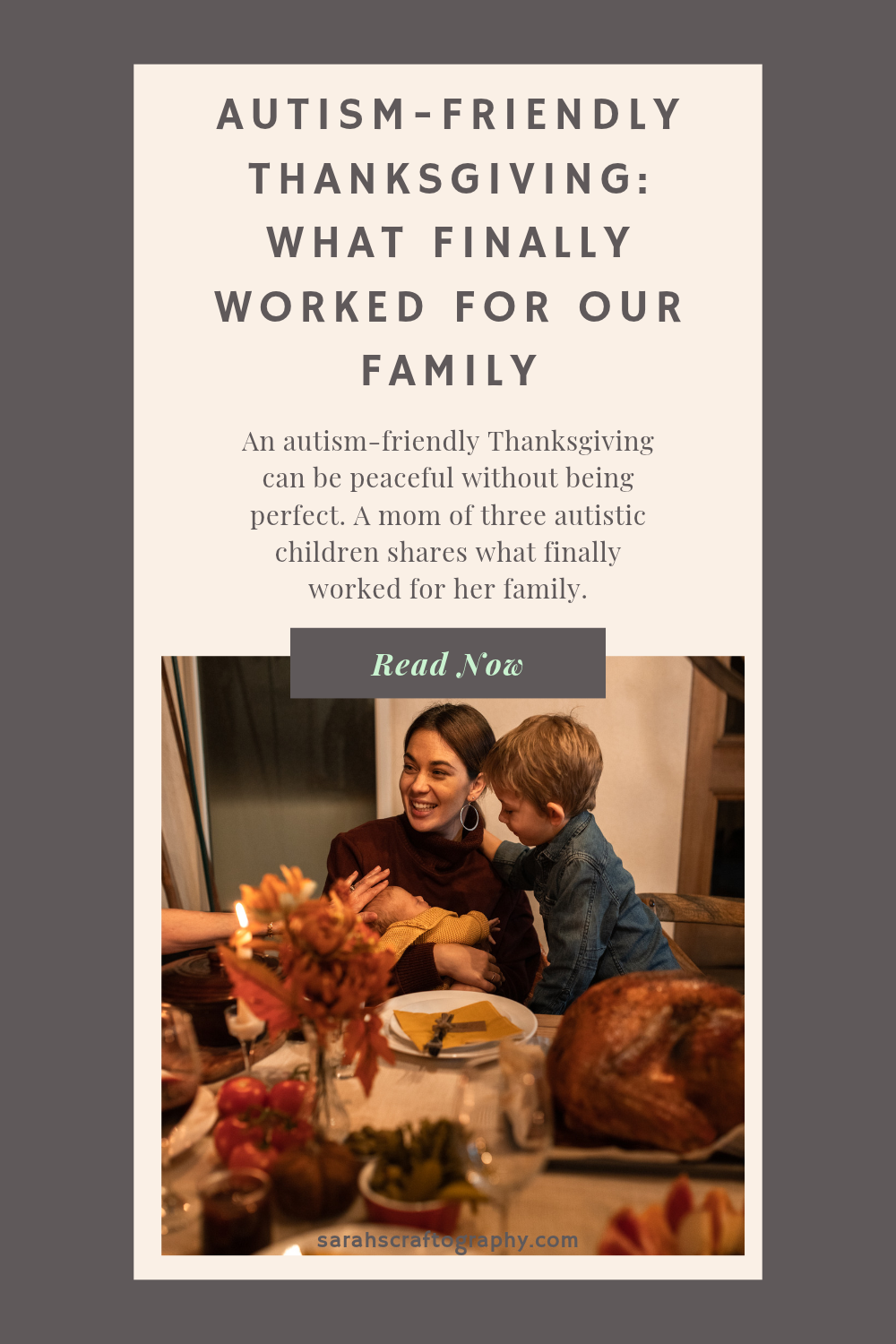
Have you ever wondered how to create an autism-friendly Thanksgiving when the drive, noise, people, food, expectations, and changes in routine can become too much for your child?
For a long time, Thanksgiving for our family didn’t look like going anywhere at all.
When Trinity was little, we tried different family get-togethers because that was what Thanksgiving was supposed to look like.
You got dressed, drove to see family, ate the big meal, visited with everyone, and somehow made it through the day.
Except we weren’t really making it through.
Trinity would sometimes have vomiting spells around gatherings.
At the time, I didn’t understand everything that was contributing to them.
Looking back now, I can see how much social anxiety played a role, and we eventually learned that the drive itself was making things harder too.
Both Trinity and Alivia struggle with motion sickness.
That took us years to fully understand because neither girl could always tell me what her body was experiencing.
Eventually, Thanksgiving became something we did quietly at home because going somewhere was simply too much.
For years, I thought getting through the holiday was the goal.
Everybody would end up miserable.
My kids would melt down.
Sometimes I would too.
Then I realized something had to change.
When I Stopped Trying to Just Get Through Thanksgiving
Thanksgiving wasn’t supposed to be a day my children and I had to survive.
Today, our holidays look very different.
We still celebrate with family, but I’ve stopped trying to make my children fit somebody else’s idea of what Thanksgiving is supposed to look like.
Instead, I’ve learned to make Thanksgiving work for the children God gave me.
That one change has made all the difference.
So, let’s talk about what an autism-friendly Thanksgiving actually looks like in our family and some of the things I’ve learned along the way.
Our Thanksgiving Didn’t Always Look Like This
Getting to where we are today took time.
For a long stretch, staying home was genuinely the better option for us.
There is nothing wrong with that.
Sometimes we get caught up in the idea that children need to attend every family gathering because it is tradition.
Traditions are wonderful when they bring people together.
When everyone is miserable and overwhelmed, though, it is okay to reevaluate what you are doing.
These days, one of our Thanksgiving celebrations is my mom’s family Thanksgiving in Fairmount, Indiana.
Once we get there, it works surprisingly well for my kids because the gathering itself is relaxed.
We don’t show up hours early like I remember doing for family gatherings when I was growing up.
Instead, we arrive closer to when everything is actually happening.
While people are getting there, we might play some basketball.
A playground outside gives the kids somewhere to run around too.
Then we go inside, eat, and everyone is free to spend time together without my children being expected to sit perfectly or socialize the entire time.
That freedom matters.
Another gathering with my dad’s side of the family happens at my mama and daddy’s house, Nana and Papa to the kids.
Being in a familiar home has worked much better than years when gatherings were held at a church or another unfamiliar location.
I’ve learned that sometimes the location itself can make a huge difference.
I’ve seen the same lesson carry into other holidays too, which is why I put so much emphasis on preparation in Preparing an Autistic Child for Halloween.
For Us, Thanksgiving Starts With the Drive
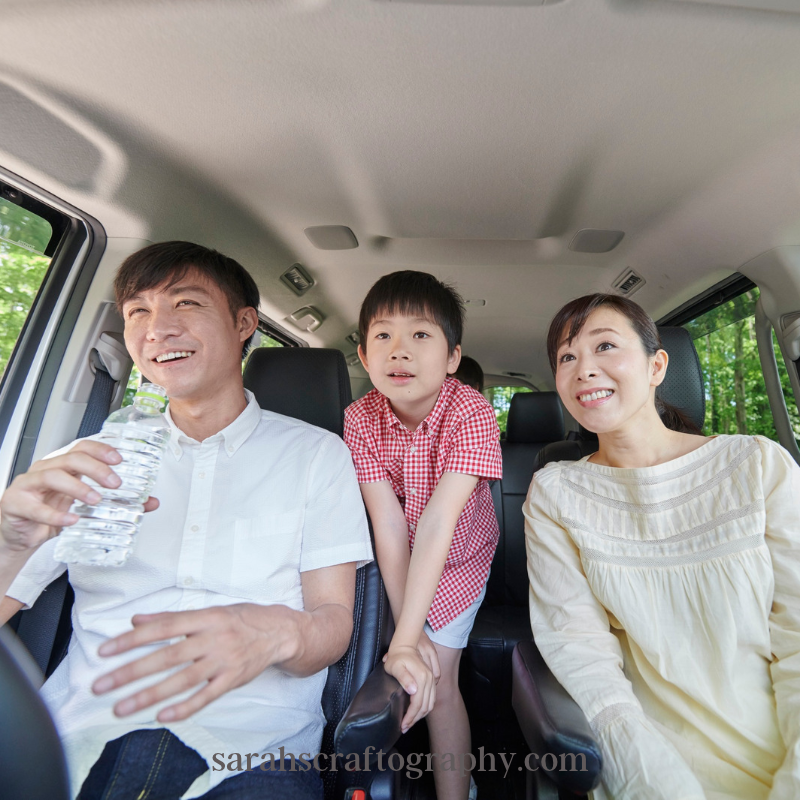
Fairmount is quite a drive from where we live.
Living away from family has meant that, for much of my life as a mom, getting to a family holiday has required at least an hour in the car.
That matters because the trip can be one of the hardest parts of the entire day for my girls.
Trinity gets motion sick.
Alivia does too, although we didn’t realize that until much later.
When Alivia was younger, she would cry and become extremely amped up in the car.
Trinity struggled during drives as well.
Back then, I didn’t always understand that what looked like distress about being in the car could also be their bodies telling us they felt sick.
Now we prepare for the drive instead of treating it like the unimportant part before Thanksgiving begins.
Screens can make motion sickness worse for my girls, so looking down at a phone or tablet isn’t always a good option.
Looking ahead and listening to music works better for us.
We also use the nausea medication their healthcare provider has prescribed when it is needed.
Current pediatric guidance recommends many of the same simple things we learned through experience.
What Helps Us With Motion Sickness
Children can look outside rather than down at books or screens.
Music or conversation can offer a distraction, while a light snack and a comfortable car may help too.
If symptoms begin, stopping for a break can give their body a chance to settle.
If your child regularly becomes sick during car rides, talk with their pediatrician about what is appropriate for them before trying medication.
You can read more from the American Academy of Pediatrics about car sickness in children.
For autistic children, planning for the travel itself can matter just as much as planning for the destination.
Familiar items, headphones, snacks, knowing what comes next, and realistic expectations can make an already demanding trip a little easier.
Most importantly, I have learned to remember that my children don’t magically reset when we pull into the parking lot.
If the drive has already taken a lot out of them, they are walking into Thanksgiving with less energy available for everything that comes next.
Comfort Comes Before Looking the Part
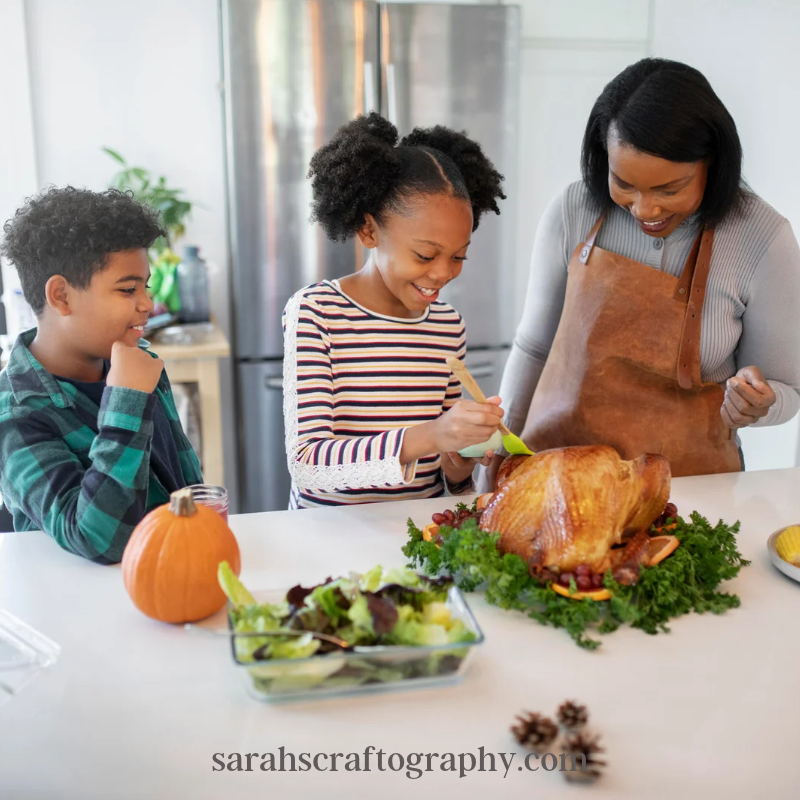
There was a time when I thought getting ready for a holiday meant everybody needed to dress up.
We don’t do that anymore.
My children wear something comfortable.
It sounds like such a small thing.
By the time we arrive, my children may already be dealing with a long drive, extra people, noise, smells, conversations, and a changed schedule.
Uncomfortable clothing is one more thing their bodies shouldn’t have to tolerate.
Taking away that unnecessary demand can make the day easier.
We also bring the things that help my children feel comfortable.
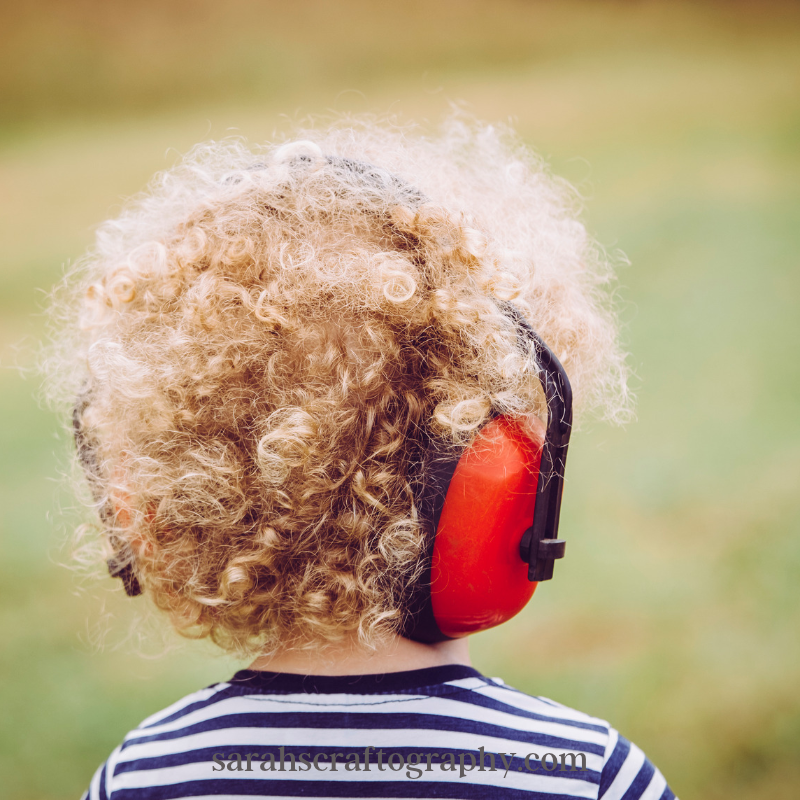
Headphones come with us.
Tablets can come too, even though we may save them for after the car ride because of motion sickness.
Music is allowed.
Trinity brings her headphones and listens when she needs to.
She may head outside and swing for a while.
Darnell also uses headphones because the volume of a gathering can bother him.
None of those things mean my children aren’t participating.
They mean we’ve learned what helps them participate.
For our family, an autism-friendly Thanksgiving isn’t about removing every difficult thing.
It’s about not adding unnecessary difficulties just because something is “tradition.”
What We Bring With Us
Our holiday bag is pretty simple because we bring what our children actually use:
- Headphones for noise and music
- Tablets or another familiar activity for times when screens work for the child
- Comfortable clothes instead of dressing up just for appearances
- Familiar or safe food when it is needed
- A plan for where the kids can move, play, or take a break
- Anything we need for the drive
- Permission to leave when one of them has had enough
None of it is fancy.
What matters is that these little things give my children a better chance to enjoy the holiday instead of spending the whole day trying to endure it.
My Children Don’t All Socialize the Same Way
One of the biggest things I’ve learned from raising three autistic children is that autism doesn’t look exactly the same in each of them.
Thanksgiving makes that very easy to see.
Trinity will say hello when she recognizes someone.
My mom’s family comes from different places, though, and there are relatives we may only see once a year.
Sometimes Trinity doesn’t recognize somebody.
In those situations, she may simply smile and nod.
That’s enough.
Alivia is completely different.
She generally doesn’t want to talk to people at all.
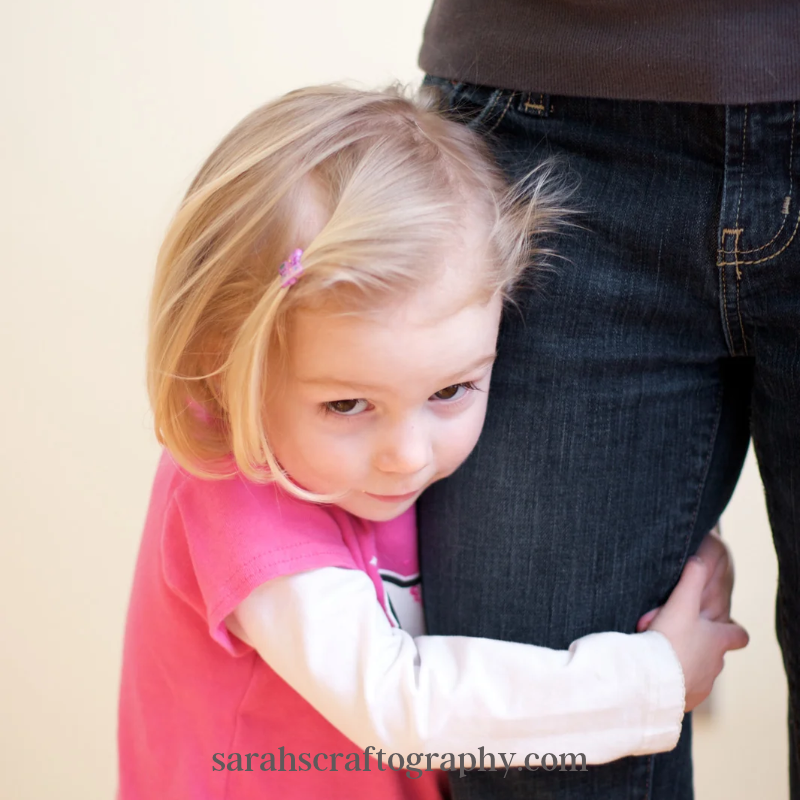
Sometimes she hides behind me.
Other times she wanders around, plays outside, or runs with the other kids.
For her, enjoying Thanksgiving doesn’t necessarily mean sitting in a room talking with relatives.
Being allowed to move and play makes her much happier.
Darnell is still little, so we’re continuing to learn what Thanksgiving looks like for him.
Last year was really the first year we did a bigger Thanksgiving gathering with him.
He actually handled the gathering pretty well.
The food?
That was another story.
Thanksgiving Dinner Does Not Have to Become a Food Battle
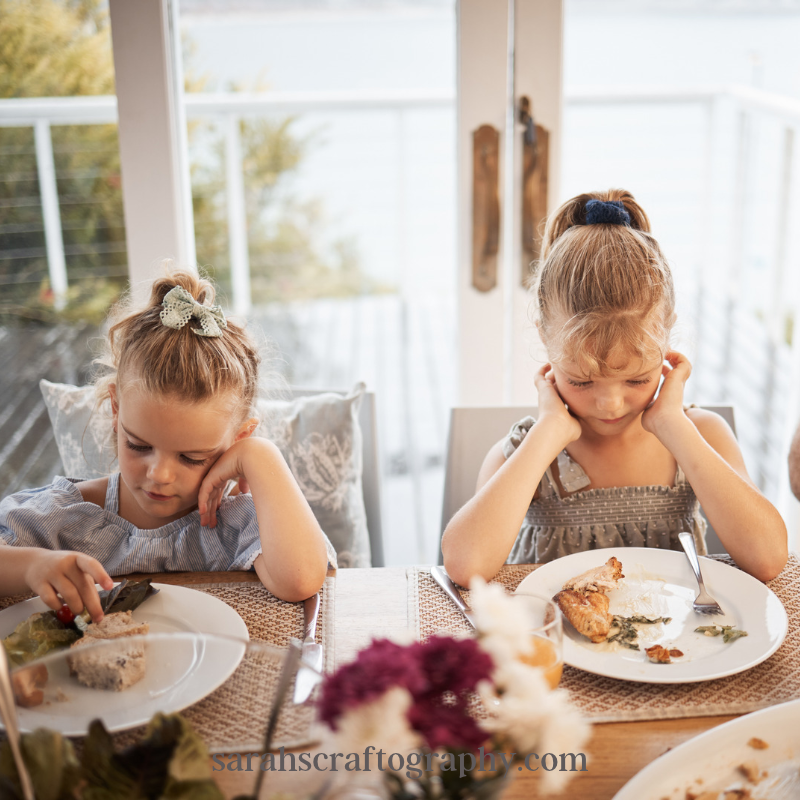
Last Thanksgiving, Darnell was not interested in much of what was on that Thanksgiving table.
My dad managed to get him to eat a few things.
There was a little turkey, some bread, and I believe he tried some macaroni and cheese.
That was about it.
A year ago, his list of safe foods was much smaller than it is now, so I’m curious to see what Thanksgiving looks like for him this year.
Trinity, on the other hand, eats almost everything.
Alivia likes many Thanksgiving foods too, although she certainly has things she doesn’t like.
I have three autistic children.
Each one has a completely different experience with the exact same Thanksgiving meal.
That alone taught me why blanket advice about autistic children doesn’t work very well.
If your child wants turkey and mashed potatoes, wonderful.
Maybe macaroni and cheese is all they want instead.
Should dinner consist of bread and the one familiar food you packed from home, your child is still part of Thanksgiving.
A holiday meal doesn’t need to become the moment we prove that a child can tolerate a new food.
There are enough demands on them already.
Food struggles aren’t limited to holidays either, and I’ve shared more of our family’s experience in How to Get Picky Kids to Eat.
Arriving at the Right Time Changed Things for Us
Growing up, I remember getting to holiday gatherings early.
As a parent, I’ve learned that more time at an event isn’t necessarily better.
We try to arrive closer to when things are actually going to happen.
That means my children aren’t using all of their energy waiting around before the meal or gathering has really begun.
It also shortens the amount of time they need to manage the social and sensory demands of the day.
This is one of those accommodations that doesn’t require buying anything or creating an elaborate plan.
Sometimes an autism-friendly Thanksgiving is simply deciding that your family doesn’t need to be the first one there and the last one to leave.

Learn What “I’m Done” Looks Like for Your Child
This might be one of the most important things I’ve learned.
My children don’t all tell me they’re finished in the same way.
Trinity can verbally tell me, “Hey, I need to go.”
With Alivia, I have to pay attention differently.
She might become extremely hyper, stop listening, or seem disconnected.
Those changes tell me she is reaching her limit.
Darnell is younger, so he may become fussy when everything has become too much.
When I see those signs, we leave.
I used to feel like we needed to push through.
Just stay a little longer.
Get through dinner.
Wait until everyone finishes.
Don’t leave too early.
That thinking made holidays miserable for all of us.
Now, when my child is done, they’re done.
Leaving early doesn’t mean Thanksgiving failed.
It means I listened.
Sometimes Loving Family Means Saying No
For the most part, my family has been understanding of my children.
I would be lying, though, if I said every holiday experience has been easy.
There is one family situation that becomes difficult almost every year.
I’ve explained repeatedly that my children cannot handle squeezing two separate holiday celebrations into one day.
The driving and motion sickness already take energy.
Add socializing, noise, changes in routine, and everything else they’re processing, and eventually we’re simply asking too much of them.
Late gathering and meal times can make that even harder.
Sometimes the proposed solution is, “You can just stay the night.”
On the surface, that probably sounds reasonable.
For my children, it isn’t.
There isn’t an appropriate space for us to stay comfortably.
Sleeping somewhere unfamiliar also creates another major change for my children to manage.
More importantly, staying overnight doesn’t solve the problem I’ve been trying to explain.
When Family Doesn’t Understand
Other comments have been harder to hear.
I’ve heard questions like, “Why are they doing that?”
Another comment has been, “What’s wrong with them?”
On other occasions, a behavior has simply been called “weird.”
Words like those are another reason I’ve learned that protecting my children’s needs sometimes requires boundaries, even with people I love.
I can appreciate that somebody believes they’re doing the best they can while still saying, “This doesn’t work for my children.”
Both things can be true.
An accommodation isn’t simply offering a solution.
It means listening when the person who knows the child is telling you whether that solution actually works.
Sometimes the kindest answer really is celebrating on another day.
My children don’t need two holiday dinners squeezed into a single day.
They need adults willing to hear me when I say they’ve reached their limit.
The Ride Home Is Part of the Decision Too
Something people don’t always see is what happens after we leave the gathering.
My children are usually ready to be home long before we actually get there.
They’re tired, anxious to get back to their own space, and still have the drive itself to manage.
That is one reason a late holiday dinner can be such a big problem for us.
If someone wants to eat at eight or nine o’clock at night after we’ve already had another celebration, “just come afterward” isn’t a small request.
Depending on the drive, that can mean I don’t get my children home until two, three, or sometimes even four o’clock in the morning.
Late Nights Don’t End When We Get Home
Until fairly recently, Trinity couldn’t sleep in the car at all.
She could be exhausted and still stay wide awake for that entire late-night ride.
More recently, there are occasional times when she is finally able to relax enough to fall asleep.
I also make sure I bring my children’s regular medications when there’s a chance we’ll be away late.
An unexpectedly long holiday shouldn’t leave us without medication when it is normally due.
Darnell usually will fall asleep in the car.
Even when he sleeps on the way home, though, the late night still affects him the next day.
The Next Day Matters Too
That part matters too.
The day after Thanksgiving doesn’t mean all of our normal responsibilities disappear.
Appointments don’t automatically cancel because it’s Black Friday.
Outside of something like Trinity being off school, life starts moving again while we’re still tired, cranky, and trying to recover from the day before.
I’m tired too.
As their mom, I’m the one driving and watching everyone’s needs.
I’m also keeping track of medications, getting everybody home and settled, and then getting back up for whatever the next day requires.
That’s why I’ve started putting much firmer boundaries around extremely late gatherings and trying to fit two holidays into one day.
Sometimes an accommodation isn’t only about helping an autistic child get through Thanksgiving.
It is also about protecting the trip home and the day that comes after it.
Family Doesn’t Need a Performance
Holiday expectations can show up in smaller ways too.
A child may not recognize the relative they see once a year.
Another might not want to answer questions or join a conversation.
Someone else may need to spend part of the gathering outside, on a tablet, or wearing headphones.
I’ve learned that my job isn’t to make my children perform in a way that makes everybody else comfortable.
My children don’t owe anyone a conversation.
Recognizing every relative isn’t a requirement for belonging.
Nobody needs to eat a particular food to prove they’re grateful.
A child shouldn’t have to tolerate being overwhelmed just so the adults can say everyone stayed for the whole gathering.
Physical affection can be another source of pressure during family events, and I talk more about respecting those differences in Navigating Affection in Autism.
We can teach kindness and respect without teaching our children that their own needs and boundaries don’t matter.
God Didn’t Ask Me to Create a Picture-Perfect Thanksgiving
My faith has changed the way I look at parenting in many ways, and holidays are no exception.
God entrusted these children to me.
That means my responsibility isn’t to create a Thanksgiving that looks impressive from the outside.
Instead, my responsibility is to love, guide, protect, and care for the children He gave me.
Jesus repeatedly showed compassion toward people others overlooked or misunderstood.
That matters to me when I think about how we treat children whose needs may not fit neatly into what society expects.
Colossians 3:12 NIV says:
“Therefore, as God’s chosen people, holy and dearly loved, clothe yourselves with compassion, kindness, humility, gentleness and patience.”
Compassion belongs at our Thanksgiving table too.
Sometimes compassion looks like letting a child wear headphones.
Kindness might mean putting a familiar food on their plate without making a big deal about it.
Patience can look like giving them time to warm up to relatives.
Gentleness may mean recognizing when they’ve reached their limit and taking them home.
Those choices don’t take anything away from the meaning of Thanksgiving.
I think they bring us closer to it.

You Are Allowed to Change the Tradition
This is something I wish I had understood much earlier.
I used to try my absolute best to get through holidays the way I thought we were supposed to.
I was miserable.
The kids were miserable too.
Before long, everyone ended up melting down, including me.
Eventually, I was over it.
For a long time, we stayed home because that was what our family needed.
Now we’ve found gatherings and routines that work much better.
For some families, Thanksgiving may need to happen at home this year.
Perhaps you drive separately so one parent can leave early.
Your child might eat before everyone else.
Dinner could include chicken nuggets beside the turkey.
Headphones might be part of the place setting.
You could arrive late, leave early, skip the family picture, celebrate with relatives on another day, or spend half the gathering on the playground.
None of those choices make Thanksgiving less meaningful.
They make it yours.

To the Mom Who Is Already Dreading Thanksgiving
If you’re already looking at the calendar and dreading Thanksgiving, I understand that feeling.
You may already be wondering how your autistic child will handle the day.
There is something I had to learn myself.
Don’t build your holiday around somebody else’s judgment.
Do what is best for your children and for you.
If someone judges those choices, you are allowed to put boundaries in place.
I spent too much time allowing other people’s expectations to keep me from doing what was best for my family.
Ultimately, those people aren’t coming home with you.
They aren’t there behind the closed doors when your child finally unravels after holding everything together.
Nobody else is helping your child regulate again in that moment.
Other people don’t see the exhaustion afterward.
You do.
That’s why you have to make decisions based on the child standing in front of you rather than the opinions surrounding you.
Your responsibility is to your children and your family.
Give yourself permission to celebrate accordingly.

Our Autism-Friendly Thanksgiving Looks Different, and That’s Okay
Looking back at those early holidays with Trinity and Alivia, I wish I could tell that younger version of myself that we didn’t have to keep pushing so hard.
I didn’t understand then everything their bodies and behavior were trying to tell me.
Today, I know so much more about my children and about autism than I did back then.
Our Thanksgiving has changed because we’ve changed.
Now we plan for the drive and bring the things that help, including headphones, music, comfortable clothes, and safe foods.
We choose familiar places when we can, use playgrounds and outdoor space, and arrive later when that works better.
Separate-day celebrations, early exits, and boundaries around the ride home help protect the rest of the holiday too.
There is also a lot less pressure.
That may be the best accommodation we’ve made.
An autism-friendly Thanksgiving doesn’t need to look perfect.
It needs to work for the people sitting around your table.
God didn’t give us identical children, so it makes sense that our families won’t all celebrate identically either.
Give your children grace.
Offer yourself some too.
Then enjoy Thanksgiving in whatever way brings peace, connection, and gratitude to your family.
A Thanksgiving That Works for Your Family
Thanksgiving looks different in our home now than it did when my children were younger, and I am grateful for that.
I used to measure a successful holiday by whether we made it through the plans we had committed to.
These days, success looks more like listening to my children, recognizing when something is too much, and being willing to change the plan.
Some years that has meant staying home.
Other years it has meant headphones, safe foods, comfortable clothes, careful travel plans, leaving early, or simply telling someone no.
None of those choices have taken Thanksgiving away from my children.
Instead, they have given us more room to actually enjoy it.
I cannot control whether every person understands the choices I make for my children.
What I can do is keep choosing compassion, protecting their needs, and remembering that God gave me the responsibility of caring for the family in front of me.
Our Thanksgiving does not have to look like anybody else’s to be full of love, gratitude, family, and faith.
Let’s Keep the Conversation Going
I’d love to hear what Thanksgiving looks like in your home.
If you have an autistic child, what is one thing that has made holiday gatherings or holiday travel easier for your family?
Share your experience in the comments because something your family has learned may be exactly what another parent needs to hear this year.
If this post reminded you of a parent who is already worrying about the holidays, please like and share it with them.
You can also subscribe by email to Sarah’s Craftography so you don’t miss future conversations about autism, parenting, faith, family life, and the lessons we’re learning along the way.
Most of all, don’t be afraid to become the change your family needs.
Sometimes changing a tradition, setting a boundary, or listening when your child says, “I’ve had enough,” is exactly how a more peaceful tradition begins.
Helpful Holiday and Travel Resources
If you want a little more help preparing for sensory needs, holiday changes, or travel, these trusted resources are good places to start.
American Academy of Pediatrics: Car Sickness in Children
Autism Society of America: 5 Tips for a Sensory-Friendly Thanksgiving
Autism Society of America: Creating an Autism-Friendly Holiday