

How do you prepare an autistic child for Halloween when the costumes, decorations, crowds, and changes can make an exciting night feel like a lot all at once?
Halloween looks very different in our house now than it did when my oldest daughter, Trinity, was little.
Back then, our Halloween nights could be chaotic.
We did not really have a set plan, and I did not know nearly as much as I know now about helping my children prepare for transitions, sensory needs, and all the unexpected pieces that can come with a holiday.
I learned a lot while raising Trinity.
Later, I was able to carry those lessons with me as I parented Alivia and Darnell.
Moving to the Cincinnati area also made a difference for our family because, in our experience, we found more autism-focused resources and understanding than we had where we lived before.
These days, we usually do the same basic thing every Halloween.
That familiarity means there is much less preparation involved than there used to be.
Still, the things I learned during those earlier years continue to shape how I prepare my kids for Halloween today.
So grab the candy bucket, check the costume for scratchy tags one more time, and let's get ready for Halloween. 🎃
Preparing an Autistic Child for Halloween Starts Before Halloween Night
One of the biggest things I have learned is that preparation does not have to be complicated.
Sometimes it is simply talking about what is going to happen before it happens.
We talk ahead of time about Halloween, make our plans, and choose costumes early enough that we can figure out whether they are actually going to work.
That predictability can be helpful because some autistic people find changes in routine and unexpected events difficult, while visual schedules and other supports can make upcoming events easier to understand.
The National Autistic Society recommends preparing ahead for changes and notes that visual prompts, seeing a new location, or practicing a journey beforehand can be useful for some autistic people.
The important words there are for some.
Autistic children are not all going to need the same amount or type of preparation.
Even within my own family, what helps one child may not be what another child needs.
First/Then Cards Helped Us Break Halloween Into Smaller Steps
When Alivia was younger, we used First/Then cards a lot.
Halloween was not presented as one giant event that she simply had to get through.
We could break the evening down step by step.
- First dinner, then costume.
- After dinner, we put on the costume.
- Next comes getting into the car and driving.
- Once we arrive, it is time to trick-or-treat.
Those little pieces made a big evening easier to understand.
Visual supports can be used to show a sequence of events, upcoming transitions, routines, or expectations, and Autism Speaks has a visual-support toolkit that includes First/Then boards and visual schedules.
I do not need to use those supports with Alivia for Halloween the way I once did.
That is another thing parents sometimes need permission to hear: a support can be incredibly useful during one season of your child's life without needing to be used forever.

Our Halloween Routine Became Part of the Preparation
Now we tend to follow the same general Halloween routine every year.
There is less explaining because the kids already have a pretty good idea of what comes next.
That did not happen overnight.
We built that familiarity by doing it over and over.
When the kids were younger, I thought preparation meant I needed to anticipate every possible problem.
These days, I see routine differently.
I do not need to predict every detail if the kids have enough familiar pieces around the unfamiliar ones.
We also keep Halloween day a little lighter when we can, while keeping the main parts of our normal routine in place.
I am not trying to turn the entire day upside down in preparation for an evening that is already different.

Please Try the Costume Before Halloween
I could probably open a small costume shop with the number of costumes my children have refused to wear over the years. 😂
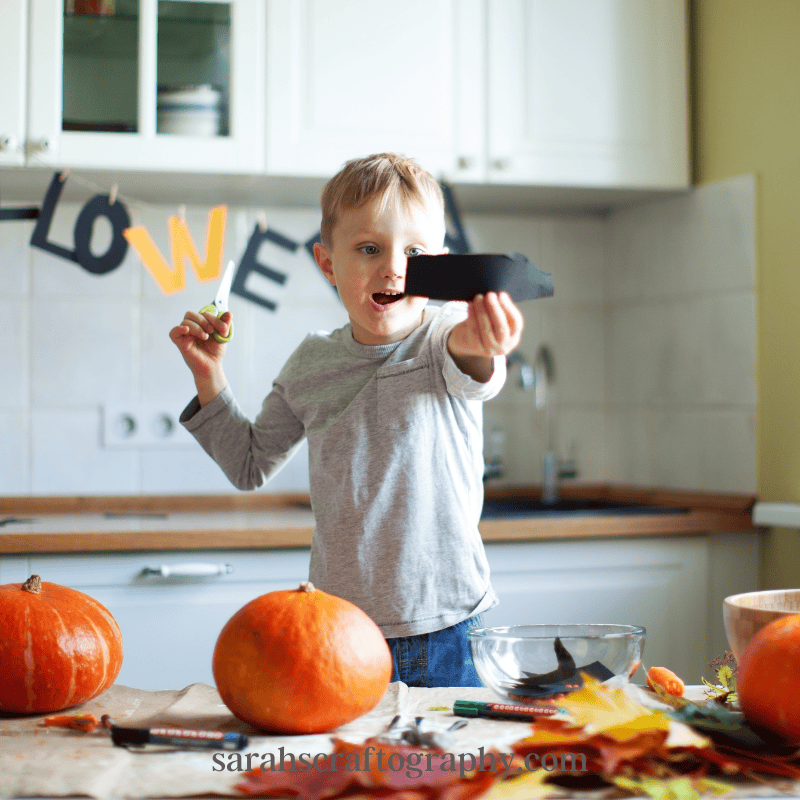
We have had costumes that looked adorable and sounded like a great idea right up until somebody actually had to wear them.
Then it was too itchy.
Maybe another one was too hot.
A different costume might feel too tight.
Sometimes the fabric simply felt wrong.
That taught me that liking a costume and being comfortable wearing that costume are two completely different things.
Sensory differences can include sensitivity to touch, textures, sounds, lights, and other input, and comfortable clothing can be an important accommodation for some autistic people.
Halloween-specific guidance from Autism Speaks also suggests considering sensory needs when choosing a costume and trying it on before Halloween.
So we plan costumes ahead and make sure everything is comfortable.
I would much rather discover the problem in our living room than after we have left the house.
If the Costume Comes Off, the Costume Comes Off
This may be one of the biggest differences between younger-mom me and the mom I am now.
If a costume fails halfway through Halloween, my kids can take it off.
That's it.
I am not fighting through another costume.
I am also not carrying a million backup things when I already have enough to keep track of.
I might bring something simple like a Halloween headband, but I am not packing an emergency costume department in the car. 😂
If my child ends up trick-or-treating in regular clothes, Halloween is not ruined.
The costume was supposed to add to the fun.
Once it becomes the thing preventing the fun, I am perfectly happy to let it go.

Prepare for the Sensory Parts Without Assuming What Your Child Can Handle
Halloween can involve flashing decorations, masks, loud sounds, crowded sidewalks, unusual smells, people getting close, and houses that suddenly move or make noise.
Those things are fun for some children and overwhelming or frightening for others.
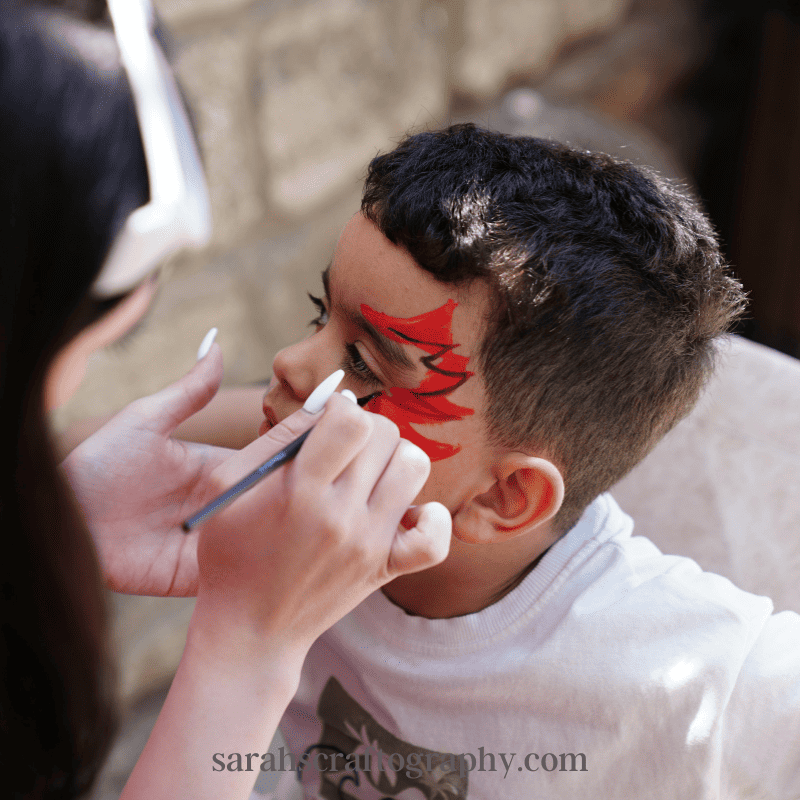
When my children were younger, masks, makeup, and faces that looked distorted could be especially difficult for them to process.
Noise can still affect them differently.
Darnell and Alivia are more sensitive to it, while Trinity can often put on headphones and keep going.
That is why I do not think preparing an autistic child for Halloween should mean creating one giant checklist and assuming every autistic child needs it.
Watch your child.
Prepare for the things that are hard for them.
If your child uses headphones, bring them.
A house that feels too scary can simply be skipped.
When crowds make communication or regulation harder, a smaller or more familiar place may work better.
Our family generally prefers familiar places and places where we have had good experiences before.
Practice Can Create Predictability Without Demanding a Performance
We have practiced parts of Halloween with our kids before.
That can include what happens when you walk up to a house, what someone might say, where the candy goes, and what happens next.
The purpose is not to make my child perform Halloween correctly.
It is to make an unfamiliar situation a little more familiar.
That distinction matters to me.
My children have struggled with things like eye contact, unfamiliar people, social expectations, and saying the expected words at the expected moment.
Practice can help them know what might happen.
It does not mean I expect perfection when we get there.
If communication is part of your concern, I have also written about Halloween AAC boards and communication supports.
Have an Exit Plan Before You Need the Exit
I want my kids to know that leaving is an option.
We do not have to finish every street.
There is no rule saying we have to stay until a certain time.
A crowded house can be skipped.
Going back to the car is always an option.
When we have had enough, we can go home.
That flexibility is part of the preparation too.
I have learned that I would rather end Halloween while we still have some good memories from the night than push everybody past their limit because I had a picture in my head of how long trick-or-treating was supposed to last.
If you want more of the sensory side of that planning, my post on sensory-friendly Halloween ideas for kids goes deeper into ways families can adjust the celebration itself.
Preparation Is Not a Guarantee That Everything Will Go Smoothly
This is probably the lesson I wish I had understood when Trinity was little.
You can prepare.
Practice can make the evening more familiar.
A comfortable costume can be ready and waiting.
The schedule can be planned out.
Headphones can be packed.
Even the familiar neighborhood can be chosen ahead of time.
And things can still fall apart.
Preparation is support, not a guarantee.
When my kids were younger, I did not always understand that.
If Halloween went badly, I could feel like I had done something wrong.
Sometimes I was hard on myself.
And looking back, I know there were times I was harder on Trinity than I needed to be because I was trying so hard to make things work.

What I Would Tell the Mom I Was Back Then
If I could go back and change one thing, it would not be the costume we bought or the route we took.
The biggest change I would make is how hard I was on myself and Trinity when things fell apart.
That younger version of me needed to hear that a hard Halloween did not mean I had failed.
Trinity had not failed either.
We were both learning.
I was learning my child.
At the same time, she was trying to navigate a world that I did not yet fully understand from her perspective.
Over the years, I learned more.
Better tools came with that experience.
Eventually, I learned to recognize when comfort mattered more than the costume and when going home mattered more than one more handful of candy.
Most importantly, I learned that when a plan falls apart, my relationship with my child matters more than saving the plan.
Preparing an Autistic Child for Halloween Is Really About Making Room for Them
Every autistic child is different.
Some children may want every decoration, every costume piece, and every house on the street.
Another child may enjoy Halloween best from the couch with a movie and a bowl of candy.
Plenty of kids will fall somewhere in between.
Preparing an autistic child for Halloween is not about teaching them to tolerate Halloween exactly the way everyone else celebrates it.
For our family, preparation means creating enough predictability to help our kids know what is coming while leaving enough flexibility to change the plan when they tell us they need something different.
And if the costume ends up in the stroller, somebody refuses the scary house, or we head home earlier than expected?
We can still call that Halloween.
I would love to hear what helps in your house if your family celebrates Halloween with an autistic child.
Share your experience in the comments because another parent may find the idea they needed in something your family has learned.
Did this post help you?
Please like it and share it with another parent who may need a little less pressure going into Halloween.
You can also subscribe to my email list for more real-life autism parenting, family life, and practical ideas from Sarah's Craftography.
Sometimes becoming the change starts with something very small: letting our kids experience a tradition in the way that works for them. 🎃



Leave a Reply