

Does autism-friendly pumpkin carving have to mean getting every child to scoop out pumpkin guts and carve a jack-o'-lantern?
Pumpkin carving is one of those fall traditions that sounds simple until you actually sit down with a child who experiences all those textures, smells, sounds, and mess differently.
In our house, I have learned that enjoying pumpkin season does not have to mean everyone participates in exactly the same way.
Some years that means carving.
Other times it means painting.
And occasionally it means handing Mom the pumpkin and saying, "You get the guts out."
What matters most to me is that my kids get to be part of the memory without feeling like they have to push through something uncomfortable just because that is how pumpkin carving is "supposed" to look.
Over the years, I have also learned that sensory preferences can change.
What one of my kids loved when they were little may be the very thing they avoid now, while something another child once could not tolerate may become something they enjoy with the right support.
That is what I want to talk about in this post: how we can make autism-friendly pumpkin carving fit the child instead of expecting the child to fit the tradition.
So grab the pumpkins, set out the paint, keep the hand-washing station close, and let's make a little Halloween magic-sensory-friendly style.
Let's begin decorating! 🎃
Autism-Friendly Pumpkin Carving Starts With the Child
After years of carving and decorating pumpkins with my own kids, I have seen firsthand just how different this tradition can look from one child to another.
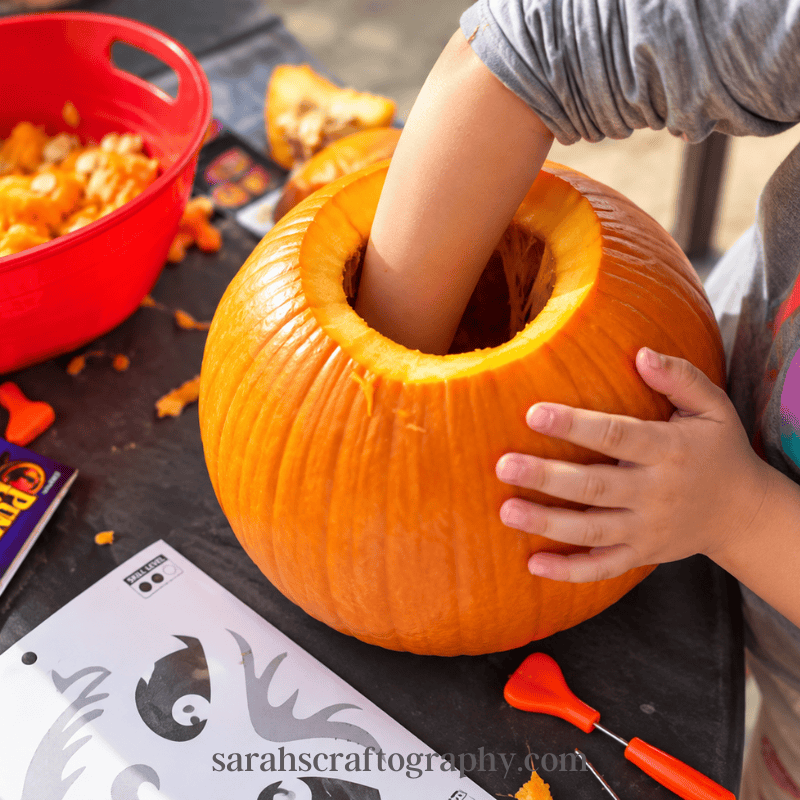
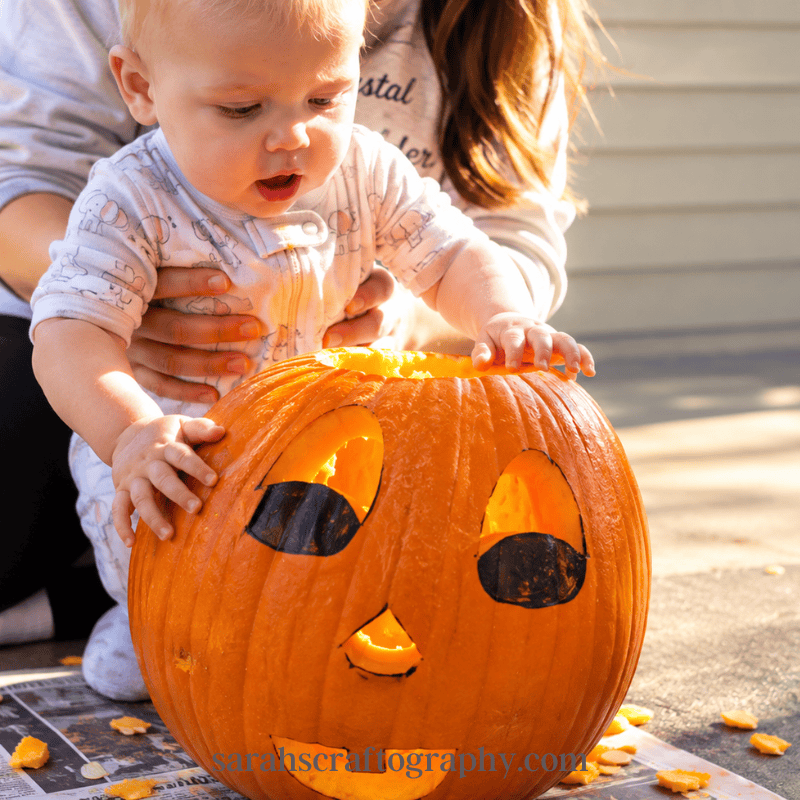
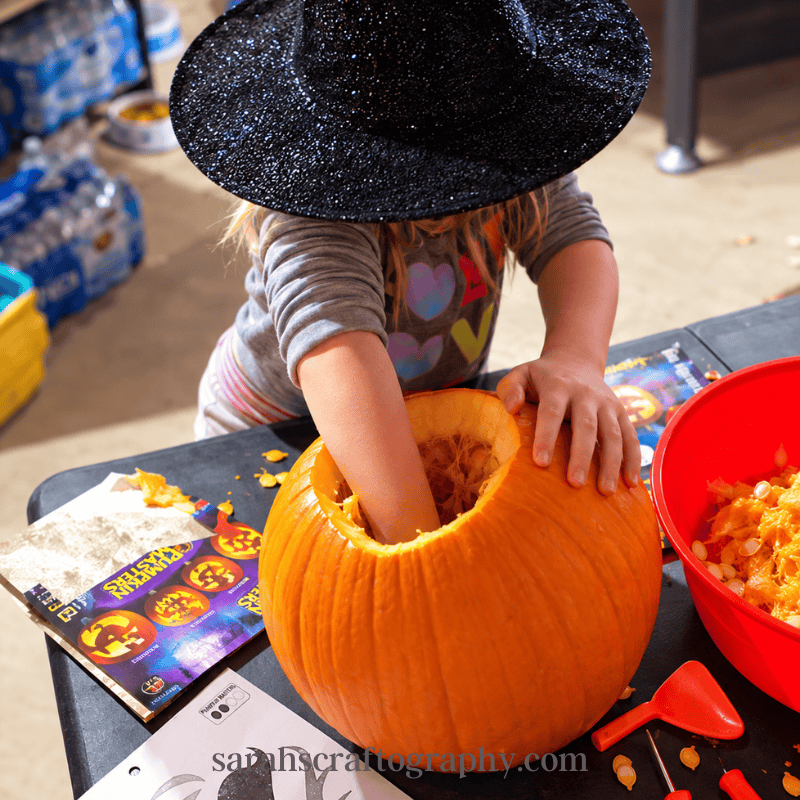
When Trinity was little, I have a funny video of her pulling the insides out of a pumpkin and happily announcing, "I've got the pumpkin guts, ha ha ha."
Now that she is older, she wants nothing to do with having pumpkin guts on her hands.
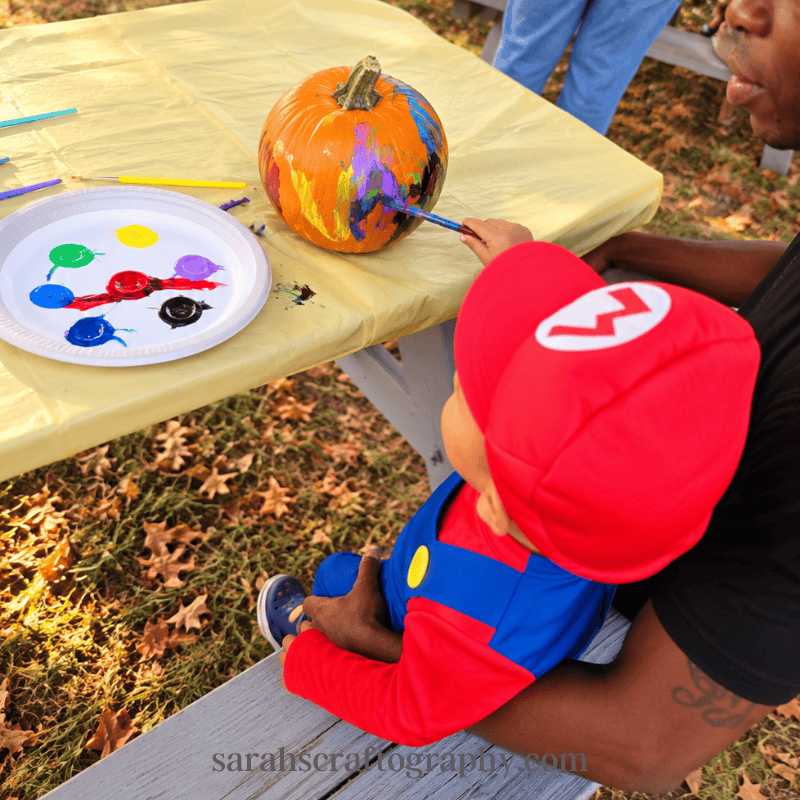
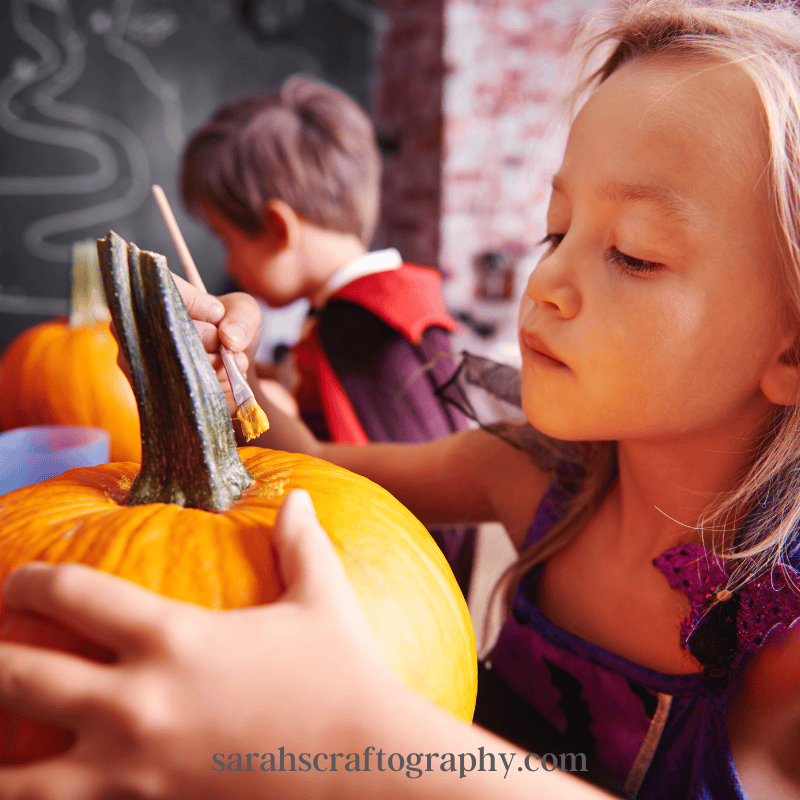
She would much rather decorate the outside with paint, stickers, markers, or whatever else we have available.
Alivia's experience has almost gone in the opposite direction.
When she was younger, she would scream if she came into contact with the inside of a pumpkin because she did not like the feeling at all.
Today, she enjoys both carving and decorating, as long as she has a way to wash the pumpkin guts off her hands when she needs to.
Darnell gives us yet another version of pumpkin fun.
He likes decorating the outside and enjoys carving, but he does not want to touch the pumpkin guts.
Three kids, three different experiences, and even those experiences have changed as they have grown.
That is why I think the best autism-friendly pumpkin carving tradition begins by letting go of the idea that there is one "right" way to do it.
Pumpkin Carving Can Be a Full Sensory Experience
Pumpkin carving involves more sensory input than we sometimes realize.
There is the slimy texture inside the pumpkin, its smell, the scraping sounds, the pressure of using tools, the mess on the table, and all the sights and sounds happening around the activity.
Autistic people can experience sensory input such as touch, smell, light, and sound more or less intensely, and those experiences vary greatly from one person to another.
The National Autistic Society also notes that sensory experiences can be mixed and can vary depending on things such as stress, tiredness, and the surrounding environment.
You can read more about autism and sensory processing from the National Autistic Society.
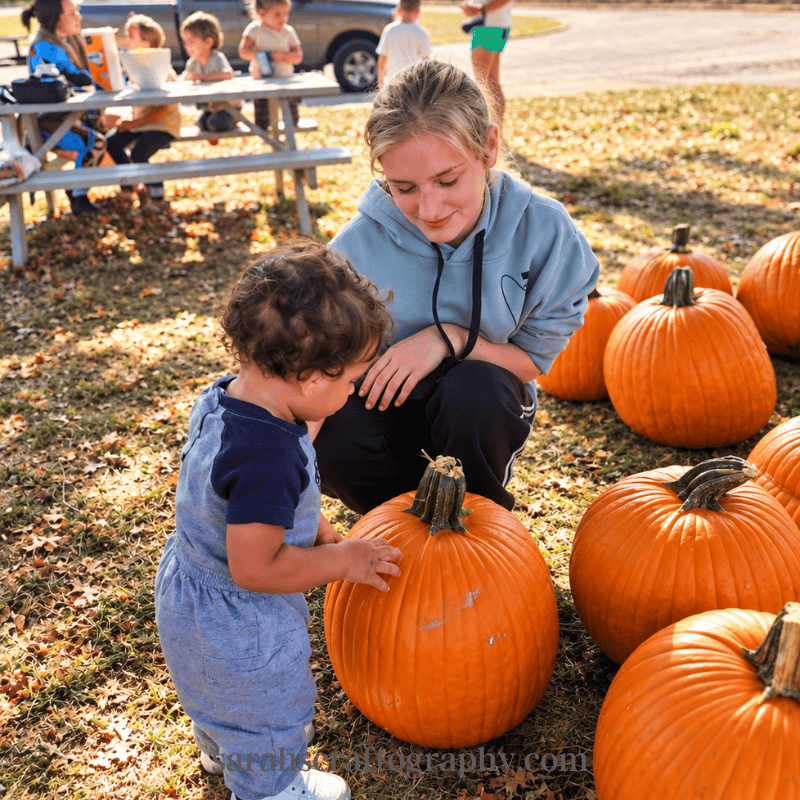
For pumpkin night, that means we should not assume what our child will enjoy based on another autistic child's experience, a sibling's reaction, or even what our own child enjoyed last year.
Trinity is my perfect reminder of that.
The little girl who once thought pumpkin guts were hilarious grew into a teenager who would rather keep them off her hands.
Alivia reminds me of the other side.
A child who once could not tolerate that texture may later decide she wants to participate when she knows she can clean her hands.
Do Not Make Tolerating Pumpkin Guts the Goal
I think this is one of the biggest things parents can take away from our experience.
The goal is not getting an autistic child to finally put their hand inside a pumpkin.
The goal is letting them be part of a family tradition in a way that feels comfortable and enjoyable to them.
If your child loves squishing pumpkin guts between their fingers, wonderful.
Using a spoon so none of it touches their skin is wonderful too.
They may want you to clean the entire pumpkin while they wait for the decorating part, and that counts too.
And if they never want the pumpkin cut open at all, hand them the paint.
Participation does not have to look the same for everyone.
Build Your Own Pumpkin Experience
Instead of announcing that everyone is going to carve pumpkins, I like the idea of breaking the tradition into choices.
Your child can participate in one step, several steps, or all of them.
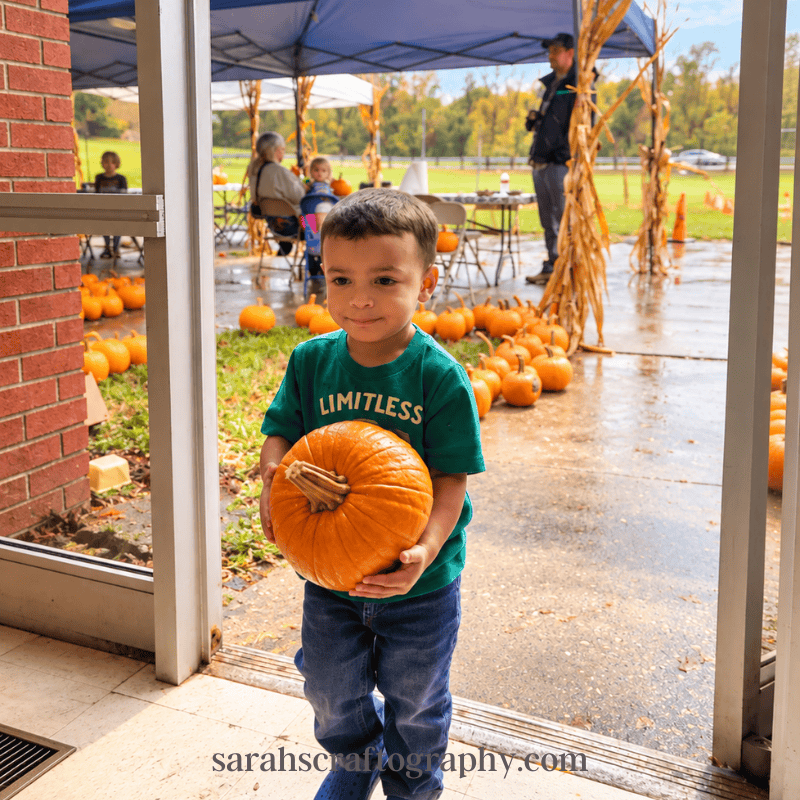
- Choose the pumpkin.
- Wash or wipe down the outside.
- Choose or draw the design.
- Watch an adult cut the top.
- Scoop with a spoon or pumpkin tool.
- Touch the pumpkin pulp if they want to.
- Help with age-appropriate carving steps.
- Paint the outside.
- Add stickers, markers, or decorations.
- Choose where the finished pumpkin will be displayed.
- Simply watch siblings or family members participate.
A child does not need to complete the whole list for pumpkin night to belong to them too.
Set Up a Hand-Washing Plan Before You Begin
One small thing can make a surprisingly big difference in our house: knowing there is a way to get clean.
Alivia can enjoy the messy part now, but she wants to be able to wash her hands when she is ready.
I would rather plan for that from the beginning than wait until she is uncomfortable and scrambling to get the texture off.
If you are carving near a sink, make sure the path to it is clear and have a towel ready.
If you are outside, plan how your child will clean up afterward and keep appropriate cleaning supplies nearby.
You can also place a trash bowl beside the pumpkin so the pulp has somewhere to go immediately.
For some children, simply knowing, "I can wash this off whenever I want," may make trying the activity feel much more manageable.
Offer Ways to Carve Without Touching the Inside
Darnell proves that liking pumpkin carving does not automatically mean liking pumpkin guts.
He can enjoy the activity while wanting nothing to do with touching the inside.
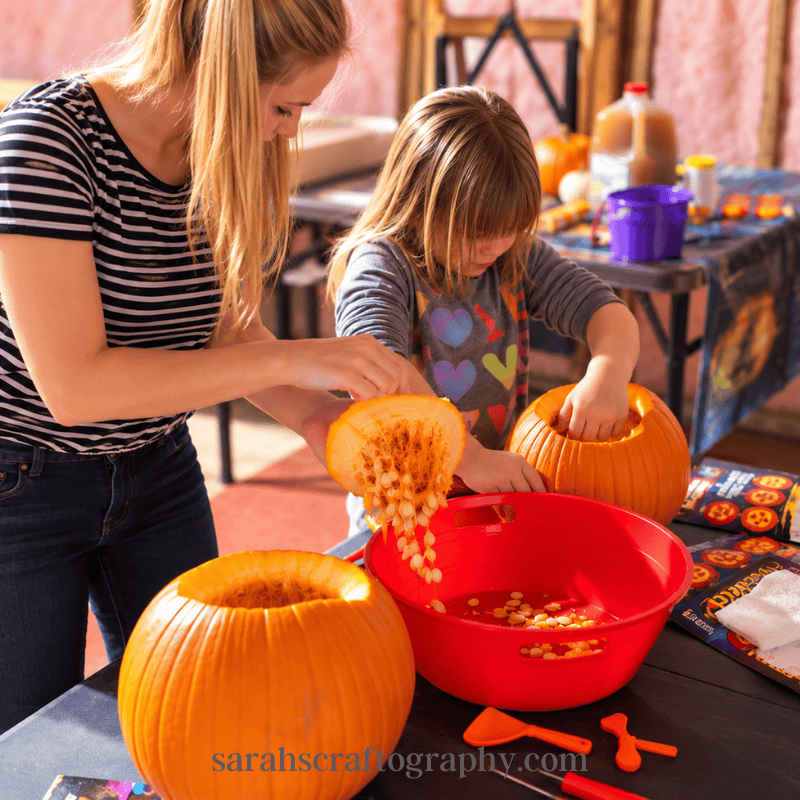
Large spoons, pumpkin scoops, or other age-appropriate utensils can create distance between little hands and the texture.
Some children may prefer gloves or another comfortable barrier.
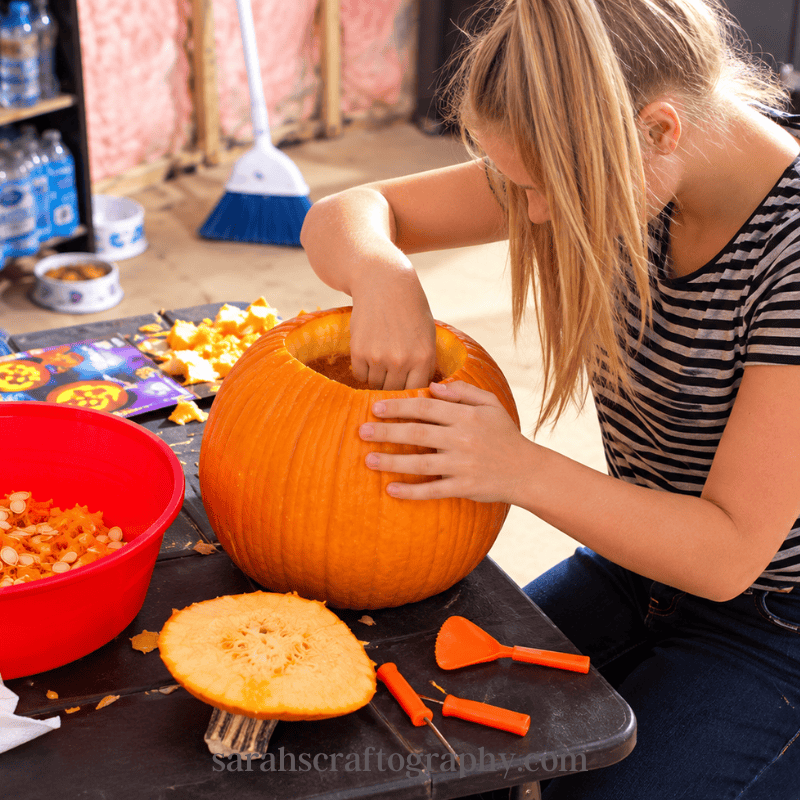
A parent or sibling can also do the scooping while the child handles the parts they actually enjoy.
If your child is curious about the pumpkin pulp but does not want direct contact, you could place some inside a securely sealed clear bag and let them decide whether they want to explore it through the bag.
None of these options should be used to pressure a child into tolerating a sensation that is distressing to them.
Remember That Smell and Sound Can Matter Too
Texture gets most of the attention when people talk about pumpkins and sensory needs, but touch is only one piece of the experience.
A freshly opened pumpkin has a smell that may be much stronger to one child than it seems to you.
Scraping the inside can create sounds a child dislikes.
Halloween music, siblings talking, adults giving instructions, costumes, bright lights, and a cluttered table can add even more sensory input.
Autism Central, an NHS-backed resource, explains that autistic people may notice sensations such as smells, sounds, and touch more intensely and that the surrounding sensory environment can contribute to overwhelm.
You can read its guidance on sensory differences and the sensory environment.
If pumpkin night starts becoming too much, sometimes the best accommodation is not another tool.
It may be turning off the music, clearing some clutter, moving to a quieter space, or letting your child take a break.
Painting a Pumpkin Still Counts
I really want parents to hear this one.
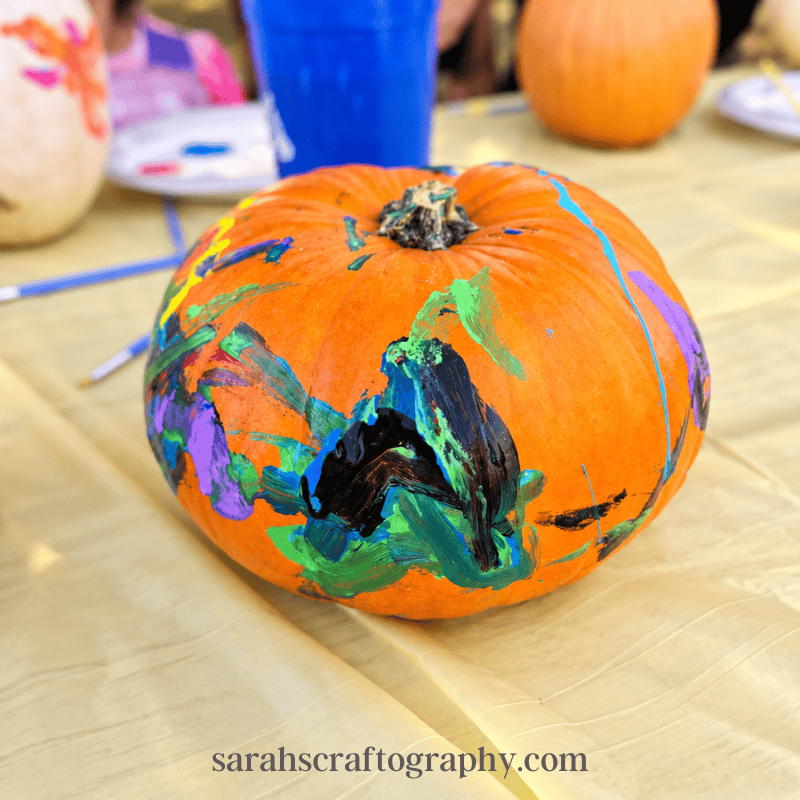
Painting a pumpkin is not the consolation prize for a child who "couldn't" carve one.
It is pumpkin decorating.
It is creative.
It is festive.
And most importantly, it can be fun.
Trinity would now much rather decorate the outside of her pumpkin than dig through the inside.
Our family photos over the years show both sides of this tradition: messy carving days and colorful painted pumpkins.
Both belong in our memories.
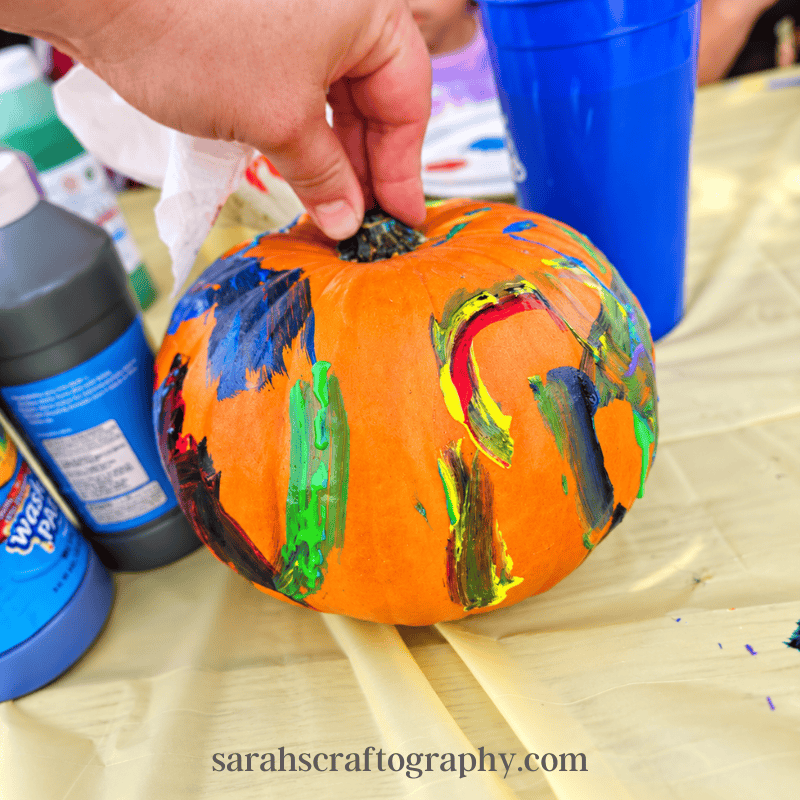
No-carve options can include washable or child-appropriate paint, markers, stickers, foam shapes, googly eyes, ribbon, or other decorations that suit your child's age and interests.
You can even put carving and decorating supplies out at the same time so the no-carve choices do not feel like a backup plan.
Let the child choose from the beginning.
Let Their Pumpkin Look Like Their Pumpkin
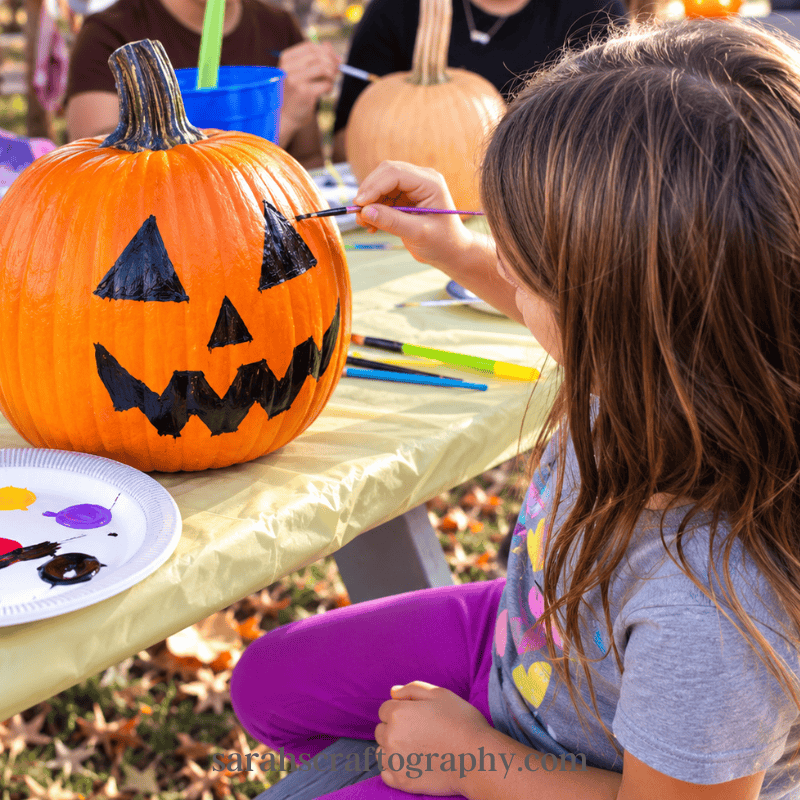
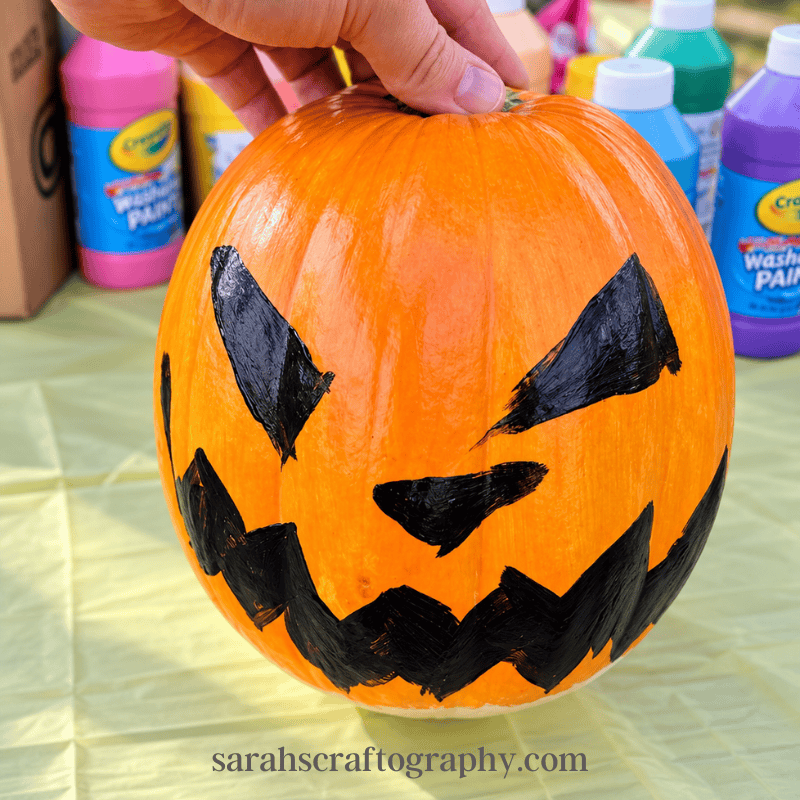
Kids do not need to create a perfect jack-o'-lantern face.
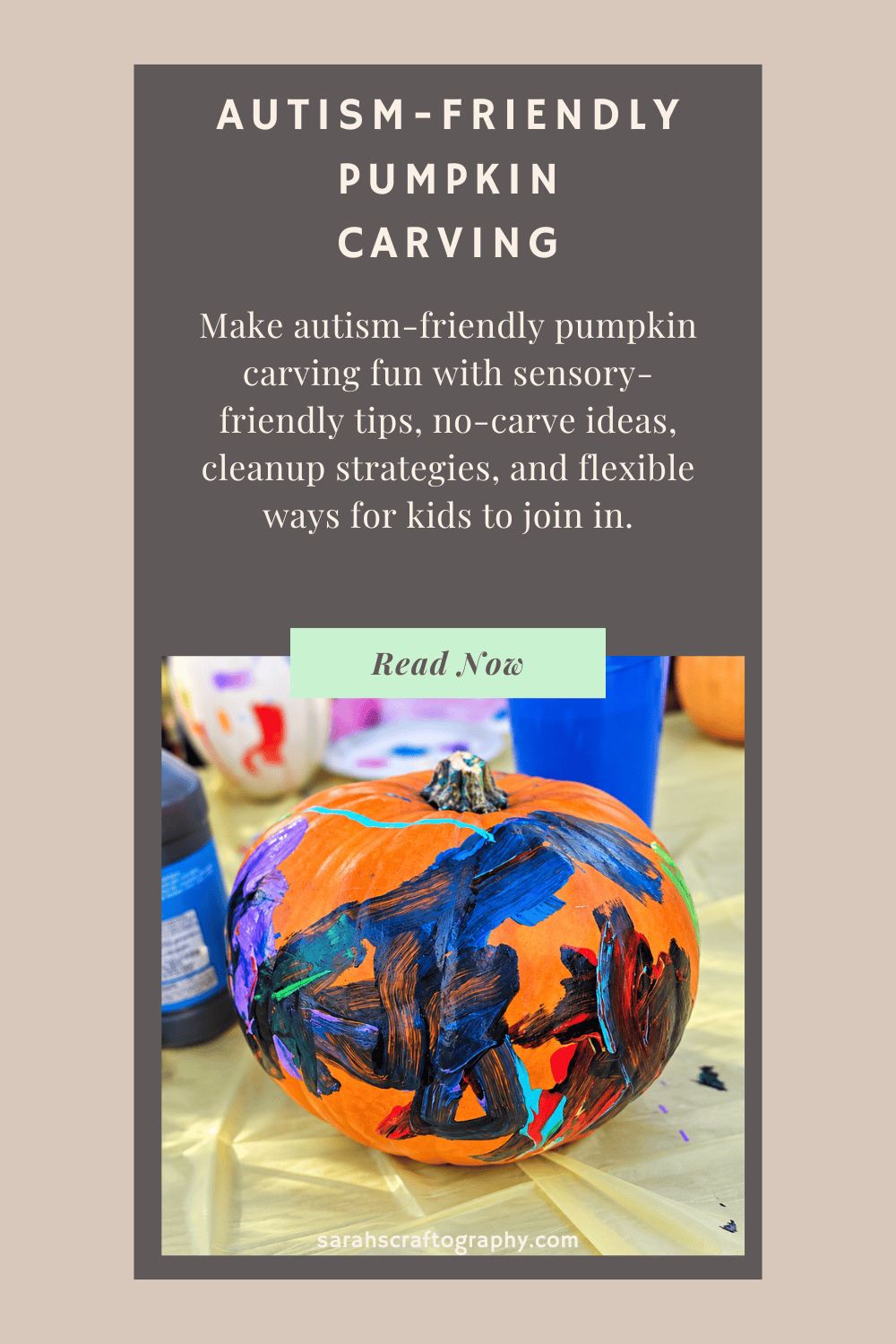
A painted pumpkin might be covered in colorful streaks that only make sense to the artist.
Somebody else may want a spooky face.
Another child may cover the entire pumpkin in stickers.
That freedom can be part of what makes the activity enjoyable.
Try asking, "What do you want your pumpkin to look like?" instead of handing over an example they are expected to copy.
If your child has a favorite character, color, animal, or special interest, that can become the inspiration.
The finished pumpkin does not have to match the rest of the porch.
Prepare for the Activity Before Pumpkin Night
Preparation can make the whole experience calmer, especially for a child who likes to know what is coming.
You might show your child the pumpkin and supplies earlier in the day and explain the basic steps.
Let them know which parts are optional.
If pictures help your child, make a simple visual sequence such as choose, decorate, clean up, and display.
Keep favorite sensory or calming items available if your child uses them.
Most of all, avoid building up pumpkin carving as something they are required to finish.
Knowing there is an exit can make an activity feel much safer.
I use the same idea throughout our other seasonal activities, and you can find more options in my sensory-friendly Halloween ideas for kids.
When Siblings Have Completely Different Sensory Needs
This is real life in our family.
One child may want to carve while another wants paint.
One may need clean hands immediately while somebody else is perfectly happy making a mess.
You do not have to choose one family method.
Set up different jobs or stations if that works better.
One child can design faces while another paints.
Someone can scoop while somebody else sorts seeds.
A younger child can decorate while an adult handles cutting.
When we stop expecting everybody to participate identically, it becomes much easier to create a tradition that includes everybody.
What If Your Child Changes Their Mind?
Let them.
This may be my favorite lesson from watching Trinity and Alivia grow.
What a child tolerated, loved, or avoided several years ago does not have to define what they do this year.
We can ask again without pressure.
"Do you want to scoop it this year, or would you rather decorate?"
Then we can believe the answer.
Sensory experiences are individual and can vary over time and depending on circumstances, so flexibility makes more sense than assuming last year's preference is permanent.
It also teaches our kids that we are listening when they tell us what their bodies are comfortable with.
Keep Pumpkin Carving Safe
Making the activity sensory-friendly should never mean overlooking basic safety.
The American Academy of Pediatrics recommends that small children decorate pumpkins rather than carve them and that adults handle the cutting.
It also recommends battery-operated flameless candles, flashlights, or glow sticks as alternatives to open flames inside jack-o'-lanterns.
You can review its Halloween safety and pumpkin decorating guidance.
Match every tool and task to your child's age and abilities, and supervise children closely around anything sharp.
If a child becomes overwhelmed, pause the activity before worrying about finishing the pumpkin.
When "I'm Done" Needs to Be Enough
A child might choose a pumpkin, paint three lines, and decide they are finished.
Another child may begin carving and discover that the smell is too much.
Maybe they thought they wanted to scoop the inside until they touched it.
That is okay.
We do not need to turn a family tradition into a test of endurance.
There is always another pumpkin, another craft, or another Halloween.
The memory I want my children to carry is not that Mom made them finish.
I want them to remember that we made room for them at the table.
Creating Halloween Traditions That Grow With Our Kids
Looking back at our old pumpkin pictures makes me smile because they capture more than Halloween crafts.
They show different ages, different reactions, and different versions of my kids.
I can remember little Trinity laughing about having pumpkin guts on her hands.
I can remember a younger Alivia wanting absolutely nothing to do with that feeling.
Now those preferences look different.
Darnell is creating his own version of the tradition too.
That is why autism-friendly pumpkin carving is not really about finding the perfect sensory trick.
It is about paying attention to the child standing in front of us right now.
Give them choices.
Keep the sink nearby.
Bring out the paint.
Let somebody else scoop the guts.
Change the plan when the plan stops working.
Let the Memory Matter More Than the Finished Pumpkin
Most of all, let the goal be connection instead of compliance.
Your pumpkin may end up carved, painted, sticker-covered, half-finished, or completely untouched.
Your child still gets to belong in the family memory.
At the end of the night, the best pumpkin is not necessarily the one with the cleanest carving or the cutest face.
It is the one connected to a memory your child was actually able to enjoy.
Maybe that memory includes sticky pumpkin guts and lots of laughter.
Maybe it includes paint-covered brushes, stickers scattered across the table, or Mom doing all the scooping.
However Halloween looks in your home, I hope you give yourself and your child permission to make the tradition your own.
How does your family make pumpkin decorating work for different sensory needs?
I would love to hear what works in your home, so leave a comment and share your favorite sensory-friendly pumpkin ideas with us.
If this post helped you, please like it and share it with another parent who may need a little encouragement to do Halloween differently this year.
And if you would like more real-life parenting, autism-friendly ideas, family activities, faith, and encouragement from Sarah's Craftography, be sure to subscribe to my email list so you do not miss what is coming next.
Let's keep creating traditions where our kids do not just participate-they know they belong. 🎃



Leave a Reply